

Maddy summaryThis bill, known as the Stopping Harmful and Outrageous Torts Act, expands legal protections for firearm manufacturers and sellers by strengthening their immunity from civil lawsuits. It requires courts to immediately dismiss any pending cases against these companies that are based on the criminal or unlawful misuse of a gun by a third party, while also clarifying that sellers are not liable for negligence in entrusting products to others. The legislation further restricts who can file such suits by prohibiting foreign governments from bringing these claims and adding a specific exception for victims under the age of 17, though it maintains immunity for cases involving design or manufacturing defects. Additionally, the bill allows companies to move these cases to federal court and grants them the right to appeal dismissal orders immediately, along with the ability to recover legal fees if they win. Finally, it preempts state and local laws that attempt to impose liability on these entities for the same types of misuse-related harms.
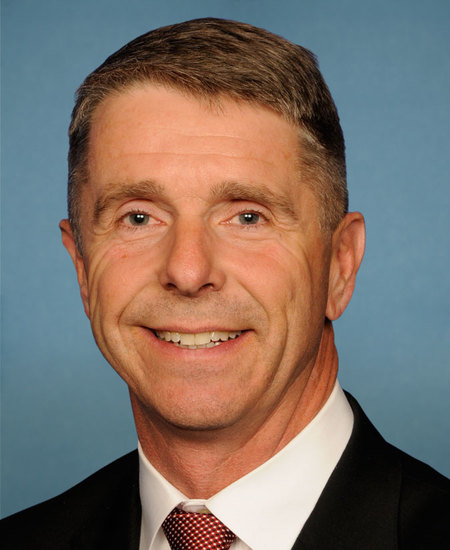
Rep. Robert J. Wittman
Sponsored bills
Maddy summaryThe Child Care Modernization Act of 2026 updates federal rules to help states create flexible child care systems that offer parents more choices across different settings like homes, centers, and schools. It expands eligibility for assistance to include children of parents who are job seekers, students, or those receiving health treatment, while also raising the income limit for some families. The bill requires states to use cost-based models to set payment rates that cover provider expenses and mandates the creation of new grants to help build and expand child care facilities. Additionally, it establishes new reporting requirements to track how much families spend on care and measures progress on improving workforce quality and access.
Maddy summaryThe DOMINANCE Act aims to reduce U.S. reliance on strategic competitors like China for critical minerals by building international partnerships to secure diversified supply chains. It establishes a Minerals Security Partnership to coordinate diplomatic, development, and financial support for critical mineral projects with allies, creates a new Office of Energy Security Compacts to develop multi-year agreements with partner countries, and sets up a new Assistant Secretary position for Energy Security at the State Department. The bill also includes education programs like the Critical Mineral Mining Fellowship Program to build U.S. workforce capacity in mining. These measures are designed to enhance U.S. national security and economic competitiveness by ensuring reliable access to critical minerals needed for defense, technology, and energy systems.
Maddy summaryThis bill increases monthly disability compensation for veterans eligible for aid and attendance by adding a $833.33 supplemental payment, effective December 2026. It also creates an automatic adjustment for dependency and indemnity compensation (DIC) payments, tying them to Social Security benefit increases plus an additional 1%, for up to five years starting December 2026. Additionally, it temporarily allows the VA to collect fees for certain housing loans from veterans with a 70% or lower disability rating (2025-2035), effective August 2026. These changes directly affect veterans receiving disability compensation, surviving family members receiving DIC, and veterans applying for VA-guaranteed housing loans.
Maddy summaryThis bill, known as the Improving Home Dialysis Act of 2026, expands Medicare coverage to include two new types of support services for patients performing dialysis at home. Starting in 2028, it will cover respite care provided by trained medical staff when a patient is temporarily unable to manage their own dialysis, as well as mental health services specifically for kidney disease during the first 60 days of home treatment. The legislation also adjusts Medicare payments to cover these services, setting specific limits on the number of sessions allowed per year and ensuring the costs are not offset by reducing payments elsewhere. These changes directly affect Medicare beneficiaries who use home dialysis and the healthcare providers who deliver these specialized services.
Maddy summaryThis bill, the Provider Reimbursement Stability Act of 2026, aims to create more predictable payment adjustments for physicians and other healthcare providers under the Medicare program. It directly affects medical practices and providers who receive reimbursement for services through the physician fee schedule. The legislation increases a threshold for certain budget neutrality calculations from $20 million to $54.3 million in 2027, with automatic increases every five years thereafter. It also requires the government to correct payment estimates when actual service usage differs significantly from projections, mandates regular updates to cost calculations for practice expenses, and limits how much Medicare payment rates can change from year to year to a maximum of 2.5 percent.
Maddy summaryThis bill would add pharmacist services to Medicare Part B coverage for beneficiaries, specifically covering pharmacist-led testing and treatment for illnesses like flu, COVID-19, or strep throat during public health emergencies. It defines covered services as those performed under state law, often requiring collaboration with a physician, and sets payment at 80% of the lesser of the actual charge or 85% of physician payment rates. Pharmacists would be prohibited from balance billing for these services, ensuring Medicare beneficiaries pay only their standard copayment. The changes would take effect January 1, 2026.
Maddy summaryThis bill authorizes the U.S. Mint to produce commemorative $5 gold and $1 silver coins marking the 25th anniversary of the September 11, 2001, terrorist attacks. The coins must feature designs honoring victims and first responders (including the inscription "Never Forget") and will be sold only during 2027-2028. All surcharges ($35 per gold coin, $10 per silver coin) collected from sales will fund the National September 11 Memorial and Museum at the World Trade Center, with no net cost to the federal government. The coins are legal tender but primarily intended for collectors, not circulation.
Maddy summaryThe Smithsonian American Women’s History Museum Act authorizes the creation of a new Smithsonian museum dedicated to women’s history, to be located within the National Mall Reserve in Washington, D.C. If the site is managed by another federal agency, the bill requires that agency to transfer the land after notifying Congress and relevant committees. The museum must ensure exhibits and programs accurately represent diverse women’s experiences by consulting a broad range of experts and community voices. The Smithsonian will submit biennial reports to Congress detailing how the museum meets these representation standards.
Maddy summaryThe NO FAKES Act of 2026 grants individuals and their heirs a new property right to control the creation and use of digital replicas of their voice or visual likeness, preventing unauthorized use in computer-generated media. This right lasts for the individual's lifetime plus 10 years after death, with potential extensions for continued commercial use, and applies to both living and deceased people. Online platforms and companies distributing such content must register with the Copyright Office, remove unauthorized replicas upon receiving valid notices, and face civil penalties of up to $750,000 per work if they fail to comply or knowingly distribute unauthorized replicas. The law also preempts most existing state laws protecting voice and likeness rights, though it preserves protections for sexually explicit content and election-related uses.