

Maddy summaryHR 2039, the Protecting the Right to Keep and Bear Arms Act of 2025, prevents the President and Health Secretary from using emergency declarations (under the National Emergencies Act or Public Health Service Act) to implement gun control measures. It amends disaster relief law to explicitly prohibit future rules that would ban firearm possession, sales, or accessories during emergencies. The bill directly affects federal agencies and future emergency declarations, blocking them from being used as a tool for gun regulation. It does not change existing gun laws but restricts how emergency powers can be applied to firearms policy.
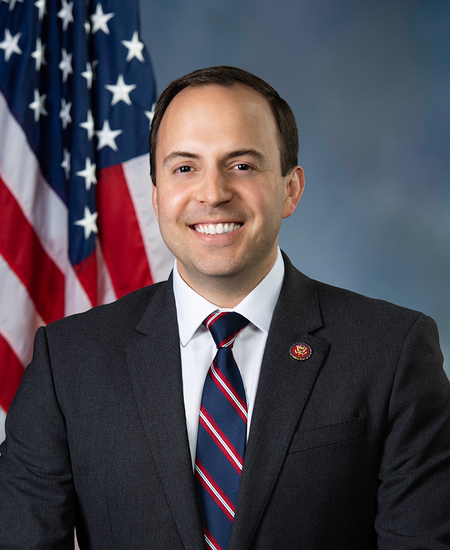
Rep. Lance Gooden
Sponsored bills
Maddy summaryThe Choice in Affordable Housing Act of 2025 aims to increase landlord participation in the Housing Choice Voucher program, which helps low-income families, seniors, and people with disabilities afford housing in the private market. The bill creates new incentives including one-time payments to landlords (up to 200% of monthly rent) for renting to voucher holders in low-poverty areas (census tracts with poverty rates below 20%), security deposit assistance for tenants, and bonus payments to public housing agencies that employ dedicated landlord liaisons. It establishes a $100 million annual fund for these initiatives and requires annual reports on the program's effectiveness in expanding housing options in high-opportunity neighborhoods. These changes directly affect landlords, voucher recipients, and public housing agencies administering the program.
This bill designates the facility of the United States Postal Service located at 620 East Pecan Boulevard in McAllen, Texas, as the "Agent Raul H. Gonzalez Jr. Memorial Post Office Building".
Maddy summaryHRES 189 is a procedural resolution censuring Representative Al Green (D-TX) for disrupting a joint session of Congress on March 4, 2025, when he interrupted the President's address. The resolution states his conduct breached proper decorum, leading to his removal by the Sergeant at Arms. It mandates Green to appear in the House chamber for the public pronouncement of censure, with the resolution to be read aloud by the Speaker. This is a formal disciplinary action by the House, not a policy change affecting constituents or legislation.
Maddy summaryThis bill ensures that U.S. Border Patrol agents and Customs and Border Protection (CBP) officers who remain on duty during a government shutdown receive their salaries. It appropriates funds from the Treasury for fiscal year 2025 to cover their pay during any shutdown period beginning after the bill's enactment. The provision specifically applies to CBP personnel who are not furloughed under standard shutdown protocols. It directly affects federal workers in CBP’s Border Patrol and Office of Field Operations during government funding gaps.
Maddy summaryThis bill ensures military personnel, civilian Defense workers, and supporting contractors continue receiving pay during government funding gaps in fiscal year 2025. It provides temporary funding from existing Treasury reserves to cover salaries for active-duty troops, reservists, Defense civilians, and contractors supporting military operations until Congress passes a full budget or by January 1, 2026. The measure directly affects all active-duty service members, reserve components, and their civilian/contractor support staff across the military. It does not create new policies but guarantees uninterrupted pay during budget implementation delays.
Maddy summaryThe CLEAR Act of 2025 encourages state and local law enforcement to cooperate with federal immigration authorities by requiring states to provide information about apprehended aliens to federal officials and creating a database of immigration violators in the National Crime Information Center. The bill provides financial assistance to states that assist with immigration enforcement, establishes procedures for transferring aliens from state/local custody to federal custody, and increases federal detention capacity. It directly affects state and local law enforcement agencies, aliens unlawfully present in the United States, and the federal government's immigration enforcement operations. The bill also includes provisions for training law enforcement on immigration enforcement procedures and offers legal immunity for officers following the law.
Maddy summaryHR 1928, the Sanctuary City Accountability Act, allows U.S. citizens to sue local governments designated as "sanctuary jurisdictions" if an alien commits a crime against them or their immediate family within that jurisdiction or later relocates. The bill creates a private right of action for compensatory damages or injunctions against such jurisdictions, defined as those obstructing immigration enforcement (e.g., refusing ICE detainers or denying access to incarcerated aliens). It explicitly limits liability for local governments that comply with state laws regarding immigration enforcement. The bill does not alter existing sanctuary policies but adds a new legal pathway for individuals affected by crimes committed by aliens in these jurisdictions.
Maddy summaryThis resolution formally censures Representative Al Green (D-TX) for disrupting President Trump's address during a joint session of Congress on March 4, 2025. It requires him to appear in the House chamber for the public reading of the censure resolution, which states his actions violated decorum rules and brought disrepute to Congress. As a procedural resolution, it does not enact policy changes but serves as a formal reprimand for conduct during a congressional session.
Maddy summaryHR 1879, the "No Tax Breaks for Sanctuary Cities Act," denies tax-exempt status for bonds issued by jurisdictions classified as "sanctuary jurisdictions." A sanctuary jurisdiction is defined as a city or state that either restricts sharing immigration status information with federal authorities or fails to comply with federal detainer requests under immigration law. The bill requires the Treasury Secretary to publish an annual list of such jurisdictions within 180 days of enactment. This policy directly affects local governments meeting the definition by removing a key funding tool - tax-exempt municipal bonds - used for public projects like schools or infrastructure. The law applies to bonds issued after enactment and does not alter existing sanctuary policies themselves.