

Maddy summaryHRES 153 is a ceremonial resolution expressing condolences to the families and loved ones of the 67 victims who died in two aviation incidents: American Eagle Flight 5342 and U.S. Army flight PAT 25, which crashed near Washington, D.C.'s Reagan National Airport on January 29, 2025. It specifically honors the victims - many connected to Wichita, Kansas (known as the "Air Capital of the World") - and extends sympathies to affected communities including Wichita, Kansas, and the National Capital Region. The resolution also commends first responders who aided in the recovery efforts. As a non-binding expression of sympathy with no policy changes, it does not affect laws or regulations.
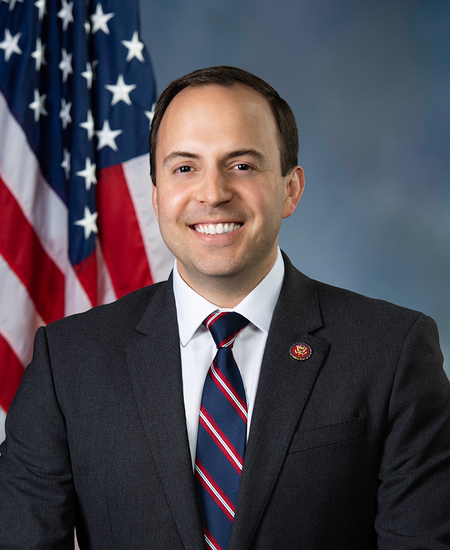
Rep. Lance Gooden
Sponsored bills
Maddy summaryHR 1792 prohibits U.S. federal funds from being provided to three United Nations agencies: the International Organization for Migration (IOM), the High Commissioner for Refugees (UNHCR), and the Relief and Works Agency for Palestine Refugees (UNRWA). The bill requires the Government Accountability Office (GAO) to conduct a study identifying all U.S. funding to these agencies from 2021-2025, including amounts and restrictions, and to assess any funds owed to the U.S. government. It also mandates an audit of the State Department’s Refugee Travel Loan Program. The GAO must submit a report to Congress within 180 days of the bill’s enactment detailing these findings. This bill directly affects federal funding mechanisms for international refugee and migration programs.
Federal Firearms Licensee Protection Act of 2025 This bill modifies criminal penalties for an offense involving the theft of a firearm from a licensed importer, manufacturer, or dealer, or from their business premises. Specifically, the bill does the following: increases from 10 to 20 years the maximum prison term, and creates a 3- or 5-year mandatory minimum prison term for an offense that occurs during the commission of a burglary or robbery. An attempt to commit an offense is subject to the same penalties as a substantive offense.
Maddy summaryThis bill protects firearm trace data maintained by the ATF's National Trace Center and related licensee information from public disclosure under FOIA. It directly affects licensed firearms dealers, state/local governments, and other entities that handle this data. Key provisions include adding a new FOIA exemption for this data, imposing fines of $10,000-$25,000 for unauthorized disclosures, and allowing licensed dealers to sue for triple damages or $25,000 per disclosure. The law also prevents sovereign immunity from blocking such lawsuits and specifies that fines apply per individual disclosure.
Maddy summaryThe PAST Act of 2025 amends the Horse Protection Act to ban harmful practices known as "soring," which deliberately cause pain to horses to exaggerate their gait for shows. It specifically prohibits devices like action devices (e.g., boots causing friction) and weighted shoes on Tennessee Walking Horses, Racking Horses, and Spotted Saddle Horses at events. The bill increases penalties, including escalating disqualifications for repeat offenses (180 days → 1 year → 3 years) and raises fines for violations to $5,000 per offense. It also requires stricter licensing for inspectors and mandates public posting of violation records to help event organizers enforce rules.
Maddy summaryHRES 166 is a non-binding House resolution expressing U.S. support for the Iranian people's desire for a democratic, secular, and nonnuclear republic. It condemns the Iranian regime's terrorism, regional proxy wars, internal suppression of ethnic and religious minorities, and human rights abuses - including executions and repression of women-led protests. The resolution calls for holding the regime accountable through sanctions, supports the Ten-Point Plan for Iran’s democratic transition, and urges protection for Iranian political refugees in Albania. It does not create new laws but affirms U.S. policy alignment with Iranian protesters' demands.
Maddy summaryThis bill awards a Congressional Gold Medal to the 761st Tank Battalion (known as the "Black Panthers"), the first predominantly Black armored unit in World War II's European Theater. It recognizes their combat service from 1944-1946, including key roles in the Battle of the Bulge and breaking the Siegfried Line, despite facing racial prejudice during and after the war. The medal will be displayed at the National Museum of African American History and Culture, with bronze duplicates available for sale to cover costs. The bill commemorates the battalion's 130,000 enemy casualties inflicted, 50% casualty rate, and their 1978 Presidential Unit Citation. It does not create new laws or affect current policies.
Maddy summaryThis bill amends the 21st Century Cures Act to explicitly include fentanyl and xylazine test strips in grant funding for state and tribal programs addressing opioid use disorders. It directly affects state and tribal health agencies that receive federal grants under this program by expanding eligibility to cover these specific test strips. The key provision adds "fentanyl or xylazine test strips" to the list of approved items that grant funds may support, ensuring these critical tools for detecting dangerous substances are included in funding. The change updates existing grant language without creating new requirements or altering program administration.
Maddy summaryThis bill requires the U.S. Department of Agriculture (USDA) to join the Committee on Foreign Investment in the United States (CFIUS) for reviews of certain transactions involving foreign adversaries. It specifically targets acquisitions of U.S. agricultural land, biotechnology, or agriculture-related infrastructure (like transportation, storage, or processing) by entities from China, North Korea, Russia, or Iran. The USDA must notify CFIUS about reportable transactions, prompting the committee to determine if a full review is needed. The provisions expire for any country removed from the official list of foreign adversaries in federal regulations.
Maddy summaryHR 1551, the Protect and Serve Act of 2025, creates a new federal criminal offense for intentionally harming law enforcement officers under specific circumstances. It imposes harsher penalties, including up to 10 years in prison for serious injury or life imprisonment if death occurs, kidnapping is involved, or a firearm is used. The law applies when the crime crosses state lines, involves interstate weapons, occurs on federal property, or targets federal officers. Prosecutions require the Attorney General’s written certification, considering factors like prior state convictions and public safety impact. The bill directly affects law enforcement officers and federal prosecutors by expanding federal jurisdiction for certain violent crimes against them.