

Maddy summaryHR 1762, the Forest Service Accountability Act, is a procedural bill changing how the Forest Service Chief is appointed. It requires the President to nominate a candidate with substantial forest management experience for Senate confirmation, with nominations referred jointly to the Senate Agriculture and Energy Committees. The bill also mandates that the President submit a new nomination within 30 days of enactment, applying to the current Chief. This affects the President, Senate committees, and the current Forest Service leadership.
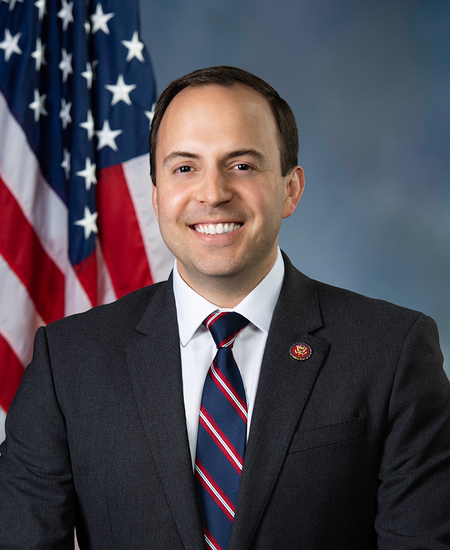
Rep. Lance Gooden
Sponsored bills
Maddy summaryThe SHORT Act (HR 2395) redefines federal firearm definitions to exclude antique and collector firearms from being classified as firearms, and removes distinctions between short-barreled rifles and shotguns in federal regulations. It prevents state laws from imposing taxes or registration requirements on short-barreled rifles and shotguns, requiring state rules to align with federal compliance instead. The bill also mandates the federal government to destroy specific records related to these firearms within one year of enactment.
Maddy summaryThe Freedom from Unfair Gun Taxes Act of 2025 would prohibit states and local governments from imposing taxes on the sale of firearms, ammunition, or firearm parts during interstate or foreign commerce. This bill directly affects state tax policies and manufacturers or dealers selling these items across state lines. It explicitly states that the bill does not change the existing federal tax on firearms and ammunition that funds wildlife conservation programs. The key provision bans state-level taxes for these sales in interstate transactions while preserving current federal funding mechanisms.
Maddy summaryHR 2425, the Kairo Act of 2025, requires child care providers receiving federal funding (like Child Care Development Block Grants or Head Start) to create a "parent's bill of rights" document. This document must include specific information: contact details for child abuse hotlines, access to facility inspection reports, procedures for reviewing a child’s records, and policies on accessing video recordings of incidents involving the child. Providers must give parents a written copy of these rights within 45 days of the bill’s effective date or the child’s first day in care. The law applies to center-based, family, and religious child care providers, ensuring parents have clear access to facility compliance information and records.
Maddy summaryHRES 254 is a non-binding resolution recognizing the 250th anniversary of the United States Marine Corps, to be observed on November 10, 2025. The resolution honors the Corps' founding at Tun Tavern in Philadelphia on November 10, 1775, its history of service in major conflicts, and its values of honor, courage, and commitment. It encourages public participation in commemorative events and local recognition of Marines' contributions to national defense.
Maddy summaryHR 2362, the VA Home Loan Awareness Act of 2025, requires lenders using the standard Uniform Residential Loan Application to add a specific disclaimer below the military service question. The disclaimer states: "If yes, you may qualify for a VA Home Loan. Consult your lender regarding eligibility." This affects all lenders nationwide that use this common mortgage application form. The bill also mandates a Government Accountability Office (GAO) study within 18 months to check if at least 80% of lenders are including the required disclaimer on the form.
Maddy summaryHR 2187 amends U.S. tax law to disallow key federal tax credits for offshore wind facilities located in inland navigable waters or coastal waters of the United States. Specifically, it removes eligibility for the investment tax credit (Section 48), production tax credit (Section 45), and clean electricity production tax credit (Section 45Y) for projects in these water areas. The bill defines "disqualified offshore wind facilities" as those situated in the specified waters, preventing them from qualifying for these financial incentives. This change applies to energy produced and property placed in service after December 31, 2025, directly affecting developers planning offshore wind projects in U.S. coastal or inland waterways.
Maddy summaryHR 2128, the Reimbursing Border Communities Act of 2025, creates a federal grant program to reimburse eligible local governments within 200 miles of the U.S.-Mexico land border for costs related to border security measures, such as additional law enforcement wages. To qualify, communities must be local governments (not sanctuary jurisdictions), submit applications to the DHS Secretary, and cannot use funds for legal aid, housing, healthcare, or other services for immigrants. Grants are capped at $500,000 per community per year, with $25 million authorized annually from 2026-2036. The program requires annual reports to Congress detailing grant usage and implementation, including recommendations for future funding adjustments.
Maddy summaryThe FOCA Act of 2025 prohibits federal agencies from requiring or banning contractors from using union agreements in construction project bids or contracts. It directly affects federal agencies, contractors, and subcontractors working on federally funded or assisted construction projects (like buildings or infrastructure). The law requires bid documents to not favor or penalize contractors based on whether they have union agreements, aiming to promote open competition and prevent discrimination. This changes how agencies structure bids but does not affect union agreements themselves. The bill applies to all new contracts and subcontracts after enactment, with limited exemptions only for public health/safety emergencies or national security.
Maddy summaryThe Credit for Caring Act of 2025 creates a federal tax credit for family caregivers of elderly or disabled relatives. It allows eligible caregivers (with over $7,500 in earned income) to claim a credit equal to 30% of qualified caregiving expenses exceeding $2,000, capped at $5,000 per year. Qualified expenses include human assistance, home modifications, respite care, counseling, lost wages for unpaid time off, and transportation, all requiring certification from a licensed healthcare provider that the care recipient has long-term needs. The credit phases out for higher earners (over $75,000 single/$150,000 joint) and requires documentation of expenses and care recipient certification.