

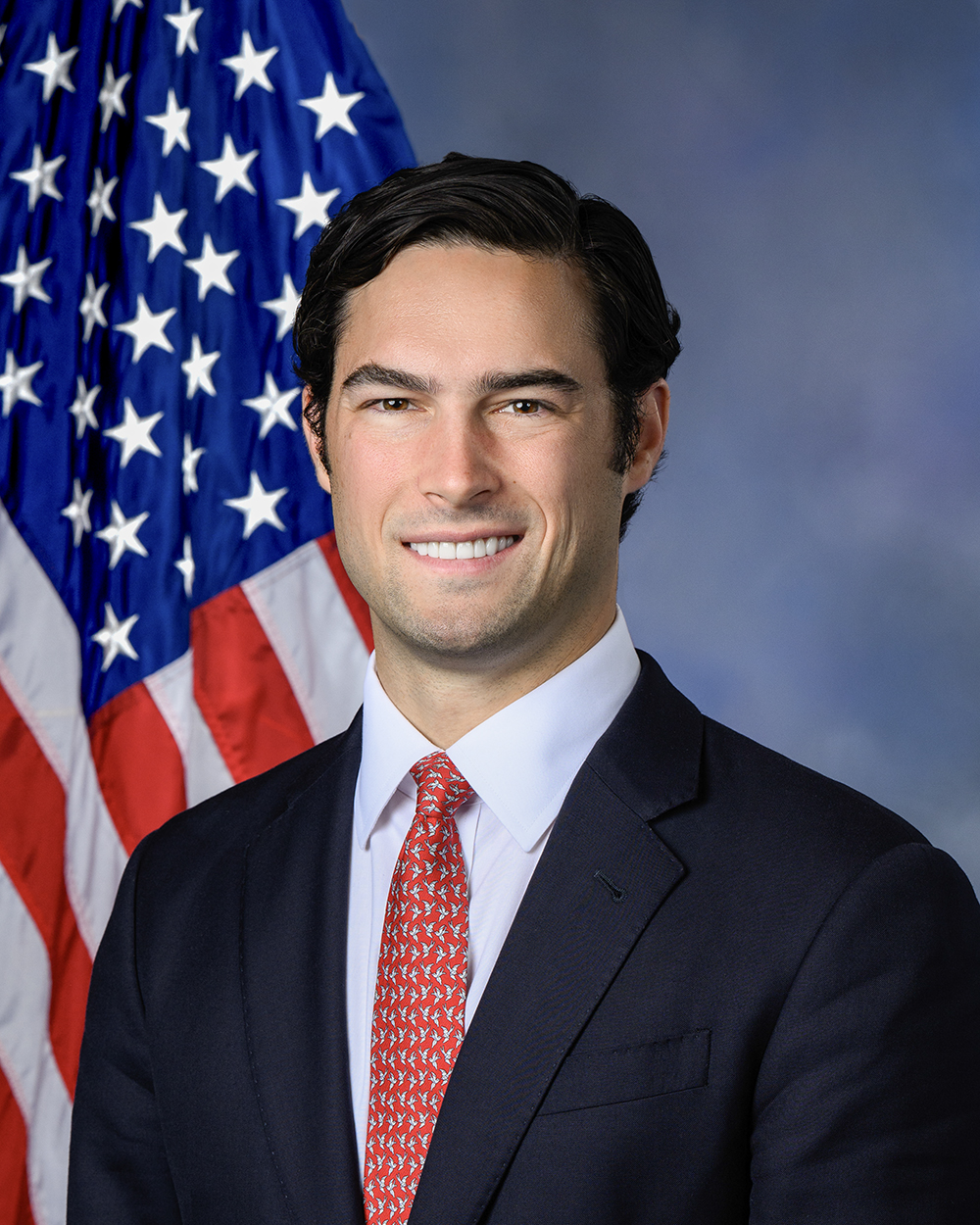
Photo of Brandon Gill
R United States House · District 26 · Texas On the 2026 ballot

Rep. Brandon Gill

Compare
Total votes
650
all sessions
Attendance
98%
12 missed
Near the chamber average
With party
91%
of cast votes
Lower than 92% of chamber peers
Bipartisan score
4%
crosses aisle rarely
Higher than 91% of chamber peers
Sponsored
352
bills & resolutions
Near the chamber average
Committees
9
assignments
352 bills and resolutions

Sponsored bills

Total
352
Primary
26
Co-sponsor
326
This page
352
matching current filters
Co-sponsor HRES 1168
In committee · Oregon House · Co-sponsor
Recognizing U.S. Immigration and Customs Enforcement for their work in protecting communities from violent criminals and illegal aliens.

Maddy summaryThis resolution formally acknowledges the work of U.S. Immigration and Customs Enforcement (ICE) agents in protecting communities from violent criminals and illegal immigrants. It calls on state and local law enforcement to cooperate with federal partners in investigating threats against ICE officers and condemns violence directed at federal law enforcement personnel. The measure also thanks ICE agents for their expanded security roles at airports during a partial government shutdown. As a congressional resolution, it does not change laws or funding but serves as an official statement of support and condemnation of violence.

In committee Apr 14, 2026 1 co-sponsor
Co-sponsor HR 8240
In committee · Oregon House · Co-sponsor
SAFER Act of 2026

Maddy summaryThe SAFER Act of 2026 prohibits U.S. immigration officials from granting asylum to individuals who have returned to their country of nationality or last habitual residence after applying for asylum. The bill also allows for the termination of existing asylum status, denaturalization, and deportation for those who return to their country of concern. Exceptions to these restrictions may be made on a case-by-case basis if the President certifies national security needs or the Secretary of State certifies a legitimate transfer of power in the country. This legislation directly affects asylum seekers and those already granted asylum who travel back to their home countries.

In committee Apr 9, 2026 1 co-sponsor
Co-sponsor HR 8236
In committee · Oregon House · Co-sponsor
Designating Hamas Affiliates in America Act of 2026

Maddy summaryThis bill directs the U.S. Treasury Department to designate the Council on American-Islamic Relations (CAIR) as a Specially Designated Global Terrorist, which would block all U.S. assets belonging to CAIR and its affiliates and prohibit Americans from engaging in any financial transactions with the organization. The legislation also requires the Treasury Secretary to suspend CAIR's tax-exempt status under federal law. These actions are based on provisions in Executive Order 13224 that allow the government to restrict support for designated terrorist organizations. The bill includes a requirement for federal agencies to submit a detailed report to Congress within 30 days explaining the legal criteria used to justify the designation.

In committee Apr 9, 2026 1 co-sponsor
Primary HR 5750
In committee · Oregon House · Lead sponsor
EQUALS Act of 2025

Maddy summaryThe EQUALS Act of 2025 extends the probation period for most federal employees in the competitive service from one year to two years, while setting a one-year probation for preference-eligible employees (such as veterans). It also establishes a two-year "trial period" for employees in the excepted service (e.g., certain security roles), with a one-year period for preference eligibles. The bill requires federal agencies to formally evaluate employees during this period and certify in writing whether continued employment serves the public interest before the probation ends, with specific notice deadlines for employees and supervisors. Exceptions include supervisors, the U.S. Postal Service, and Congress.

In committee Apr 9, 2026 0 co-sponsors
Co-sponsor HR 1071
In committee · Oregon House · Co-sponsor
No Censors on our Shores Act of 2025

Maddy summaryHR 1071, the "No Censors on our Shores Act," amends U.S. immigration law to make certain foreign government officials inadmissible or deportable if they censor U.S. citizens within the United States. Specifically, it targets officials who directly carried out censorship against U.S. citizens in the U.S. that would violate the First Amendment if done by a U.S. official. The bill adds new grounds for inadmissibility (under Section 212(a)(2)(J)) and deportability (under Section 237(a)(2)(G)) based on this censorship. It directly affects foreign government officials whose actions meet this standard, not the general public or U.S. citizens. The law focuses on immigration consequences for foreign officials engaging in speech suppression that would breach First Amendment protections domestically.

In committee Apr 9, 2026 1 co-sponsor
Co-sponsor HR 8112
In committee Mar 26, 2026 1 co-sponsor
Co-sponsor HR 6194
In committee · Oregon House · Co-sponsor
Protecting Americans from Russian Litigation Act of 2025

Maddy summaryHR 6194, the Protecting Americans from Russian Litigation Act of 2025, prevents U.S. persons (individuals or businesses) from facing civil lawsuits in U.S. courts related to complying with U.S. sanctions or export controls. It blocks the enforcement of foreign court judgments or arbitral awards where the claim arose from actions taken to comply with U.S. sanctions, or where foreign courts based jurisdiction on those sanctions. The law requires federal or state courts to dismiss such cases and applies broadly to all U.S. sanctions, not just those targeting Russia. Exceptions include lawsuits related to terrorism, torture, or contractual disputes resolved under U.S. courts or arbitration.

In committee Mar 26, 2026 1 co-sponsor
Co-sponsor HR 8077
In committee · Oregon House · Co-sponsor
287(g) Cooperation Act of 2026

Maddy summaryThis bill, the 287(g) Cooperation Act of 2026, requires state and local law enforcement agencies to sign a formal agreement with the Department of Homeland Security to remain eligible for federal Community Oriented Policing Services grants. The law mandates that agencies must have this written memorandum of agreement in place within 180 days of the bill's enactment, or they will be ineligible to receive funding for the program. The Attorney General and Secretary of Homeland Security must establish procedures to verify that agencies have completed this agreement before approving any grant awards. The changes apply to grant applications starting with fiscal year 2027 and all subsequent years.

In committee Mar 25, 2026 1 co-sponsor
Co-sponsor HR 8064
In committee · Oregon House · Co-sponsor
Career Criminal Accountability Act of 2026

Maddy summaryThis bill creates a federal "three-strikes" sentencing system that mandates longer prison terms for repeat offenders based on the severity of their prior convictions. It directly affects defendants convicted of federal crimes by requiring judges to calculate "strikes" from past misdemeanor and felony convictions, with violent felonies and firearm offenses counting as full strikes while lesser offenses count as partial strikes. Under the new rules, offenders with three or more strikes face consecutive sentences of 10 to life years in prison depending on whether their current offense involves violence or firearms, while preventing enhancements from being triggered solely by misdemeanor convictions. The law also limits how juvenile convictions count toward strike totals and excludes strikes from a single continuous criminal episode to prevent harsh penalties for related crimes committed at once.

In committee Mar 24, 2026 1 co-sponsor
Co-sponsor HR 2409
In committee · Oregon House · Co-sponsor
Guidance Clarity Act of 2025

Maddy summaryThe Guidance Clarity Act requires federal agencies to include a clear statement on all guidance documents, explaining that the guidance does not have the force of law and is not binding on the public or the agency. This statement must be prominently displayed on the first page of the document and specify that it is intended only to clarify existing legal requirements. Agencies must begin using this statement 30 days after the Office of Management and Budget (OMB) issues implementing guidance, which OMB must provide within 90 days of the bill's enactment. The bill directly affects all federal agencies that issue guidance under specific legal authority, ensuring transparency about the non-binding nature of such communications.

In committee Mar 24, 2026 1 co-sponsor
Showing 41 to 50 of 352 bills
Previous 1 4 5 6 36 Next