

Maddy summaryThe FASTER Act of 2026 expands the list of major food allergens regulated by the FDA to include barley, rye, and oats alongside wheat. This change requires food manufacturers to clearly label these gluten-containing grains, helping consumers with allergies and Celiac disease identify potential triggers. The law also mandates that the FDA update its compliance guides within a year to reflect these new allergen categories. Additionally, the bill directs the Department of Health and Human Services to produce a comprehensive report on Celiac disease, covering data on prevalence, diagnostic methods, prevention strategies, and potential treatments. These provisions apply to all foods entering the market starting one year after the law is enacted.
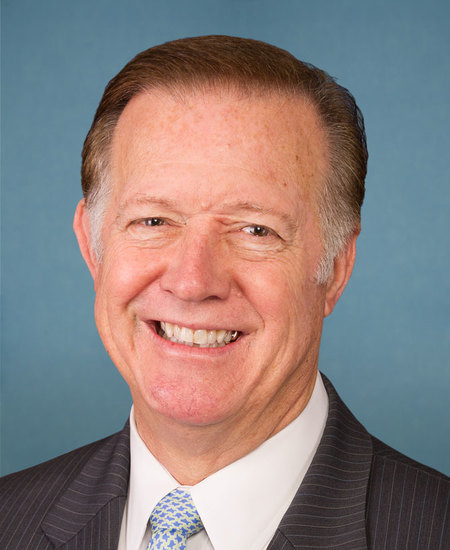
Rep. Randy K. Weber, Sr.
Sponsored bills
Maddy summaryThis bill, known as the Deputy Darren Almendarez Act, adds a new federal crime for knowingly possessing or purchasing catalytic converters removed from vehicles with the intent to sell or distribute them. It directly affects individuals involved in the removal and resale of these parts, as well as businesses like scrap yards and repair shops, by establishing penalties of up to five years in prison and fines of $100,000 for first offenses. The law includes specific exceptions that allow for legal possession or purchase if the converter was removed by a vehicle owner, acquired during official duties by authorized entities, or bought from licensed businesses that follow state and local identification rules. For repeat offenders, the potential prison sentence increases to ten years and the fine limit rises to $200,000.
Maddy summaryThe Stop EU Overreach Act directs the United States Trade Representative to initiate a formal investigation within 30 days of enactment to determine if specific European Union environmental and sustainability regulations unfairly burden American commerce. These targeted measures include rules on corporate sustainability due diligence, reporting, deforestation traceability, and carbon border adjustments that apply to US companies based on their operations or supply chains outside the EU. If the investigation concludes that these foreign practices are unreasonable or discriminatory, the USTR is authorized to take retaliatory actions such as imposing duties on imports from EU member states or suspending trade agreement benefits. The bill includes a sunset provision that terminates its requirements for any specific EU measure once the USTR certifies that the European Union has repealed the rule or entered into a binding agreement to exempt US persons from its extraterritorial obligations.
Maddy summaryThis bill reauthorizes and expands the Accelerating Access to Critical Therapies for ALS Act through 2031, extending funding for research into treatments for amyotrophic lateral sclerosis. It requires drug manufacturers to share interim clinical trial data with the FDA to better assess the progress of investigational drugs and clarifies that phase 3 clinical trial definitions include combined phase 2/3 trials and planned trials not yet enrolling participants. The legislation also mandates the FDA to publish an updated five-year action plan for ALS and other rare neurodegenerative diseases, including resource needs and coordination strategies with broader disease communities. Additionally, the bill requires the Government Accountability Office to submit a report on the program's implementation four years after enactment.
Maddy summaryThe Citizenship Act of 2026 redefines the term "invader" to include individuals who are unlawfully present in the United States or those seeking entry specifically for the purpose of giving birth. Under this legislation, children born in the U.S. to these designated invaders would not be entitled to birthright citizenship if their mothers were not lawfully admitted or if the parents do not meet specific residency requirements. The bill also explicitly excludes children born through commercial surrogacy contracts involving nationals of certain countries from acquiring citizenship. Additionally, the act declares that courts cannot review the President's or Congress's determination that an invasion is occurring.
Maddy summaryThis bill establishes a temporary funding mechanism for the United States Victims of State Sponsored Terrorism Fund by requiring the Treasury Department to loan $3 billion annually to the fund for fiscal years 2027, 2028, and 2029. The borrowed money must be distributed immediately to victims as part of the annual payment and cannot be saved for future use. Interest on these loans will be set by the Treasury based on market rates and will be repaid only from future fines and penalties collected from state sponsors of terrorism after the fund ends. The authority to make these loans expires on September 30, 2029, and the funds are treated as direct spending rather than new appropriations.
Maddy summaryThe Pipeline Safety Authorization Act of 2026 expands federal oversight of gas and hazardous liquid pipelines by clarifying which smaller rural systems are exempt from regulation and raising maximum civil penalties for safety violations to $3.4 million. It requires the Department of Transportation to establish a confidential voluntary information-sharing system where pipeline operators can safely exchange safety data without fear of it being used in enforcement actions or lawsuits. Additionally, the bill mandates that states adopt specific best practices for preventing excavation damage, such as limiting exemptions for utility locates and requiring positive confirmation before digging begins. The legislation also authorizes funding for these safety programs through 2031 and creates a formal hearing process for enforcement cases involving significant financial costs.
Maddy summaryHR 6213, the Heat Workforce Standards Act of 2025, prohibits the U.S. Department of Labor from finalizing, implementing, or enforcing OSHA's proposed "Heat Injury and Illness Prevention" standard (published August 30, 2024). This bill directly blocks the specific regulatory proposal targeting heat safety in both outdoor and indoor work settings. It does not create new requirements or affect workers; it solely prevents the implementation of the existing OSHA proposal. The bill is procedural, focusing on halting a regulatory action rather than establishing new policy.
Maddy summaryHR 2821, the FDA Modernization Act 3.0, requires the FDA to update regulatory language within one year of enactment. It directs the agency to replace all references to "animal tests" with "nonclinical tests" in 22 specific sections of the Code of Federal Regulations related to drug development and approval processes. The bill also adds a definition for "nonclinical test" into relevant FDA regulations to align with prior legislative changes. This update applies directly to pharmaceutical manufacturers and FDA reviewers who follow these regulatory guidelines during drug development. The changes aim to modernize terminology without altering current testing requirements.
Maddy summaryHR 2715, the *Destruction of Hazardous Imports Act*, expands the authority to destroy imported goods that pose public health risks. It amends the Federal Food, Drug, and Cosmetic Act to allow the Secretary of Health and Human Services to order the destruction of any refused import (not just drugs or devices) if it presents a significant health concern. The bill also prohibits the unauthorized movement, sale, or export of such refused goods. These changes apply to importers of hazardous refused articles 180 days after enactment, with the FDA required to finalize implementing regulations within 90 days.