

Maddy summaryThe Packaging and Claims Knowledge Act of 2025 requires companies to ensure that recyclable, compostable, and reusable claims on consumer product packaging are accurate and supported by third-party certification. The bill mandates that recyclable claims must include information about local recycling availability, while compostable claims must be backed by scientific evidence and clearly explain disposal limitations. Companies must also provide actual reuse systems or products for reusable packaging claims, and the Federal Trade Commission will issue guidance on compliance without creating binding regulations.
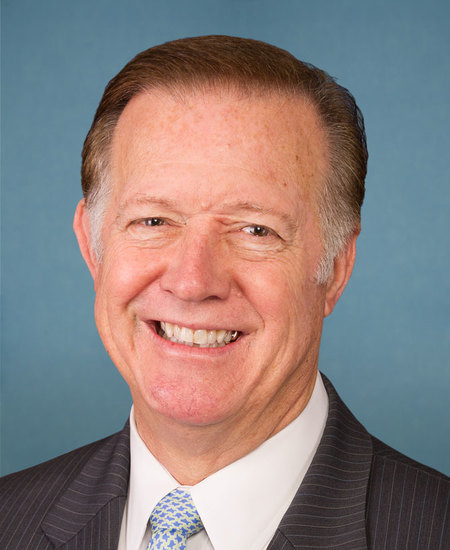
Rep. Randy K. Weber, Sr.
Sponsored bills
Maddy summaryThe Chip EQUIP Act restricts federal funding for semiconductor manufacturing equipment made by foreign entities designated as security concerns (or their subsidiaries). It prohibits the use of such "ineligible" equipment - defined as completed, fully assembled tools like etching, lithography, or inspection machines - in projects receiving federal financial assistance for 10 years. The bill requires federal agreements to include this ban, with limited waivers allowed only if the equipment is unavailable from U.S. or allied sources, was refurbished by a foreign entity of concern but originally made by a non-concern entity, or meets export rules and national security criteria. This directly affects companies receiving federal funds for semiconductor manufacturing facilities.
Maddy summaryHR 6152, the Foreign Robocall Elimination Act, establishes an interagency task force to address foreign robocalls entering the United States. The task force, composed of the FCC, FTC, DOJ, and private sector representatives, will study the origins, impacts, and potential solutions to foreign robocalls and must submit a report to Congress within 360 days. The bill also modifies existing law to require FCC notices about robocall mitigation every three years instead of annually, and introduces a bond requirement for providers using the Robocall Mitigation Database. This legislation affects telecommunications providers, federal agencies, and all U.S. telephone users who receive unwanted calls. The bill aims to improve coordination between U.S. agencies and foreign countries in combating illegal robocalls through concrete policy changes.
Maddy summaryH.Res. 1497 is a House resolution that commemorates the fifth anniversary of the Abbey Gate bombing, in which 13 U.S. servicemembers were killed during the withdrawal from Afghanistan. The bill lists the names of the fallen soldiers and formally condemns the Biden-Harris administration for what it describes as dereliction of duty and the forfeiture of military property to the Taliban. It asserts that the withdrawal was a disastrous failure that ignored security warnings and left Americans at risk, while also criticizing the lack of accountability from officials involved in the decision-making process.
Maddy summaryThe Foreign Propaganda Disclosure Act amends the Foreign Agents Registration Act to explicitly include social media influencers in its regulatory scope. The bill defines a social media influencer as any individual who maintains a monetized account on a social media platform, using an existing definition from the Trafficking Victims Prevention and Protection Reauthorization Act of 2022. By making this addition, the legislation requires these specific digital content creators to comply with the same registration and disclosure obligations currently applied to other foreign agents.
National Law Enforcement Officers Remembrance, Support and Community Outreach Act. [ sic ] This bill temporarily directs the Department of the Interior to award a grant to the National Law Enforcement Officers Memorial Fund for the expenses associated with operating and enhancing the community outreach, public education, and officer safety and wellness programs of the National Law Enforcement Museum.
Maddy summaryThis House resolution formally honors the life and legacy of the late Representative Kay Granger from Texas, recognizing her historic achievements in public service. The bill highlights her roles as the first woman elected mayor of Fort Worth, the first Republican woman to represent Texas in the U.S. House, and the first Republican woman to chair the House Committee on Appropriations. It also acknowledges her contributions to national defense, including her work on the F-35 fighter jet program and the naming of a Navy ship for Fort Worth. The resolution expresses sympathy to Granger's family and directs the Clerk of the House to send an official copy of the document to her loved ones.
Maddy summaryThis joint resolution seeks to overturn a specific Environmental Protection Agency rule that granted California the authority to enforce its own nonroad engine pollution standards for commercial harbor craft. If enacted, the bill would render the EPA’s decision invalid and prevent it from taking effect. The measure directly affects California by removing its ability to impose stricter local emissions regulations on these vessels.
Maddy summaryThis bill proposes to reject a specific rule issued by the Environmental Protection Agency regarding pollution control standards for ocean-going vessels at ports in California. If passed, the measure would use a congressional veto to cancel the rule, preventing it from taking legal effect. The legislation directly impacts the EPA's ability to enforce these specific emission limits and affects shipping companies and ports in California that would have been subject to the new standards.
Maddy summaryThe Right to Worship Act makes it unlawful for individuals to knowingly disrupt religious services or prevent people from entering houses of worship within 100 feet of an entryway during the hour before and after a scheduled service. The bill applies to conduct that meaningfully interferes with a service's normal operation or unreasonably hinders participation, while explicitly allowing free speech as long as it adheres to these specific time, place, and manner restrictions. Violators face escalating civil fines ranging from $2,500 for a first offense to $10,000 for subsequent offenses, assessed by the Attorney General. Additionally, the act permits aggrieved individuals, the U.S. Attorney General, or state attorneys general to file civil lawsuits seeking injunctive relief, compensatory damages, and attorney fees.