

Maddy summaryHR 3492, the Protect Children’s Innocence Act, makes it a federal crime to perform genital or bodily mutilation or chemical castration on minors under 18, except for specific medical reasons. The bill broadly defines prohibited procedures to include gender transition-related surgeries (like hysterectomies or mastectomies) and medical treatments such as puberty blockers or cross-sex hormones administered to minors. It criminalizes these acts when they occur across state lines, involve payments, or use interstate commerce, while explicitly banning religious tradition as a defense. Exceptions include medically necessary procedures for health emergencies, childbirth, or conditions certified by a physician.
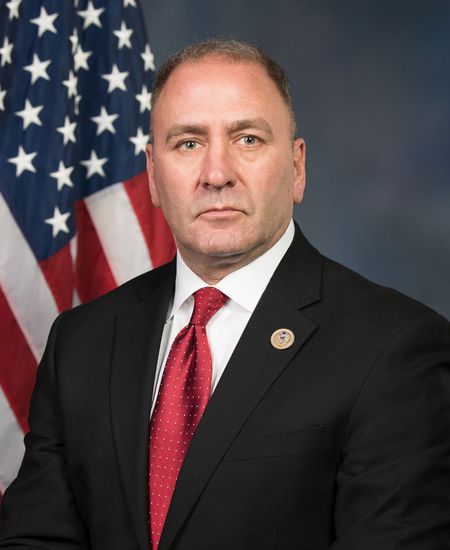
Rep. Clay Higgins
Sponsored bills
Maddy summaryThis bill, the Protecting Ballot Measures From Foreign Influence Act of 2025, bans foreign nationals from contributing money to state and local ballot initiatives and referendums. It amends the Federal Election Campaign Act to explicitly include these state and local voting measures under the existing prohibition on foreign contributions for federal elections. The key provision requires that contributions to ballot measures - like state-level policy votes - must not come from foreign individuals or entities. The law would apply to all contributions made after its enactment date.
Miracle on Ice Congressional Gold Medal Act This act provides for the award of Congressional Gold Medals to the members of the 1980 U.S. Olympic men's ice hockey team in recognition of the team's achievement at the 1980 Winter Olympic Games.
Maddy summaryThe SHIELD Act of 2025 withholds federal funding from states or local governments that arrest, detain, or prosecute federal officers for lawful immigration enforcement actions. It directly affects jurisdictions (like cities or counties) that interfere with federal immigration enforcement, such as by blocking ICE operations. The law requires the Attorney General and DHS to determine violations, then blocks all federal grants and contracts for the affected jurisdiction during the fiscal year. Funding withheld is reallocated to compliant jurisdictions, and restoration requires written assurances that interference will stop.
Maddy summaryHR 6560, the National Flood Insurance Program Automatic Extension Act of 2025, prevents the National Flood Insurance Program (NFIP) from expiring by automatically extending its core operations until the end of the fiscal year following its terminal year, unless Congress passes new legislation. The bill ensures that existing flood insurance policies remain valid, claims continue to be paid, and the program’s administrative functions operate under the same terms and funding levels in effect before the expiration date. It specifically does not extend temporary programs like pilot projects or commissions with fixed termination dates. This procedural bill directly affects FEMA, policyholders, and insurers by maintaining uninterrupted flood insurance coverage without requiring new congressional action for the extension period.
Maddy summaryThis bill amends the Natural Gas Act to give the Federal Energy Regulatory Commission (FERC) exclusive authority to approve U.S. LNG export terminal projects, requiring FERC to deem such exports consistent with the public interest. It directly affects natural gas companies seeking to build or expand export facilities and streamlines FERC's review process by removing prior requirements for interagency coordination. The bill clarifies that FERC's decisions won't override existing sanctions laws, including restrictions on trade with countries designated as state sponsors of terrorism under current law. This change aims to accelerate domestic LNG export projects while maintaining legal safeguards for national security and foreign policy.
Maddy summaryHRES 932 is a symbolic resolution passed by the House of Representatives that condemns six specific members of Congress (including Senators Kelly and Slotkin and Representatives Crow, Deluzio, Goodlander, and Houlahan) for allegedly making statements that encouraged military and intelligence personnel to disobey orders from the President. The resolution claims these lawmakers falsely suggested the administration issued "illegal orders" and undermined the military chain of command, violating the Uniform Code of Military Justice (UCMJ). It does not create new laws or policies but formally denounces the lawmakers' statements as "dangerous and seditious rhetoric." As a procedural resolution, it has no binding effect on military conduct or policy.
Maddy summaryHR 6466, the Forced Abortion Prevention and Accountability Act, prohibits non-consensual administration of abortion drugs (like mifepristone or misoprostol) to pregnant women without their informed consent. It criminalizes this act with penalties up to 25 years in prison and allows victims to sue for triple damages, psychological/physical injury compensation, and attorney fees. The bill directly affects pregnant women who might face coerced procedures and medical providers or others who administer such drugs without consent. Key provisions include criminal penalties for the act itself, enhanced penalties for serious injury or death, and a civil remedy framework for victims seeking compensation.
Maddy summaryHR 6372, the D.C. Shield Law Repeal Act, repeals the Human Rights Sanctuary Amendment Act of 2022 (D.C. Law 24-257), which had modified District of Columbia protections for certain immigrant residents. The bill restores the previous legal framework that existed before the 2022 amendment took effect. This directly affects D.C. law and its implementation regarding immigrant rights within the District.
Maddy summaryThis bill suspends payment limits for agricultural subsidies for the 2025 crop year, removing caps on payments to farmers. It also establishes a new option for farmers to receive 50% of their expected 2025 crop payments as an advance by December 1, 2025, if they opt in. The remaining balance is paid later after the marketing year ends, with farmers required to repay any overpayment if the final amount exceeds the advance. The bill directly affects farmers growing covered commodities (like corn, soybeans) who choose to participate in the advance payment program.