

Give Kids a Chance Act of 2025 This bill expands the Food and Drug Administration’s (FDA’s) authority with respect to research on rare pediatric diseases, including by permitting the FDA to take enforcement action against drug sponsors that fail to satisfy pediatric study requirements and by reauthorizing programs that support pediatric research. Specifically, the bill modifies requirements relating to molecularly targeted pediatric cancer investigations to permit research on new drugs in combination with active ingredients that have already been approved, provided certain conditions are met; permits the FDA to take enforcement action against drug sponsors that fail to comply with pediatric study requirements, if such sponsors demonstrated a lack of due diligence in satisfying the requirement; renews the FDA’s authority to award priority review vouchers to sponsors of new products intended to treat rare pediatric diseases through September 30, 2029; and reauthorizes through FY2027 certain funding for the National Institutes of Health to support priority pediatric research. The bill also provides statutory authority for the FDA’s interpretation of the orphan drug exclusivity period. The bill specifies, consistent with FDA regulations, that the seven-year market exclusivity period for drugs for rare diseases or conditions (i.e., orphan drugs) prohibits the approval of the same drug for the same approved use or indication with respect to the disease or condition. (In Catalyst Pharmaceuticals, Inc. v. Becerra , a court rejected the FDA’s interpretation and held that orphan drug exclusivity extends to all uses or indications for the disease or condition.)
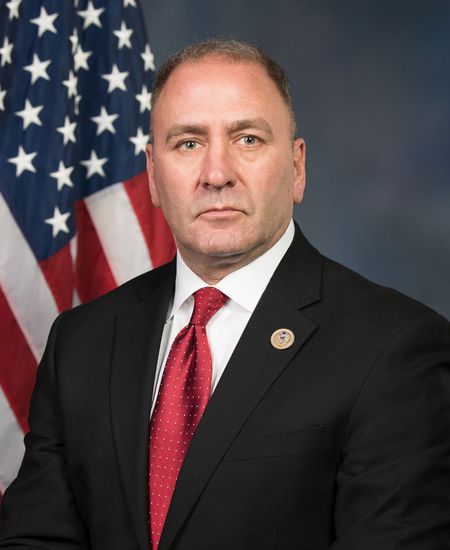
Rep. Clay Higgins
Sponsored bills
Maddy summaryThis bill authorizes Congress to award two gold medals in honor of Charlie Kirk, a conservative activist and founder of Turning Point USA, who was tragically killed in 2025. One medal will go to his family, and the other will be displayed at the Smithsonian Institution to preserve his legacy. The bill does not create new policy or affect any laws - it is purely commemorative, following standard procedures for Congressional Gold Medals. It includes provisions for striking the medals and selling bronze duplicates to cover costs, but contains no substantive legislative changes.
Maddy summaryThis bill prohibits federal funds from being used to cover any abortion-related expenses for individuals classified as "illegal aliens" under immigration law. It specifically blocks taxpayer money from paying for travel, lodging, meals, childcare, translation, doula care, or patient education services connected to abortion access. The law directly affects non-citizens who are inadmissible or deportable under specific immigration statutes (as defined in the Immigration and Nationality Act). It applies to all federal programs and funds, restricting assistance for abortion services beyond the procedure itself.
Maddy summaryHR 5107, the Common-Sense Law Enforcement and Accountability Now in DC Act (CLEAN DC Act), repeals D.C. Law 24-345 (the 2022 Comprehensive Policing and Justice Reform Amendment Act). This bill directly affects Washington, D.C.'s policing and justice systems by reversing all changes made under that 2022 law. The key mechanism is a straightforward repeal, restoring all prior District laws as if the 2022 reform had never been enacted. The bill does not introduce new provisions but undoes existing reforms to the District’s law enforcement framework.
Maddy summaryHR 4070, the Tren de Aragua Border Security Threat Assessment Act, requires the Secretary of Homeland Security to conduct a detailed assessment of the criminal threats posed by the Venezuelan gang Tren de Aragua to U.S. borders within 180 days of the bill's enactment. The assessment must cover the group's origins, methods, funding, and specific threats to the southwest, northern, and maritime borders, followed by a strategic plan within one year outlining how federal, state, and local agencies will counter these threats through information sharing, interdiction, and preventing the group's expansion in the U.S. The bill directly affects DHS, intelligence agencies, and border law enforcement partners by mandating these reports and planning processes.
Maddy summaryThis bill amends Section 2119 of Title 18 (carjacking statute) to clarify the legal definition of the offense. It removes the phrase "with the intent to cause death or serious bodily harm" from the main definition, replacing it with "knowingly," and refines the death penalty provision to specify that death must result from a carjacking taken with the intent to cause death or serious bodily harm. The change streamlines the statute by focusing on the act of taking a vehicle "knowingly" rather than requiring proof of intent to cause harm as a core element. This technical amendment affects how federal prosecutors define and prosecute carjacking cases under existing law.
Maddy summaryThe Protect American Fisheries Act of 2025 amends the Magnuson-Stevens Act to expand the definition of "fishery resource disaster" to include "economic cause." This means U.S. fisheries affected by foreign activities - such as illegal fishing, predatory pricing, or harmful subsidies that distort markets or disrupt sustainable harvests - can now qualify for disaster assistance. The bill requires documentation of how foreign actors' actions specifically harm U.S. fishing communities' operational or economic viability. It directly affects U.S. commercial and recreational fisheries facing market disruptions from foreign entities, enabling them to access federal aid previously limited to natural or anthropogenic disasters.
Maddy summaryHR 1514 establishes the Mississippi River Basin Fishery Commission within the Department of the Interior to coordinate management of interjurisdictional fisheries across 31 U.S. states, two Canadian provinces, federal agencies, and tribal nations. The Commission oversees six sub-basin management plans, develops strategies to control invasive carp (like bighead and silver carp), and administers grant programs for conservation projects. It provides $30 million annually (2027-2029) and $50 million annually (2030-2032) to fund collaborative efforts, with grants prioritizing projects aligned with the existing MICRA Joint Strategic Plan. The Commission’s authority is nonbinding, requiring consensus among member entities but not overriding state or federal management laws.
Maddy summaryHRES 888 is a proposed resolution to formally censure and condemn Delegate Stacey Plaskett for coordinating with Jeffrey Epstein, a convicted sex offender, during a February 2019 congressional hearing. The resolution claims Plaskett received real-time text messages from Epstein with instructions on her questioning during the hearing. If passed, the resolution would remove Plaskett from the House Permanent Select Committee on Intelligence and direct the Committee on Ethics to investigate her ties to Epstein. This action directly affects Plaskett, the Delegate from the U.S. Virgin Islands, and addresses alleged misconduct during official congressional proceedings.
Maddy summaryThis bill amends the Immigration and Nationality Act to add new grounds for deporting non-citizens. It makes any non-citizen deportable if they have been convicted of a felony or two misdemeanors (under either state or federal law) after entering the United States. The key provision expands deportation eligibility beyond previous standards by explicitly including state misdemeanor convictions alongside federal offenses. This change directly affects non-citizens with specific criminal records, potentially increasing deportation risks for those with certain convictions. The policy alters the legal standard for removal but does not change sentencing or enforcement procedures.