

Maddy summaryHR 7432, the Foster Youth Housing Opportunity Act, improves housing access for foster youth aged 18 to 26 who are aging out of care. It amends federal law to explicitly include "access to housing" in support services, allowing states to use existing funds for housing-related supportive services like financial counseling, lease assistance, and help with security deposits. The bill also requires the Health and Human Services and Housing and Urban Development departments to create joint guidance within a year to coordinate housing programs and child welfare services. States must report to Congress within three years on outcomes like stable housing rates and homelessness reduction for these youth. The law takes effect one year after enactment.
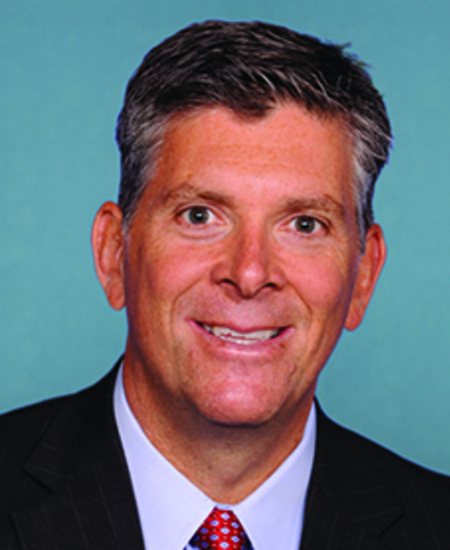
Rep. Darin LaHood
Sponsored bills
Maddy summaryThe Rural MOMS Act of 2026 modifies how Medicare counts hospital beds, specifically excluding labor and delivery rooms from the total number of acute care inpatient beds used to determine if a facility qualifies as a Critical Access Hospital. This change directly affects rural hospitals that provide maternity services by altering the financial thresholds required to maintain their special status under the Medicare program. By removing delivery rooms from the bed count calculation, the bill aims to prevent these facilities from losing their designation solely because they offer childbirth care. The legislation does not change how these hospitals are funded or operated, but rather adjusts the metric used to evaluate their eligibility for critical access benefits.
Nationwide Consumer and Fuel Retailer Choice Act of 2025 This bill amends the Clean Air Act to address the limitations on Reid Vapor Pressure (a measure of gasoline's volatility) that are placed on gasoline during the summer ozone season. Specifically, the bill applies the waiver for Reid Vapor Pressure requirements that is applicable to gasoline blended with 10% ethanol (E10) to gasoline blended with up to 15% ethanol (E15). This change allows gasoline that is blended with 10% to 15% ethanol to be sold year-round. Currently, states may be excluded from the waiver for Reid Vapor Pressure requirements by submitting documentation supporting that the waiver would increase air pollution. The bill nullifies existing state exclusions, but states may submit documentation after enactment of the bill to be excluded going forward. The bill also modifies the Renewable Fuel Standard Program, which requires transportation fuel sold or introduced into commerce in the United States to contain minimum volumes of renewable fuel. Under the existing program, obligated parties, such as small refineries, must satisfy the volume obligations by either blending renewable fuels into their gasoline or diesel fuel products or by acquiring credits that represent the required renewable fuel volume. The bill directs the Environmental Protection Agency to return compliance credits to small refineries under certain circumstances.
Maddy summaryThe Fresh Starts for Foster Youth Act amends the John H. Chafee Foster Care Program to require states to provide legal counseling access for youth aging out of foster care, directly affecting current and former foster youth aged 18-21 transitioning to adulthood. Key provisions mandate that states certify their case planning processes address legal barriers impacting housing, education, employment, and family connections - such as court records, custody issues, and family relationship recognition. This ensures foster care systems proactively help youth navigate legal challenges during their transition to independence. The law applies to state plans approved one year after enactment, requiring states to integrate legal support into their transition services. It does not change funding but adds specific requirements for how states must address legal obstacles for foster youth.
Maddy summaryThis bill expands Medicaid coverage to include services in assisted living facilities for individuals who currently require hospital or nursing home care, provided they meet state income and resource limits. It also modifies the Low-Income Housing Tax Credit to give priority funding to projects that help reduce long-term medical costs for the elderly by offering care in non-institutional settings. Both changes are scheduled to take effect on January 1, 2027, allowing states time to update their laws and plans to comply with the new requirements.
Maddy summaryHR 2424, the Modern, Clean, and Safe Trucks Act of 2025, repeals a 12% federal excise tax on new heavy trucks, tractors, and trailers. This tax currently adds significant costs - $7,000+ for trailers, $20,000+ for clean diesel trucks, and up to $50,000 for advanced technology trucks - discouraging replacement of older, less efficient vehicles. The bill directly affects truck manufacturers, dealers, and fleet operators by removing this cost barrier, making newer, cleaner models more affordable. It aims to accelerate the adoption of modern trucks with improved safety and environmental features, particularly benefiting electric and alternative-fuel vehicles that face higher upfront costs.
Clergy Act This bill establishes a two-year window for certain members of the clergy and Christian Science practitioners to revoke their exemption from Social Security and Medicare taxes on ministerial earnings. Under current law, such individuals who object to participation in public insurance programs on religious or conscientious grounds may apply to the Internal Revenue Service (IRS) for an irrevocable exemption and will not receive Social Security or Medicare benefits in retirement unless they have qualifying credits from other employment. The IRS must develop a plan to inform members of the clergy and Christian Science practitioners of their eligibility to revoke prior exemptions, pursuant to the bill's changes.
Maddy summaryThe Supporting Energy and Economic Development (SEED) Act extends tax credits for biodiesel and renewable diesel production through 2029. It prevents taxpayers from receiving both the production credit and the fuel use credit for the same fuel, ensuring only one benefit is claimed. These changes apply to fuel sold or used after the bill becomes law.
Maddy summaryThis bill establishes a framework to protect American-owned closed-source AI models from unauthorized extraction by foreign entities, particularly those from China and Russia. It requires the Secretary of State to conduct assessments identifying which foreign entities are conducting model extraction attacks or facilitating them through fraudulent account networks, then publish a public list of these actors for up to five years. The legislation authorizes the President to impose economic sanctions on identified entities and their affiliates, while also creating mechanisms for industry coordination and sharing information about threats. Importantly, the bill distinguishes between legitimate AI research conducted under contractual terms and unauthorized extraction attempts that bypass access controls or violate usage agreements.
Stop Stealing our Chips Act This bill creates a whistleblower incentive program and establishes whistleblower protections for individuals who provide information to the Department of Commerce's Bureau of Industry and Security (BIS) related to violations of U.S. export control laws. Currently, BIS administers and enforces controls on the export of dual-use goods (e.g., items with both civilian and military uses) and certain military parts and components. These export controls are implemented primarily under the Export Control Reform Act of 2018 (ECRA) through the Export Administration Regulations. Under the bill, BIS must establish a whistleblower incentive program to reward individuals who voluntarily report original information that results in BIS (1) imposing fines under ECRA on persons that violate, attempt to violate, conspire to violate, or cause a violation of ECRA or any related regulation, order, license, or authorization; or (2) requiring the forfeiture of property that results in net proceeds. Additionally, BIS must establish a secure online portal for whistleblowers to report violations of ECRA. The bill outlines requirements for BIS to review, investigate, and provide status updates related to these reports. The bill requires BIS to pay an award to certain whistleblowers who voluntarily reported original information that led to the imposition of a fine under ECRA. The bill establishes the Export Compliance Accountability Fund for paying these awards and funding related activities. The bill also sets forth whistleblower protections by (1) prohibiting employers from impeding communication or retaliating against individuals who act as whistleblowers, and (2) establishing confidentiality requirements.