This resolution supports the recognition of Distracted Driving Awareness Month. The resolution also supports the efforts of the Department of Transportation, state and local governments, and state and local law enforcement to prevent and stop distracted driving.
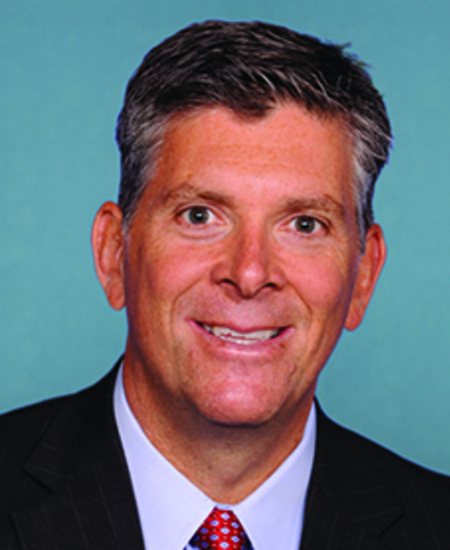
Rep. Darin LaHood
Sponsored bills
Maddy summaryHR 8295, the Protecting Families from Fertility Fraud Act of 2026, creates a new federal crime for knowingly misrepresenting the nature or source of DNA used in assisted reproductive technology or assisted insemination. This directly affects fertility clinics, practitioners, and patients undergoing such procedures. Individuals found guilty could face up to 10 years in prison, a fine, or both. The bill defines federal jurisdiction for these offenses, primarily involving interstate commerce, and extends the statute of limitations to 10 years after identification through DNA testing. It also adds this new crime to the list of "racketeering activities" under federal law.
Maddy summaryThis resolution designates the week of April 20 through April 24, 2026, as National Home Visiting Week to raise awareness about home visiting programs that support families. The bill does not create new funding or change existing laws, but instead formally recognizes the importance of these services that help parents, promote healthy child development, and strengthen family relationships. It highlights statistics showing that over 284,000 families received home visiting services in 2024, with more than 20,000 home visitors providing support nationwide. The resolution serves as a commemorative measure to acknowledge the role of home visitors in providing practical, emotional, and educational assistance to families across the United States.
Maddy summaryThis bill, titled the Ensuring Better Interest Treatment and Deductibility Act, would change how businesses calculate the limit on interest expenses they can deduct on their taxes. It directly affects corporations and other businesses that pay interest on loans by modifying the rules for determining adjusted taxable income. The key provision removes a specific clause from the tax code that currently limits how much interest can be deducted based on a company's earnings, effectively allowing more interest to be treated as a deductible business expense. These changes would apply to tax years starting after December 31, 2025, meaning businesses would need to adjust their financial planning for future tax filings.
Maddy summaryThis bill requires fertilizer manufacturers and wholesalers to report weekly prices and quantities of nitrogen, phosphorus, potassium, and fertilizer products to the U.S. Department of Agriculture. The reporting must distinguish between domestic and foreign sources while exempting agricultural cooperatives and non-manufacturer retailers from mandatory requirements, though they may voluntarily provide data. The Secretary of Agriculture will make this information publicly available on a weekly basis through a dashboard that aggregates data to protect confidential business details. A separate retail survey program will supplement manufacturer reports with regional price estimates, and the Secretary must review reporting requirements every two years to ensure they remain accurate. The legislation explicitly states that these reporting requirements do not override existing antitrust laws.
Maddy summaryHR 3447, the Chip Security Act, requires manufacturers to equip specific advanced integrated circuits (classified under export control numbers like 3A090) with security mechanisms before exporting them. These mechanisms must verify location and prevent unauthorized access, diversion, or tampering. The law mandates this for covered chips within 180 days of enactment, with a follow-up assessment within one year to develop additional security requirements. It directly affects U.S. chip exporters and importers of these high-tech products, aiming to strengthen export control compliance and national security.
Maddy summaryThis resolution expresses support for designating the week of March 22 through March 28, 2026, as National Cleaning Week. It directly affects the cleaning industry, frontline workers, and the general public by formally recognizing the importance of routine cleaning for public health and safety. The bill highlights findings that proper cleaning reduces virus transmission and acknowledges the essential services provided by cleaning professionals in schools, hospitals, and workplaces. It does not create new laws or funding but serves as a symbolic gesture to promote awareness of hygiene practices.
Maddy summaryThis bill directs the U.S. Trade Representative to investigate whether Canada's Online Streaming Act unfairly targets American streaming companies by imposing discriminatory taxes and content requirements. It authorizes the Trade Representative to consult with affected U.S. businesses and trade partners, then potentially take retaliatory trade actions if Canada does not amend the measures. The legislation also requires regular reporting to Congress on Canada's implementation of these policies and extends similar investigative powers to other countries with comparable digital trade restrictions.
Maddy summaryHR 5688, the Non-Domiciled CDL Integrity Act, changes rules for issuing commercial driver's licenses (CDLs) to people who don't live in the state where the license is issued. It allows states to issue CDLs to foreign nationals with lawful U.S. immigration status and work-related visas (valid for up to one year or until their stay ends), requiring states to verify status before issuing and keep records for two years. For residents of U.S. territories like Puerto Rico, it requires proof of U.S. citizenship or permanent residency before issuing CDLs, with similar verification and record-keeping rules. The bill directly affects commercial drivers from foreign countries and U.S. territories seeking CDLs in states where they are not residents.
Enhanced Iran Sanctions Act of 2025 This bill imposes sanctions on certain foreign persons (individuals and entities) that are involved in Iran's petroleum sector as well as certain associated persons. The bill also requires or authorizes actions to facilitate the enforcement of sanctions on Iran. Specifically, the bill requires the President to impose visa- and property-blocking sanctions on any foreign person that, after the bill's enactment, knowingly engages in any transaction related to the processing, export, or sale of oil, condensates, gas, liquefied natural gas, or other petrochemical products in whole or in part from Iran. The President must also impose sanctions on certain foreign persons associated with a sanctioned individual or entity. For example, the President must sanction the subsidiaries and corporate officers of a sanctioned business. The bill provides certain exceptions to these sanctions, including specifying that sanctions do not apply to the importation of goods or to conducting or facilitating transactions for humanitarian assistance. The Department of State must establish an interagency working group that shall seek to establish a multilateral contact group to coordinate international efforts to enforce sanctions on Iran. The bill expands the State Department rewards program to authorize a reward payment to any individual who furnishes information leading to the identification of a person (1) subject to sanctions under this bill, or (2) that has attempted or is attempting to evade sanctions under this bill.