

Repealing Big Brother Overreach Act This bill repeals the Corporate Transparency Act. The act requires existing companies and newly created companies to report beneficial ownership information to the Department of the Treasury’s Financial Crimes Enforcement Network for purposes of addressing the financing of terrorism and money laundering.
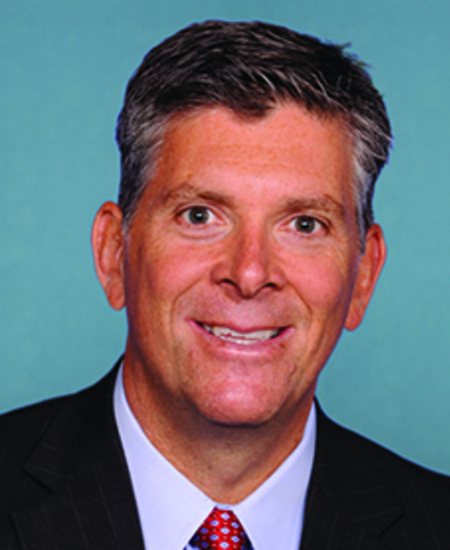
Rep. Darin LaHood
Sponsored bills
Maddy summaryHR 1468 establishes a new "CCP Initiative" within the Department of Justice's National Security Division to counter threats from the Chinese Communist Party. The initiative specifically targets intellectual property theft, economic espionage, and unauthorized technology transfers by Chinese entities, focusing on protecting U.S. businesses, academic institutions, and critical infrastructure. Key mechanisms include developing enforcement strategies, prioritizing cases involving trade secret theft and hacking, and requiring annual congressional reports on progress, resource use, and economic impacts. The initiative is designed to operate separately from other DOJ programs and will expire six years after enactment.
Maddy summaryThis resolution expresses the House of Representatives' opposition to foreign countries imposing digital services taxes that discriminate against U.S. companies. It highlights that these taxes unfairly target gross revenues rather than actual profits and penalize businesses that do not have a physical presence in the taxing country. The bill calls on other nations to repeal such measures and engage in fair trade negotiations based on international tax principles. Additionally, it supports the use of trade tools like Section 301 investigations to protect American businesses from these discriminatory practices.
Maddy summaryThis bill expands tax-advantaged financing options for small businesses and farmers by updating the rules for qualified small issue bonds. It allows these bonds to fund the creation of intangible property like software, alongside traditional manufacturing, and raises the borrowing limits for eligible projects from $10 million to $30 million. Additionally, the legislation increases the maximum loan amount for first-time farmers from $450,000 to $1 million and adjusts the calculation for farm size eligibility to use an average rather than a median. These changes are designed to provide more accessible funding for a broader range of agricultural and manufacturing initiatives while including automatic inflation adjustments for future years.
Maddy summaryHR 1041, the Veterans 2nd Amendment Protection Act, prevents the Department of Veterans Affairs (VA) from automatically sending veterans' personal information to the national background check system (NICS) solely because a court has appointed a fiduciary (like a guardian) to manage their benefits. This directly affects veterans who have a fiduciary appointed due to mental health or cognitive challenges but are not deemed a danger to themselves or others. The bill requires a court order finding the veteran poses a danger before any such information can be shared with the NICS. It changes VA procedures to block unnecessary barriers to firearm ownership for veterans who qualify for fiduciary support without a judicial determination of danger.
Maddy summaryThe Rental Housing Investment Act provides tax incentives to encourage the development of new long-term residential rental properties in the United States. It allows developers to take an accelerated depreciation deduction of up to $150,000 per unit for buildings containing at least two dwelling units, with an increased limit of $250,000 per unit for projects designated as affordable housing. To ensure these properties remain available for rent, the bill includes rules that require the buildings to be used for rental purposes for at least 10 years, or 15 years for affordable housing, before the tax benefits are recaptured. These changes apply to properties placed in service after a 12-month delay following the law's enactment.
Maddy summaryThis bill, the Provider Reimbursement Stability Act of 2026, aims to create more predictable payment adjustments for physicians and other healthcare providers under the Medicare program. It directly affects medical practices and providers who receive reimbursement for services through the physician fee schedule. The legislation increases a threshold for certain budget neutrality calculations from $20 million to $54.3 million in 2027, with automatic increases every five years thereafter. It also requires the government to correct payment estimates when actual service usage differs significantly from projections, mandates regular updates to cost calculations for practice expenses, and limits how much Medicare payment rates can change from year to year to a maximum of 2.5 percent.
Maddy summaryThis bill would add pharmacist services to Medicare Part B coverage for beneficiaries, specifically covering pharmacist-led testing and treatment for illnesses like flu, COVID-19, or strep throat during public health emergencies. It defines covered services as those performed under state law, often requiring collaboration with a physician, and sets payment at 80% of the lesser of the actual charge or 85% of physician payment rates. Pharmacists would be prohibited from balance billing for these services, ensuring Medicare beneficiaries pay only their standard copayment. The changes would take effect January 1, 2026.
Maddy summaryThe Smithsonian American Women’s History Museum Act authorizes the creation of a new Smithsonian museum dedicated to women’s history, to be located within the National Mall Reserve in Washington, D.C. If the site is managed by another federal agency, the bill requires that agency to transfer the land after notifying Congress and relevant committees. The museum must ensure exhibits and programs accurately represent diverse women’s experiences by consulting a broad range of experts and community voices. The Smithsonian will submit biennial reports to Congress detailing how the museum meets these representation standards.
Maddy summaryThe Dietary Supplements Access Act allows individuals to use funds from specific tax-advantaged health accounts to purchase dietary supplements without paying income taxes on those withdrawals. This legislation directly affects holders of Health Savings Accounts, Archer Medical Savings Accounts, and Health Flexible Spending Arrangements by permitting up to $500 per year in tax-free spending on these products, with a lower limit of $250 for married couples filing separately. The bill explicitly defines dietary supplements according to federal law but excludes energy drinks, soft drinks, and sodas from this benefit. These tax advantages will only become effective for expenses incurred after December 31, 2025.