

Save Our Sequoias Act This bill provides for the conservation of giant sequoia trees ( Sequoiadendron giganteum ) in California. Specifically, it provides statutory authority for the Giant Sequoia Lands Coalition and outlines the coalition's duties. The coalition must submit a Giant Sequoia Health and Resiliency Assessment and annually update it. The information from the assessment must be made available so the information can be integrated into certain other plans. The coalition must also create and maintain a website that contains the assessment, educational materials, searchable information about individual giant sequoia groves, and a searchable database to track the status and costs of reforestation and rehabilitation activities. In addition, the bill declares an emergency on certain public lands and allows officials to carry out protection plans during the emergency to respond to the threat of wildfires, insects, and drought. The emergency expires after seven years. The Department of the Interior must develop and implement a Giant Sequoia Reforestation and Rehabilitation Strategy. Finally, the bill establishes a variety of programs and funds to support the conservation of giant sequoias.
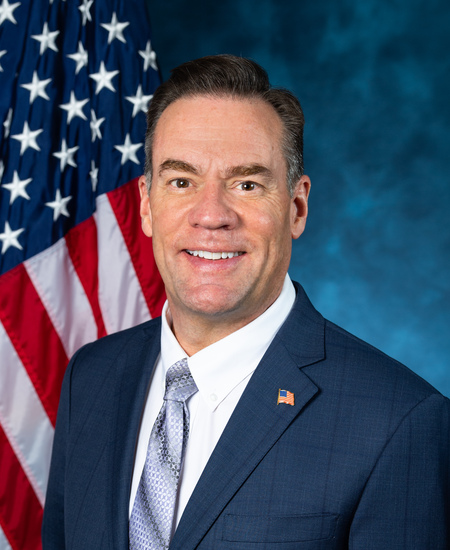
Rep. Russ Fulcher
Sponsored bills
Maddy summaryThis bill, titled the American Families First Assistance Act, would restrict eligibility for Temporary Assistance for Needy Families (TANF) benefits for most aliens in the United States. It directly affects non-citizen immigrants by removing their ability to receive federal cash assistance for low-income families under the existing welfare program. The key provision amends the Personal Responsibility and Work Opportunity Reconciliation Act of 1996 to disqualify qualified aliens from TANF block grants, with specific exceptions for certain categories of immigrants including nationals of Cuba. This change would limit access to financial support for families with children who are not U.S. citizens or lawful permanent residents.
Maddy summaryH.J. Res. 151 seeks to block a Bureau of Land Management (BLM) rule that established management guidelines for Utah's Grand Staircase-Escalante National Monument. The resolution, introduced in March 2026, uses the Congressional Review Act to request Congress disapprove the rule, which was issued in January 2025 and submitted for review. If enacted, the resolution would prevent the rule from taking effect, meaning the BLM would not be required to follow the specific management plan outlined in that rule. This action directly affects the monument's management, as the rule governed activities like land use and conservation within the protected area.
Maddy summaryThe Stop Illegal Alien Cops Act amends federal law to modify exemptions for government entities regarding firearms. Currently, federal, state, and local government agencies are generally exempt from many federal prohibitions when acquiring or supplying firearms for official use. This bill would remove that exemption for specific prohibitions, making it unlawful for government entities to provide firearms to or employ individuals who are unlawfully in the United States. Additionally, the bill removes the
Respect State Housing Laws Act This bill eliminates a provision that requires a 30-day notice period before a landlord may begin eviction proceedings against a tenant in federally assisted or federally backed housing.
Protection of Women in Olympic and Amateur Sports Act This bill requires certified national governing bodies (NGBs) of amateur sports (e.g., USA Gymnastics) to prohibit a person whose sex is male from participating in an amateur athletic competition that is designated for females, women, or girls. Under the bill, male means an individual who has, had, will have—or would have, but for a developmental or genetic anomaly or historical accident—the reproductive system that at some point produces, transports, and utilizes sperm for fertilization.
Maddy summaryThis bill authorizes the U.S. Mint to produce two types of commemorative $2.50 coins for the 250th anniversary of the Declaration of Independence: a circulating coin for everyday use and a numismatic (collector) coin. Both would feature designs based on the 1926 Sesquicentennial coin - showing allegorical liberty holding the Declaration on one side and Independence Hall on the other - with "1776-2026" inscriptions. The bill requires the Mint to issue these coins by July 4, 2026, if technically and economically feasible, but does not mandate their production or affect any specific groups beyond the public who may purchase them.
Maddy summaryThis bill amends the tax code to allow first-time homebuyers to use funds from 529 college savings plans for home purchases without tax penalties, under specific conditions. It permits tax-free withdrawals of the original contributions (plus earnings) if the account was maintained for 15 years, the funds are used within 60 days for a first home purchase, and the total lifetime withdrawals do not exceed $35,000. If the home is sold within 5 years, a recapture tax may apply based on the time held. It directly affects first-time homebuyers who have maintained 529 plans for 15 years and use the funds for qualifying home purchases.
Maddy summaryThe LASSO Act requires 10% of annual revenue generated from public lands managed by the Interior Department and Agriculture Department (including national forests and Outer Continental Shelf areas) to be deposited into the Social Security Trust Fund. This directly affects the Social Security Trust Fund by increasing its funding, while ensuring no fee hikes for public land activities or reductions in funds for states, tribes, or local governments. The bill mandates this transfer annually without altering existing revenue-sharing agreements or pricing structures. It aims to bolster Social Security finances through a specific, measurable mechanism tied to federal land management.
Maddy summaryThis bill prevents state or local governments from banning or restricting energy connections (like installation, modification, or access) based on the type or source of energy, such as electricity, natural gas, or renewable fuels. It directly affects consumers choosing energy providers and energy companies seeking to offer services. The key provision prohibits local laws, regulations, or policies that limit energy services sold in interstate commerce, covering all energy types listed in the bill’s definitions. It does not create new programs but limits regulatory authority at the state or local level. The law aims to ensure open access to diverse energy sources without source-based restrictions.