

Save Our Sequoias Act This bill provides for the conservation of giant sequoia trees ( Sequoiadendron giganteum ) in California. Specifically, it provides statutory authority for the Giant Sequoia Lands Coalition and outlines the coalition's duties. The coalition must submit a Giant Sequoia Health and Resiliency Assessment and annually update it. The information from the assessment must be made available so the information can be integrated into certain other plans. The coalition must also create and maintain a website that contains the assessment, educational materials, searchable information about individual giant sequoia groves, and a searchable database to track the status and costs of reforestation and rehabilitation activities. In addition, the bill declares an emergency on certain public lands and allows officials to carry out protection plans during the emergency to respond to the threat of wildfires, insects, and drought. The emergency expires after seven years. The Department of the Interior must develop and implement a Giant Sequoia Reforestation and Rehabilitation Strategy. Finally, the bill establishes a variety of programs and funds to support the conservation of giant sequoias.
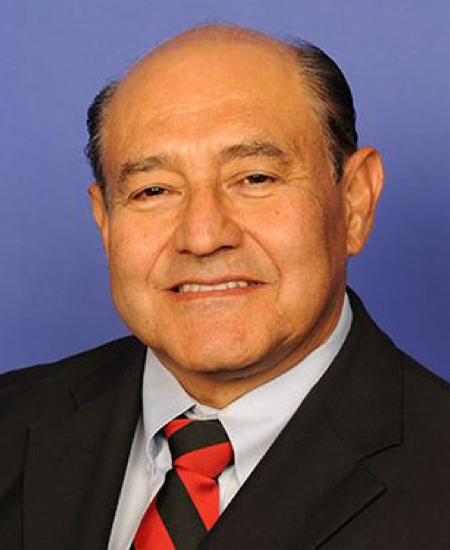
Rep. J. Luis Correa
Sponsored bills
Maddy summaryThe VALOR Act (HR 7598) ensures veterans with pending disability claims don't pay unnecessary housing loan fees. It requires the VA to refund or credit fees paid by veterans who later have their disability claims approved. Specifically, if a veteran pays a housing loan fee before their disability claim is decided and the claim is approved after payment, the VA must reimburse the fee amount. This directly affects veterans applying for VA-guaranteed home loans while awaiting disability compensation decisions. The bill creates a clear, automatic reimbursement process without requiring veterans to file separate claims for refunds.
Maddy summaryHRES 1110 is a non-binding House resolution expressing the U.S. House of Representatives' disapproval of the slaughter of dogs and cats for human consumption and urging Japan to enact a nationwide ban. It references the U.S. 2018 ban on this practice (under the Agriculture Improvement Act) and notes similar bans in South Korea, Taiwan, and cities like Shenzhen and Jakarta. The resolution affirms shared U.S.-Japan values on animal welfare, encourages bilateral cooperation on animal rights, and clarifies it does not interfere with protected cultural or religious practices. As a symbolic diplomatic statement, it has no legal force but aims to influence Japan’s policies on animal welfare.
This concurrent resolution directs the President to terminate the use of U.S. Armed Forces from hostilities against Iran or any part of the Iranian government or military unless a declaration of war or authorization to use military force for such purpose has been enacted. The resolution specifies that it shall not be construed to prevent the United States from defending itself from imminent attack.
Maddy summaryHRES 1107 is a House resolution urging the President to issue a proclamation flying the U.S. flag at half-staff to honor Rev. Jesse Jackson. The resolution recognizes his civil rights leadership, including founding the Rainbow PUSH Coalition and his presidential campaigns in 1984 and 1988, which advanced racial equality and economic justice. This symbolic gesture directly affects the President (as the one who would issue the proclamation) and the public, who would observe the flag at half-staff.
Maddy summaryThis bill creates a business tax credit for companies that purchase zero-emission electric lawn, garden, and landscaping equipment. The credit equals 40 percent of the equipment's cost, with annual limits of $25,000 and a ten-year aggregate cap of $100,000 per business. Eligible equipment includes electric-powered mowers, trimmers, and other landscaping tools powered by solar, batteries, fuel cells, or grid electricity, as well as batteries and generators used to power them. The credit applies to equipment placed in service after December 31, 2024, and expires five years after the bill is enacted.
Maddy summaryThis bill establishes the Red Star Service Banner as an officially recognized symbol to honor U.S. service members and veterans who died by suicide, as well as first responders who died by suicide. The banner features a white field with a blue border and a single red star, and it may be displayed at private residences, workplaces, public buildings, community spaces, and other appropriate locations to recognize the sacrifice of those who died and support their families. The legislation clarifies that displaying the banner does not create new eligibility for benefits, requires VA approval for individual display, or establish any legal status beyond recognition. It also allows the Secretary of Veterans Affairs to promote awareness of the banner in coordination with the Department of Defense without requiring additional funding.
Maddy summaryThis bill, known as the Direct File Act of 2026, would establish a government-run online system allowing taxpayers to prepare and file their individual income tax returns for free. The legislation prohibits the Treasury Department from entering into agreements that restrict its ability to provide tax preparation or filing services, and it voids any existing contracts with such restrictions. The program would use IRS data to simplify filing, include customer support, be available in multiple languages, and allow users to file even if they are not required to. It also enables taxpayers in participating states to file state and local returns alongside their federal returns, with funding provided to states that meet certain standards.
Maddy summaryThis bill updates administrative procedures for the Public Safety Officers' Benefits Program to speed up claim processing and expand disability coverage. It requires the Bureau of Justice Assistance to notify claimants about missing information within 90 days and issue interim payments if claims aren't resolved within 270 days, while also mandating annual audits of backlogged claims. The legislation adds benefits for permanent partial disabilities that prevent officers from working in their previous capacity and creates a faster approval process for claims supported by World Trade Center health certifications.
Law-Enforcement Innovate to De-Escalate Act This bill removes less-than-lethal projectile devices (e.g., certain TASERs) from regulation under the Gun Control Act. The term less-than-lethal projectile device means a device that (1) is not designed or intended to expel (and may not be readily converted to discharge) commonly used ammunition or projectiles exceeding a velocity of 500 feet per second; (2) is designed and intended to be used in a manner not likely to cause death or serious bodily injury; and (3) does not accept (and cannot be readily modified to accept) an ammunition feeding device. The bill also requires the Bureau of Alcohol, Tobacco, Firearms and Explosives to determine whether a device satisfies the definition of a less-than-lethal projectile device within 90 days of a request.