

Maddy summaryHRES 971 is a non-binding resolution condemning China's economic and military actions against Japan following Japanese officials' comments about Taiwan. It specifically addresses China's travel advisory (causing $1.2 billion in tourism losses), a ban on Japanese seafood imports, and military drills near Japanese territory. The resolution reaffirms U.S. support for the U.S.-Japan alliance under their mutual security treaty and calls on China to cease coercion. It emphasizes U.S. commitment to upholding a "free and open Indo-Pacific" based on international law. This resolution directly affects Japan's economy and security, with no new legal obligations but serving as a formal U.S. policy statement.
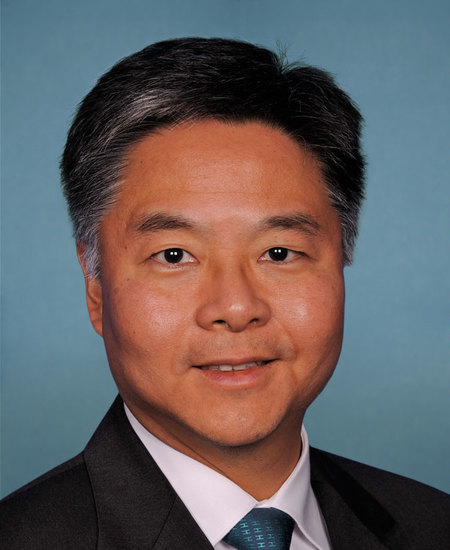
Rep. Ted Lieu
Sponsored bills
Maddy summaryHR 6194, the Protecting Americans from Russian Litigation Act of 2025, prevents U.S. persons (individuals or businesses) from facing civil lawsuits in U.S. courts related to complying with U.S. sanctions or export controls. It blocks the enforcement of foreign court judgments or arbitral awards where the claim arose from actions taken to comply with U.S. sanctions, or where foreign courts based jurisdiction on those sanctions. The law requires federal or state courts to dismiss such cases and applies broadly to all U.S. sanctions, not just those targeting Russia. Exceptions include lawsuits related to terrorism, torture, or contractual disputes resolved under U.S. courts or arbitration.
Maddy summaryHR 3447, the Chip Security Act, requires manufacturers to equip specific advanced integrated circuits (classified under export control numbers like 3A090) with security mechanisms before exporting them. These mechanisms must verify location and prevent unauthorized access, diversion, or tampering. The law mandates this for covered chips within 180 days of enactment, with a follow-up assessment within one year to develop additional security requirements. It directly affects U.S. chip exporters and importers of these high-tech products, aiming to strengthen export control compliance and national security.
Love Lives On Act of 2025 This bill extends entitlement for various benefit programs and services for surviving spouses of deceased members of the Armed Forces or veterans. The bill provides that the remarriage of a surviving spouse must not bar the furnishing of dependency and indemnity compensation or special pension benefits to such spouse. Additionally, the Department of Defense may not terminate the payment of an annuity for a surviving spouse under the Survivor Benefit Plan solely because the surviving spouse remarries. The bill also expands the definition of a dependent under TRICARE to include a remarried widow or widower whose subsequent marriage has ended due to death, divorce, or annulment.
Maddy summaryThe Kira Johnson Act establishes a federal grant program to support community-based organizations in improving maternal health outcomes for populations facing higher rates of maternal mortality and health disparities. It allocates $100 million annually from 2027 to 2031 for grants that fund programs addressing social determinants of health, culturally congruent care, and support for midwifery practices. The bill also creates a separate $5 million annual funding stream for training all maternity care employees on bias reduction, trauma-informed care, and respectful service delivery. Additionally, the legislation requires hospitals and health systems to establish compliance programs that allow patients to report bias and mandates regular public reporting on these efforts. A study by the National Academies and ongoing evaluation by the GAO will assess the effectiveness of these initiatives in improving patient experiences and health outcomes for pregnant and postpartum individuals from racial and ethnic minority groups.
Extending WIC for New Moms Act This bill amends the Special Supplemental Nutrition Program for Women, Infants, and Children (WIC) to extend the eligibility periods for breastfeeding and postpartum women. Specifically, a state program may elect to certify a breastfeeding woman for up to 24 months (currently 1 year) postpartum. The bill also expands the eligibility period for postpartum women to up to 24 months after termination of pregnancy (currently 6 months). The Department of Agriculture must submit a report to Congress evaluating the effect of these changes to the program on (1) maternal and infant health outcomes, (2) breastfeeding rates, and (3) qualitative evaluations of family experiences under WIC.
Maddy summaryThis bill would eliminate interest on all existing and future Federal student loans starting in 2026, directly affecting current borrowers and future students. It requires the Department of Education to automatically modify eligible Federal Direct loans to stop interest accrual and allows borrowers to refinance other Federal loans into zero-interest consolidation loans without origination fees. The legislation also creates a new Education Affordability Trust Fund that would use loan repayments to fund these interest-free loans and potentially provide additional Pell Grants, while establishing a six-member board to oversee investments in government bonds.
Maddy summaryThe FAIC Act requires Medicare to pay separately for certain high-cost cancer treatments starting in 2026, rather than bundling them into general outpatient service payments. This change applies to FDA-approved cancer drugs and biologics that do not receive special transitional payments and cost at least $350 per day. The separate payment amount will be based on the drug's average sales price or, if unavailable, its wholesale acquisition cost or mean unit cost. The law includes a budget neutrality provision to ensure total Medicare spending remains unchanged by adjusting other payments as needed.
Maddy summaryThe GUARDRAILS Act (HR 8031) repeals the December 11, 2025 Executive Order on Artificial Intelligence, which previously established a national policy framework for AI development. By removing this executive order, the bill prevents the federal government from using funds to implement, enforce, or administer the policies outlined in that directive. This change directly affects federal agencies and any organizations that were relying on the executive order's framework for AI regulation. The legislation does not create new AI rules but instead eliminates the existing executive mandate that had been in place.
Maddy summaryThe Opportunities in Organic Act establishes a new federal program to support farmers and ranchers transitioning to organic certification and expanding organic operations. It provides cost-share payments for organic certification (up to $1,500 per producer, with higher amounts allowed for socially disadvantaged farmers or in high-cost regions) and funds eligible nonprofits to deliver technical assistance, transition support, and supply chain development. The program specifically targets socially disadvantaged farmers, organic producers, and farms in vulnerable or under-resourced areas, with annual funding starting at $50 million for 2027-2028 and increasing to $100 million annually by 2030.