

Maddy summaryHR 5555 directs the Secretary of the Interior to study whether to designate a coastal California area as a National Heritage Area. The study would cover Monterey, San Mateo, Santa Cruz, and San Luis Obispo counties, plus adjacent regions with similar heritage features. This study, required under existing law (54 U.S.C. § 120103(a)), would assess if the area meets criteria for designation but does not create the Heritage Area itself. The study is limited to evaluating feasibility and suitability, with no immediate policy changes.
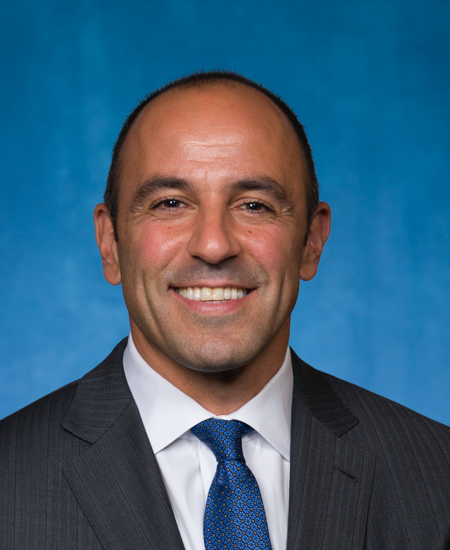
Rep. Jimmy Panetta
Sponsored bills
Maddy summaryThis bill exempts H-1B visa holders working in healthcare from a presidential restriction that requires a $100,000 payment for entry into the United States. It directly affects foreign medical professionals and healthcare workers who hold H-1B nonimmigrant visas. The legislation removes the additional fee requirement for these workers while limiting any fees that may be charged to the standard amount already established under immigration law. The bill defines healthcare workers using the existing definition from the Affordable Care Act and was introduced in the 119th Congress in March 2026.
Save Our Sequoias Act This bill provides for the conservation of giant sequoia trees ( Sequoiadendron giganteum ) in California. Specifically, it provides statutory authority for the Giant Sequoia Lands Coalition and outlines the coalition's duties. The coalition must submit a Giant Sequoia Health and Resiliency Assessment and annually update it. The information from the assessment must be made available so the information can be integrated into certain other plans. The coalition must also create and maintain a website that contains the assessment, educational materials, searchable information about individual giant sequoia groves, and a searchable database to track the status and costs of reforestation and rehabilitation activities. In addition, the bill declares an emergency on certain public lands and allows officials to carry out protection plans during the emergency to respond to the threat of wildfires, insects, and drought. The emergency expires after seven years. The Department of the Interior must develop and implement a Giant Sequoia Reforestation and Rehabilitation Strategy. Finally, the bill establishes a variety of programs and funds to support the conservation of giant sequoias.
Enhanced Iran Sanctions Act of 2025 This bill imposes sanctions on certain foreign persons (individuals and entities) that are involved in Iran's petroleum sector as well as certain associated persons. The bill also requires or authorizes actions to facilitate the enforcement of sanctions on Iran. Specifically, the bill requires the President to impose visa- and property-blocking sanctions on any foreign person that, after the bill's enactment, knowingly engages in any transaction related to the processing, export, or sale of oil, condensates, gas, liquefied natural gas, or other petrochemical products in whole or in part from Iran. The President must also impose sanctions on certain foreign persons associated with a sanctioned individual or entity. For example, the President must sanction the subsidiaries and corporate officers of a sanctioned business. The bill provides certain exceptions to these sanctions, including specifying that sanctions do not apply to the importation of goods or to conducting or facilitating transactions for humanitarian assistance. The Department of State must establish an interagency working group that shall seek to establish a multilateral contact group to coordinate international efforts to enforce sanctions on Iran. The bill expands the State Department rewards program to authorize a reward payment to any individual who furnishes information leading to the identification of a person (1) subject to sanctions under this bill, or (2) that has attempted or is attempting to evade sanctions under this bill.
Maddy summaryHRES 1110 is a non-binding House resolution expressing the U.S. House of Representatives' disapproval of the slaughter of dogs and cats for human consumption and urging Japan to enact a nationwide ban. It references the U.S. 2018 ban on this practice (under the Agriculture Improvement Act) and notes similar bans in South Korea, Taiwan, and cities like Shenzhen and Jakarta. The resolution affirms shared U.S.-Japan values on animal welfare, encourages bilateral cooperation on animal rights, and clarifies it does not interfere with protected cultural or religious practices. As a symbolic diplomatic statement, it has no legal force but aims to influence Japan’s policies on animal welfare.
Maddy summaryThis bill would require infant formula manufacturers to conduct standardized testing for specific pathogens and microorganisms in both their facilities and finished products. It mandates that companies report positive test results to the FDA within one business day and retain records of these findings for inspections. The legislation also requires the FDA to notify congressional committees within one business day of receiving positive test results or issuing certain inspection classifications. Additionally, the bill establishes clear inspection standards that apply to all infant formula products regardless of where they are made.
Maddy summaryThis bill, known as the DROUGHT Act of 2026, increases the maximum federal funding level for certain water infrastructure projects from the standard cap to 90 percent of project costs. It directly affects states and counties experiencing severe drought conditions, as well as projects serving low-income communities or those designated as regionally or nationally significant. The legislation defines covered projects as those located in areas with severe drought designations or declared drought emergencies, those serving low-income populations, or those that improve water supply, reuse, or reduce water usage. The bill requires federal officials to prioritize financing for these specific projects under the Water Infrastructure Finance and Innovation Act of 2014.
Maddy summaryThis bill, the PrEP Access and Coverage Act of 2026, requires most health insurance plans to cover HIV prevention medication without charging patients any out-of-pocket costs. It directly affects people with private insurance, government health programs like Medicare and Medicaid, military health care, and the Indian Health Service. The law mandates that insurance companies cannot require pre-approval for these medications, cannot charge deductibles or copayments for them, and cannot deny or charge higher premiums for life, disability, or long-term care insurance based on someone taking HIV prevention medication. The bill also creates a new public education campaign to increase awareness about HIV prevention options and provides federal funding to states and community organizations to expand access to these services.
Maddy summaryHR 3553, the BRUSH Fires Act, requires the U.S. Forest Service to conduct a study evaluating wildfire mitigation methods in shrubland ecosystems (like chaparral and sagebrush) to reduce fire risk and damage to nearby communities. The study will assess fuel management practices, invasive species control, ember ignition prevention, and factors hindering effective wildfire management. It mandates a report within 90 days of study completion, identifying best practices, research gaps, and opportunities to improve Forest Service coordination with local entities. The bill directly affects communities near shrublands and Forest Service managers by gathering data to inform future fire prevention strategies. This is a procedural study bill, not a policy change, with no direct funding or regulatory requirements.
Maddy summaryThe DISCLOSE Act of 2026 aims to increase transparency in election spending and prevent foreign influence. It expands the ban on foreign money to cover federal, state, and local elections, including ballot initiatives and judicial nominations, and criminalizes using corporations to conceal these funds. The bill mandates that organizations spending over $10,000 on campaign-related activities, such as independent expenditures or judicial nomination advocacy, disclose their beneficial owners and top donors. Additionally, it establishes new "Stand By Every Ad" disclaimers for political communications, requiring the highest-ranking official to approve the message and, for certain ads, list their top funders. These provisions directly affect non-candidate organizations, individuals involved in political and judicial nomination spending, and foreign nationals.