Issue · Environment

Environment

Every environment bill, vote, and legislator stance in Oregon, automatically classified by Maddy, our AI policy reader.

Total bills
290
119th Congress
Top supporter
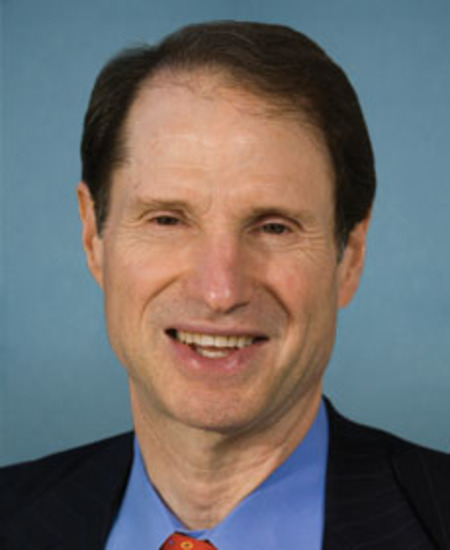
Ron Wyden
76% support rate
Top opponent
Cliff Bentz
31% support rate
Ranked legislators
6
5 support · 1 oppose
Key legislators

Who's moving environment in Oregon

Legislators moving environment in Oregon
Legislator Party Stance Support rate Votes
Ron Wyden
Ron Wyden Senate
D
Support
76% 235
Jeff Merkley
Jeff Merkley Senate
D
Support
75% 233
Val T. Hoyle
Val T. Hoyle House · District 4
D
Support
65% 302
Maxine Dexter
Maxine Dexter House · District 3
D
Support
64% 302
Andrea Salinas
Andrea Salinas House · District 6
D
Support
63% 305
Cliff Bentz
Cliff Bentz House · District 2
R
Oppose
31% 305
Showing 1–10 of 290 bills

All environment bills

in committee · United States · House Sep 10, 2026

HRES 1524: Expressing support for the designation of the week of September 19 through September 26, 2026, as "National Estuaries Week".

This House resolution expresses support for designating the week of September 19 through September 26, 2026, as National Estuaries Week to raise public awareness about the importance of these coastal ecosystems. The bill highlights that estuaries support a significant portion of the U.S. population and economy while providing critical services such as flood control, water filtration, and habitat for fish and wildlife. It acknowledges ongoing threats to estuary health, including pollution and sea level changes, and recognizes the efforts of government agencies, organizations, and individuals working to protect and restore these areas.
in committee · United States · House Aug 6, 2026

HR 10061: Wildfire Response and Readiness Act

The Wildfire Response and Readiness Act establishes a national prescribed fire program that requires federal agencies to increase the acreage of controlled burns on public lands by 10 percent annually for a decade. It creates a ten-year national wildfire plan to coordinate landscape-scale forest restoration, reforestation, and watershed protection efforts across federal, state, tribal, and private boundaries. The bill also authorizes new funding for community resilience, including grants for home hardening, satellite monitoring technology, and a joint office dedicated to fire environment data and prediction. Additionally, it modernizes the firefighting workforce by establishing training academies, expanding civilian conservation centers, and providing liability protections for non-federal partners conducting prescribed fires.
in committee · United States · House Sep 3, 2026

HR 10255: Penalties for Polluters Act

The Penalties for Polluters Act significantly increases the maximum civil penalties for violations of federal mineral leasing, oil and gas royalty management, and offshore lands laws to better account for inflation. These higher fines apply to companies and individuals who fail to comply with regulations regarding natural resource extraction and environmental protection. The bill also establishes a Penalty Revenue Reinvestment Fund that collects the additional revenue generated by these increased penalties. Half of this fund is distributed to states, Indian tribes, and local governments harmed by violations, while the other half supports federal agencies in enforcing compliance and safety standards.
in committee · United States · Senate Aug 6, 2026

S 5284: Green New Deal for Public Housing Act

The Green New Deal for Public Housing Act directs federal funds to public housing agencies and tribal entities to rehabilitate, modernize, and electrify the nation's public housing stock into zero-carbon homes within ten years. The bill establishes grant programs that require recipients to conduct deep energy retrofits, install renewable energy systems, upgrade water quality infrastructure, and provide high-speed internet access to residents. In exchange for these funds, agencies must commit to maintaining their total number of housing units, ensuring displaced residents can return to their original projects, and adhering to strict labor standards that prioritize hiring low-income individuals and supporting resident-owned businesses. Additionally, the legislation strengthens tenant participation by mandating the formation of elected resident councils in larger developments and providing stipends for volunteer officers who help manage community operations.
in committee · United States · Senate Aug 4, 2026

S 5234: Human-Wildlife Conflict Reduction Act of 2026

The Human-Wildlife Conflict Reduction Act of 2026 directs the Secretary of Agriculture to establish a federal program focused on developing and implementing nonlethal strategies to reduce conflicts between wildlife, humans, and livestock. The program will absorb existing nonlethal initiatives from the Animal and Plant Health Inspection Service and prioritize efforts in states where these operations are already active, with a specific focus on protecting livestock from predators and preventing damage to agriculture and infrastructure. To support these goals, the Act authorizes the provision of assistance, training, and demonstration projects for landowners, agricultural producers, Indian Tribes, and nonprofit organizations, while also requiring the development of state-level implementation plans. The legislation appropriates $20 million annually for fiscal years 2027 through 2031 to fund these activities, with a cap limiting research expenditures to no more than 10 percent of the total annual budget.
Sub-Topics Public Lands Wildlife Tags Agriculture
in committee · United States · Senate Aug 6, 2026

S 5273: Fisheries Science Modernization Act of 2026

The Fisheries Science Modernization Act of 2026 directs the National Oceanic and Atmospheric Administration (NOAA) to integrate environmental DNA (eDNA) sampling into federal fishery stock assessments through a multi-year pilot study and subsequent implementation plan. To support this transition, the bill establishes the National Aquatic Biomolecular Coordination Network, a multi-agency body tasked with developing national standards for eDNA collection, analysis, and data sharing across various aquatic environments. Additionally, the legislation authorizes funding to expand NOAA’s workforce and laboratory capabilities, encourages partnerships with private-sector technology developers, and amends the Magnuson-Stevens Act to formally incorporate eDNA methods into fisheries management.
in committee · United States · Senate Aug 4, 2026

S 5235: Alan Reinstein Ban Asbestos Now Act of 2026

The Alan Reinstein Ban Asbestos Now Act of 2026 amends the Toxic Substances Control Act to immediately prohibit the manufacture, processing, use, and distribution of commercial asbestos and products containing it in the United States. The bill defines commercial asbestos to include eight specific mineral varieties while excluding cases where asbestos is present only as a trace impurity or in materials already installed in buildings prior to the law's enactment. A significant exception allows existing chlor-alkali facilities to continue using asbestos for manufacturing diaphragms until 2032, with a potential extension to 2036 for companies that demonstrate progress in converting to alternative technologies. Additionally, the legislation permits the President to grant temporary exemptions for national security purposes if no feasible alternatives exist and requires strict exposure controls during any authorized transitional periods.
in committee · United States · Senate Aug 6, 2026

S 5302: Truth in Labeling Act of 2026

The Truth in Labeling Act of 2026 establishes federal standards for when producers can label packaging, food service products, and beverage containers as recyclable, compostable, reusable, or refillable. The bill requires the Environmental Protection Agency (EPA) to define specific criteria for these terms based on nationwide infrastructure analysis and mandates a standardized on-package label system to reduce consumer confusion. Producers who use these labels without meeting the established requirements would be subject to enforcement actions by the Federal Trade Commission, with penalties directed toward recycling infrastructure and education programs. Additionally, the legislation creates an advisory committee to guide standard development and requires annual reports to Congress on implementation progress and consumer understanding.
Sub-Topics Recycling
in committee · United States · Senate Jul 28, 2026

S 5145: Wildfire Air Quality Sensor Expansion Act of 2026

The Wildfire Air Quality Sensor Expansion Act of 2026 directs the Environmental Protection Agency to provide grants and loans to help local air pollution control agencies purchase and operate portable air sensors in rural and remote areas. These low-cost devices are intended to measure smoke pollutants like PM2.5 and ozone in locations where traditional monitoring equipment is scarce, thereby improving the accuracy of air quality data for communities affected by wildfires. To ensure success, the bill also authorizes funding for technical assistance to help agencies install and maintain these sensors, while requiring that the data collected be shared with the EPA to update public air quality maps. The legislation authorizes $10 million annually through 2032 for grants and provides additional unspecified funding for loan programs and technical support, with a specific focus on expanding coverage to Indian tribes and areas lacking existing monitoring infrastructure.
Sub-Topics Air Quality Forestry
in committee · United States · Senate Jul 23, 2026

S 5126: Seeds and Breeds for the Future Act

The Seeds and Breeds for the Future Act directs the U.S. Department of Agriculture to allocate at least $75 million annually toward developing new plant cultivars and animal breeds that are publicly funded and available for commercial use. This funding prioritizes research on climate-resilient crops, nutritionally improved varieties for local populations, and breeds adapted to specific regional conditions or dual-use energy systems. The bill also establishes a new coordinator role to oversee breeding research across the department and mandates that any public breed developed with federal funds must be produced substantially within the United States if sold under exclusive rights. Additionally, the legislation requires the implementation of strategic plans to assess and utilize national collections of plant and animal genetic resources, ensuring these materials remain accessible for future agricultural needs.
Tags Agriculture
Showing 1 to 10 of 290 bills
1 2 3 29 Next