

Maddy summaryThis joint resolution directs the President to remove U.S. Armed Forces from hostilities against Iran that were not authorized by Congress. The bill is based on the constitutional finding that Congress holds the sole power to declare war and notes that no specific authorization exists for the current military operations in Iran. It mandates the withdrawal of troops while allowing the U.S. to continue defensive actions, intelligence sharing, and assistance to allies and citizens affected by the conflict. The measure applies to military engagements initiated since February 28, 2026, without explicit congressional approval.
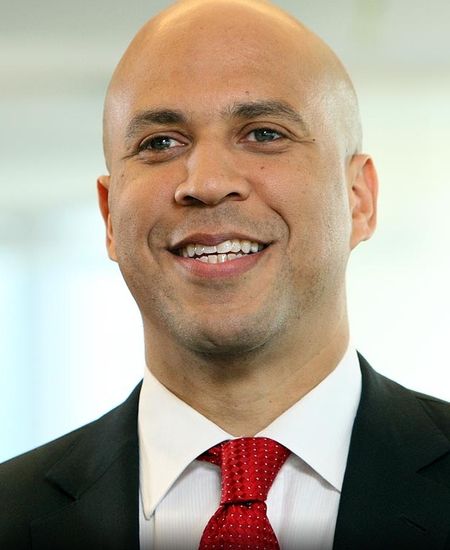
Sen. Cory A. Booker
Sponsored bills
Maddy summaryThis bill requires the U.S. Holocaust Memorial Museum to study how public K-12 schools across all states teach about the Holocaust. The study will examine whether Holocaust education is mandatory or optional in curricula, review teaching materials and methods, and assess how schools measure student understanding of the Holocaust and related issues like antisemitism. It specifically looks at teacher training, use of museum resources, and challenges schools face in implementing this education. The museum must submit a detailed report to Congress within three years of the bill's enactment. This study aims to inform future educational approaches but does not change current school requirements.
Maddy summaryThis bill would fundamentally change how Supreme Court justices are appointed and how long they serve by establishing a fixed schedule of biennial appointments. Under the new rules, the President could only nominate one justice every two years, specifically within the first 120 days of their term or following a rejected nomination, ensuring that the total number of justices hearing appellate cases never exceeds nine. Additionally, the legislation sets a 14-year term limit for each justice, meaning their service would end automatically when their term expires rather than continuing for life. These changes aim to reduce the impact of single appointments on the court's composition for decades while maintaining the current nine-justice quorum for most cases.
Maddy summaryThe Health Equity and Accountability Act of 2026 is a comprehensive legislative proposal designed to reduce health disparities by mandating standardized data collection on race, ethnicity, gender identity, and socioeconomic status across federal health programs. The bill requires the Department of Health and Human Services to establish new commissions and task forces focused on preventing bias in artificial intelligence and ensuring equitable data reporting during public health emergencies. It also expands access to care for underserved populations by removing citizenship barriers to Medicaid, increasing funding for minority-serving institutions, and requiring culturally and linguistically appropriate services from federally assisted health providers. Additionally, the legislation addresses specific disease disparities through targeted research grants and mandates that drug manufacturers investigate and report on racial or ethnic differences in drug safety and effectiveness.
Maddy summaryThis concurrent resolution formally recognizes the significant wage gap between Black women and white, non-Hispanic men in the United States. The document cites data showing that Black women earn roughly 65 cents for every dollar earned by white men and highlights how this disparity impacts their ability to support families and accumulate wealth. By referencing existing laws like the Equal Pay Act and the Civil Rights Act, the bill reaffirms Congress's support for equal pay for equal work without proposing new legislation or policy changes. Ultimately, the measure serves as a symbolic acknowledgment of the economic challenges faced by Black women due to dual discrimination based on race and gender.
Maddy summaryThe CDC Tribal Public Health Security and Preparedness Act amends federal law to explicitly include Indian Tribes, Tribal organizations, and urban Indian organizations in public health security programs previously reserved for states and localities. It authorizes $750 million annually from 2027 to 2029 for cooperative agreements with these tribal entities to enhance their ability to prepare for and respond to public health emergencies. The bill removes matching fund requirements for tribal recipients and mandates that the CDC consult with tribes on program design, rule modifications, and waivers to ensure effective implementation. Additionally, it requires the CDC to conduct a review and submit a detailed report to Congress on how the program serves tribal communities and any infrastructure limitations encountered.
Maddy summaryThe MediKids Act expands Medicaid eligibility to cover children and young adults up to age 26, regardless of their immigration status, and establishes a system for automatic enrollment of newborns that allows parents to opt out if other qualifying health coverage is available. The bill ensures that states provide full federal funding for these expanded groups and extends specific pediatric health services, such as Early and Periodic Screening, Diagnostic, and Treatment (EPSDT), to individuals up to age 26. Additionally, the legislation modifies tax rules to prevent this new Medicaid coverage from counting as minimum essential coverage for the purpose of individual health insurance tax penalties.
Maddy summaryThis bill directs the U.S. Department of the Interior to study the Mullica River watershed in New Jersey to determine if it should be officially designated as a Wild and Scenic River. The study will focus on specific segments of the Mullica River and its tributaries, including the Wading River and Batsto River, to assess their suitability for protection. If the study concludes that these waters meet the necessary criteria, the area could receive federal protections to preserve its natural character and recreational values. The final results of this evaluation must be reported to Congress within three years of funding becoming available.
Maddy summaryThis bill would establish the Julius Rosenwald and Rosenwald Schools National Historical Park, a unit of the National Park System, to honor philanthropist Julius Rosenwald and the Rosenwald Schools that educated over 600,000 African American children in the segregated South from 1912 to 1932. The park would include three restored schools (in Maryland, South Carolina, and Virginia) and a visitor center in Chicago, Illinois, to preserve these sites and share their history through exhibits and educational programs. It also creates a national network to connect remaining Rosenwald Schools, enabling coordinated interpretation and resource-sharing across the country.
Maddy summaryThis bill designates specific segments of the Upper Raritan River Watershed in New Jersey - including the North Branch, South Branch, and Lamington-Black Rivers and their tributaries - for a federal study. The study, to be completed within 3 years of funding, will evaluate whether these watersheds qualify for potential future inclusion in the National Wild and Scenic Rivers System. The Secretary of the Interior must report the study results to Congress. This bill does not immediately protect the rivers but initiates a process to assess their eligibility for federal protection.