Prohibiting IRS Financial Surveillance Act This bill prohibits the Department of the Treasury from requiring a financial institution to report the balances, transactions, or the transfers into and out of a financial account. This prohibition does not apply to laws or regulations in effect on the date of enactment.
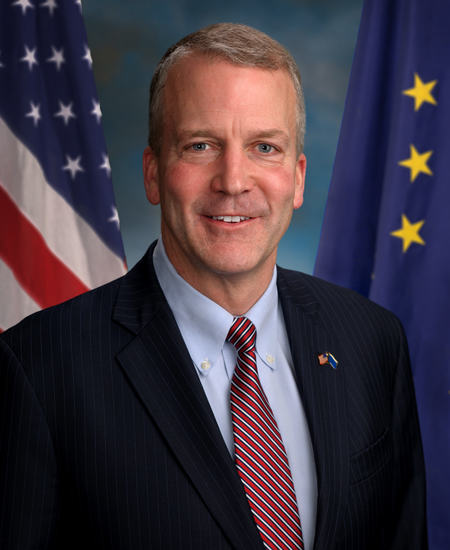
Sen. Dan Sullivan
Sponsored bills
Comforting Our Military Families through On-base or Remote Treatment Act of 2021 or the COMFORT Act of 2021 This bill authorizes the Office of Military Family Readiness Policy within the Department of Defense (DOD) to coordinate programs and activities for the provision of nonmedical counseling services to military families through the DOD Military and Family Life Counseling Program. Under the bill, nonmedical counseling services means mental health care services that are nonclinical, short-term, and solution-focused to address topics related to personal growth, development, and positive functioning. The bill authorizes mental health professionals to provide non-medical counseling services regardless of where the provider or recipient is located so long as the provision of service is within the scope of the authorized duties of the provider. For purposes of the bill, mental health professionals include licensed or certified mental health professionals or members of the uniformed services, civilian DOD employees, or DOD contractors.
Save Our Servicemembers Act of 2021 This bill requires the Office of the Under Secretary of Defense for Personnel and Readiness within the Department of Defense (DOD) to evaluate and standardize DOD's suicide prevention efforts. Specifically, the bill directs the Defense Suicide Prevention Office to collaborate with each military department to (1) develop and implement a process to ensure that individual nonclinical suicide prevention efforts are assessed for effectiveness, and (2) develop consistent suicide-related definitions for use throughout DOD. The bill also requires the use of such suicide-related definitions in any updated policies of DOD or each military department.
State, Local, Tribal, and Territorial Fiscal Recovery, Infrastructure, and Disaster Relief Flexibility Act This bill allows states, tribes, territories, and localities to use certain COVID-19 relief funds for new categories of spending, including for natural disasters and infrastructure projects. It also makes changes to expenditure deadlines and other aspects of this funding. Specifically, recipients may use funds for emergency relief from natural disasters and associated negative economic impacts of natural disasters. In addition, recipients may use a portion of their COVID-19 relief funds for designated infrastructure projects, such as nationally significant freight and highway projects. Furthermore, the bill allows recipients to expend COVID-19 relief funds on these types of infrastructure projects until September 30, 2026. Under current law, recipients must expend the funds by December 31, 2024. Other changes in the bill include (1) modifying eligibility and allocation requirements for funding set aside for counties and Indian tribes that are near public lands, (2) allowing Indian tribes an additional year to expend their COVID-19 relief funds, and (3) establishing a process for government entities to decline COVID-19 relief funds and requiring any declined funds to be used to reduce the federal deficit.
This bill authorizes the Department of Defense and the Department of Veterans Affairs to enter into agreements for the planning, design, and construction of facilities to be operated as shared medical facilities.
This bill requires the Department of Veterans Affairs (VA) to designate one week each year as Buddy Check Week for the purposes of organizing outreach events and educating veterans on how to conduct peer wellness checks. The VA shall ensure that the Veterans Crisis Line has a plan for handling the potential increase in calls that may occur during such week.
This resolution honors and commends the women who served in the Navy Women Accepted for Voluntary Emergency Service (WAVES) during World War II. Additionally, the resolution recognizes that the WAVES opened opportunities for women and contributed vitally to the victory of the United States and Allies in World War II.
Judicial Efficiency Improvement Act This bill divides the U.S. Court of Appeals for the Ninth Circuit into two judicial circuits: (1) the Ninth Circuit, and (2) a new Twelfth Circuit. The new Ninth Circuit shall be composed of California, Guam, Hawaii, and the Northern Mariana Islands. The new Twelfth Circuit shall be composed of the following states: Alaska, Arizona, Idaho, Montana, Nevada, Oregon, and Washington. The bill creates two additional circuit court judgeships for the Ninth Circuit. It creates 77 additional district court judgeships in specified judicial districts in Arizona, California, Colorado, Delaware, Florida, Georgia, Idaho, Indiana, Iowa, New Jersey, New Mexico, New York, and Texas. Additionally, it converts eight temporary district court judgeships to permanent judgeships in specified judicial districts in Kansas, Missouri, Arizona, California, Florida, New Mexico, North Carolina, and Texas.

Judicial Reorganization Act of 2021 This bill creates a new U.S. Court of Appeals by dividing the current U.S. Court of Appeals for the Ninth Circuit. The newly created U.S. Court of Appeals for the Twelfth Circuit shall have jurisdiction over Alaska, Arizona, Idaho, Montana, Nevada, Oregon, and Washington. The U.S. Court of Appeals for the Ninth Circuit shall retain jurisdiction over California, Guam, and Hawaii.
Federal Courts of Appeals Modernization Act This bill establishes the Commission on Structural Alternatives for the Federal Courts of Appeals. The commission must (1) study the current structure of the federal courts of appeals, with particular reference to the U.S. Court of Appeals for the Ninth Circuit; and (2) recommend changes to promote the expeditious and effective disposition of cases.