

Maddy summaryHR 620, the FARM Act, expands the Committee on Foreign Investment in the United States (CFIUS) to review foreign investments in U.S. agriculture. It requires CFIUS to assess transactions where foreign entities gain control of U.S. agricultural businesses (including those using agricultural products defined under 7 U.S.C. 451) and adds agricultural supply chains to the list of critical infrastructure and critical technologies. The bill mandates annual reports from the Secretary of Agriculture and the Comptroller General to Congress, detailing foreign investments in U.S. agriculture, potential threats to supply chains, and espionage risks targeting agricultural research or data. This directly affects foreign investors seeking to acquire U.S. agricultural assets and reshapes CFIUS review processes for the sector.
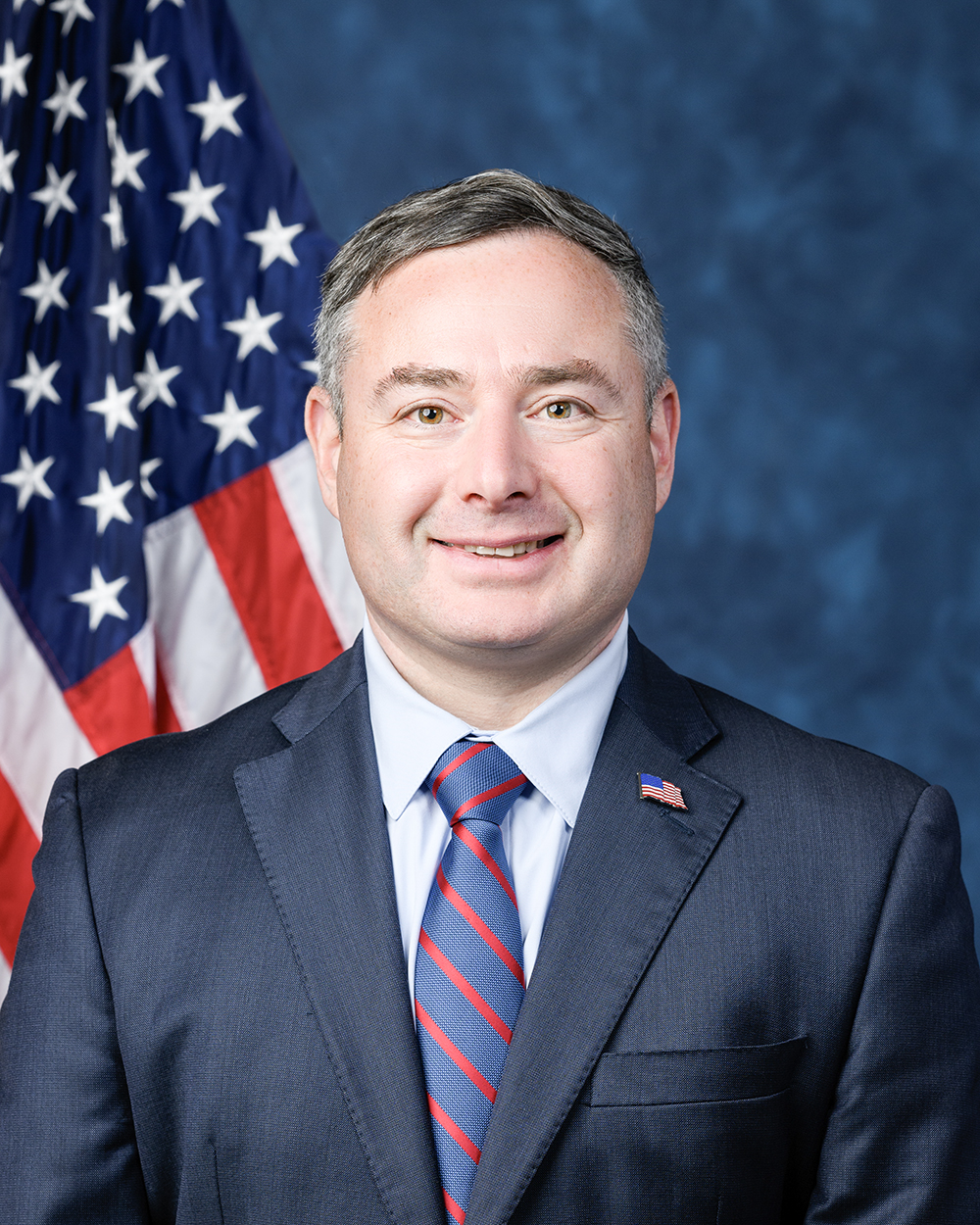
Rep. Eugene Simon Vindman
Sponsored bills
Maddy summaryHR 575, the Increased TSP Access Act of 2025, amends conservation program rules to expand access to third-party providers (TSPs) like agricultural retailers, engineers, and certified crop advisors. It creates new pathways for state agencies and professional organizations to certify TSPs (within 180 days of enactment), requires the USDA to review certifications within 10 business days, and sets payment rates equivalent to direct government services. The bill directly affects agricultural producers who use conservation programs and TSPs seeking certification, while mandating annual transparency reports on certification numbers, funding, and program effectiveness. Key changes include streamlined certification for existing specialists (e.g., certified crop advisors) and rules preventing double-counting of payments from other federal programs.
Maddy summaryThis bill (HJRES 63) would rename the Robert E. Lee Memorial, a National Park Service site in Arlington, Virginia, to "Arlington House National Historic Site." It directly affects the National Park Service, which manages the site, and all federal government documents, maps, and records referencing the location. The key provision updates all official references to the site to the new name and repeals two prior resolutions that established the memorial. As a procedural renaming bill, it does not create new policies or funding but changes the site's official designation.
Maddy summaryThis bill changes tax rules so dental school faculty receiving loan repayment assistance through specific federal programs no longer have to pay income tax on those payments. It directly affects dental faculty at institutions participating in the Dental Faculty Development Program under the Public Health Service Act. The key provision amends tax law to exclude these loan repayments from taxable income, reducing their financial burden. The bill also requires a report to Congress on how many faculty remain in teaching roles after receiving this assistance.
Maddy summaryThe Technology for Energy Security Act (HR 1752) extends a federal tax credit for investments in fuel cell technology. It changes the deadline for claiming this credit from January 1, 2025, to January 1, 2033, for projects starting construction after December 31, 2024. This directly affects businesses and individuals installing fuel cell systems by allowing them to claim the tax incentive for an additional eight years. The bill does not alter the credit amount but expands the timeframe for eligible projects.
Rebuild America’s Health Care Schools Act of 2025 This bill allows hospitals to receive reimbursement under Medicare for certain costs associated with training nursing and allied health students in settings other than the hospital itself. Currently, hospitals may receive reimbursement under Medicare for the reasonable costs associated with training nursing and allied health students if certain conditions are met; the criteria vary depending on whether the students are enrolled in an educational program that is operated by the hospital or another entity. If the students are part of a program that is operated by another entity, the training must occur at the hospital itself or in areas immediately surrounding the hospital in order to qualify for reimbursement (among other requirements). The bill allows hospitals to receive reimbursement for these costs if the training is conducted at an entity that is related to the hospital (i.e., common ownership or control). The bill requires the Centers for Medicare & Medicaid Services (CMS) to update regulations to reflect these changes. Additionally, the CMS may not recoup or reduce payments to hospitals with respect to costs that are allowed under the bill and must refund any such recoupments or reductions that occurred during the six-year period prior to the bill's enactment.
Maddy summaryHR 1753 creates two new tax credits to support local journalism and small businesses. It offers a 80% credit (up to $5,000) for eligible small businesses (with <50 full-time employees) that advertise in qualifying local media like community newspapers or FCC-licensed radio/TV stations, reducing to 50% ($2,500 max) after the first year. A separate credit provides 50% (then 30%) of wages paid to local news journalists (at least 200 hours quarterly) for employers whose primary income comes from local newspaper publishing, capped at $12,500 per journalist per quarter. Both credits expire after 5 years and require strict definitions of "local" media to qualify, including having in-community journalists and limiting corporate ownership. The bill directly affects small local news publishers and qualifying small businesses seeking tax relief for local advertising and journalism staffing.
Maddy summaryHR 1705 creates a new 30% federal tax credit for agricultural businesses investing in qualifying technology projects focused on specialty crop production. The credit applies to eligible equipment, software, and systems used in precision agriculture (like GPS-guided tools for efficient input use) or controlled environment agriculture (indoor farming systems with climate control and automation). Businesses can claim this credit for property placed in service after January 1, 2025, with projects needing completion by December 31, 2035. The bill specifically targets innovations that improve efficiency in growing, processing, or packaging specialty crops as defined in existing law.
Maddy summaryThis bill makes permanent a provision requiring health insurance plans to cover telehealth services without applying deductibles, which was previously temporary. It directly affects health insurance plans and their members who use telehealth services, ensuring no out-of-pocket cost for these visits under the plan. The key mechanism removes specific language in tax code provisions that limited this coverage to certain time periods, applying the rule permanently to all plan years starting in 2025. The bill does not create new telehealth services or infrastructure but changes how existing telehealth visits are covered by insurance.
Maddy summaryHR 1757, the EMPSA Act, modifies Supplemental Security Income (SSI) rules to eliminate a "marriage penalty" for married individuals with intellectual or developmental disabilities. It directly affects married adults with these disabilities who currently face reduced benefits due to their spouse's income. Key provisions include: (1) allowing eligibility based solely on the individual's own income/resources (excluding spouse's), (2) calculating benefits at the standard rate minus the individual's own income (not spouse's), and (3) excluding the spouse's income/resources from eligibility determinations. This change ensures married individuals with qualifying disabilities receive full SSI benefits without penalty for their spouse's financial situation.