

Maddy summaryHR 3194, the LOCOMOTIVES Act, prevents states from setting their own emissions standards for locomotives used in interstate commerce. It amends the Clean Air Act to clarify that federal emissions rules exclusively apply to locomotives providing common carrier railroad transportation for hire (like commercial freight or passenger services across state lines), excluding these from state regulation. This directly affects railroads operating interstate services and state environmental agencies that previously could establish stricter local rules for such locomotives. The bill does not change the actual emissions requirements but shifts regulatory authority solely to the federal government for this specific category of locomotives.
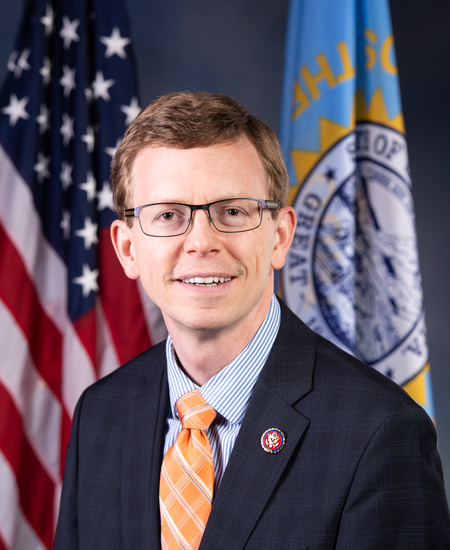
Rep. Dusty Johnson
Sponsored bills
Maddy summaryThis bill redesignates the existing National Parks and Public Land Legacy Restoration Fund as the America's Legacy Restoration Fund to address deferred maintenance on federal lands. It directs revenue from recreation fees and a portion of energy development income into the fund, which must be used primarily for repairing critical infrastructure like roads, trails, and buildings managed by agencies such as the National Park Service and the Forest Service. The legislation establishes strict rules requiring that most funds go toward non-transportation projects, mandates transparency through public dashboards tracking project status, and sets aside a small percentage for matching private donations. Additionally, the bill increases entrance fees for foreign visitors to ensure they contribute to the fund, while prohibiting the use of these specific funds for land acquisition or employee bonuses.
Repealing Big Brother Overreach Act This bill repeals the Corporate Transparency Act. The act requires existing companies and newly created companies to report beneficial ownership information to the Department of the Treasury’s Financial Crimes Enforcement Network for purposes of addressing the financing of terrorism and money laundering.
Maddy summaryThis bill would add pharmacist services to Medicare Part B coverage for beneficiaries, specifically covering pharmacist-led testing and treatment for illnesses like flu, COVID-19, or strep throat during public health emergencies. It defines covered services as those performed under state law, often requiring collaboration with a physician, and sets payment at 80% of the lesser of the actual charge or 85% of physician payment rates. Pharmacists would be prohibited from balance billing for these services, ensuring Medicare beneficiaries pay only their standard copayment. The changes would take effect January 1, 2026.
Nationwide Consumer and Fuel Retailer Choice Act of 2025 This bill amends the Clean Air Act to address the limitations on Reid Vapor Pressure (a measure of gasoline's volatility) that are placed on gasoline during the summer ozone season. Specifically, the bill applies the waiver for Reid Vapor Pressure requirements that is applicable to gasoline blended with 10% ethanol (E10) to gasoline blended with up to 15% ethanol (E15). This change allows gasoline that is blended with 10% to 15% ethanol to be sold year-round. Currently, states may be excluded from the waiver for Reid Vapor Pressure requirements by submitting documentation supporting that the waiver would increase air pollution. The bill nullifies existing state exclusions, but states may submit documentation after enactment of the bill to be excluded going forward. The bill also modifies the Renewable Fuel Standard Program, which requires transportation fuel sold or introduced into commerce in the United States to contain minimum volumes of renewable fuel. Under the existing program, obligated parties, such as small refineries, must satisfy the volume obligations by either blending renewable fuels into their gasoline or diesel fuel products or by acquiring credits that represent the required renewable fuel volume. The bill directs the Environmental Protection Agency to return compliance credits to small refineries under certain circumstances.
Maddy summaryThis bill would amend federal law to strengthen penalties for organized retail crime by expanding definitions of theft to include digital goods, gift cards, and setting a $5,000 aggregate value threshold for charges over a 12-month period. It would establish a new "Organized Retail and Supply Chain Crime Coordination Center" under Homeland Security to coordinate Federal, State, local, and Tribal law enforcement efforts against cross-jurisdictional theft groups. The Center would share information with retailers, transportation companies, and law enforcement agencies, track crime trends, and produce annual reports on organized retail crime. This legislation directly affects retailers, supply chain businesses, and law enforcement agencies, while targeting organized crime groups responsible for a 93% increase in larceny incidents and rising safety concerns for retail employees. The bill aims to address significant financial losses and supply chain disruptions noted in the National Retail Federation's 2023 data.
Maddy summaryThis concurrent resolution expresses Congress's support for law enforcement officers and honors those who have died or been injured while performing their duties. The document highlights the dangers officers face, noting high rates of assaults and suicide, as well as current staffing shortages compared to pre-2020 levels. It calls for increased measures to improve officer safety, including more personnel, better training and equipment, stricter penalties for assaulting officers, and expanded mental health resources. This non-binding measure does not create new laws or allocate funding but serves to formally recognize the contributions of police professionals and urge government bodies to provide necessary support.
Maddy summaryThis bill expands the review authority of the Committee on Foreign Investment in the United States to include real estate transactions involving specific foreign nations and entities linked to them. It designates certain locations, such as military bases, agricultural land, and critical infrastructure, as "sensitive sites" where purchases or leases by foreign adversaries face stricter scrutiny. Under the new rules, these transactions are presumed to pose an unresolvable national security risk unless the committee provides clear evidence that the threat can be mitigated. The legislation also ensures that existing state laws restricting foreign ownership of farmland remain in effect and requires the committee to issue new regulations within 120 days of enactment.
Maddy summaryThis resolution expresses support for designating May 5, 2026, as the National Day of Awareness for Missing and Murdered Indigenous Women and Girls. It calls on the public and organizations to honor the victims and show solidarity with their families. The bill also recommends that the Department of Justice commission a new study to gather updated statistics on the crisis, noting that previous data is nearly a decade old.
Maddy summaryHR 7331 authorizes a federal feasibility study to assess building a water supply project serving municipal, rural, and industrial users across South Dakota, Iowa, Nebraska, and Minnesota. The study, to be conducted by the Secretary of the Interior with the Dakota Mainstem Regional Water System, must follow federal reclamation standards and determine if the project is viable. Federal funding for the study is capped at 50% of costs, with $10 million authorized, and the study must be completed within 10 years of the bill's enactment. This bill directly affects the four states' water planning but does not fund or construct the project itself.