

Maddy summaryThis bill establishes new federal standards requiring oil and gas companies operating on the Outer Continental Shelf to be certified as "fit to operate" before they can obtain or maintain leases. To receive this certification, companies must demonstrate a clean safety and environmental record over the past decade, maintain an investment-grade credit rating, and prove they have sufficient funds to cover future decommissioning costs. The legislation also mandates that operators place a significant portion of estimated decommissioning costs into interest-bearing escrow accounts and limits the time a well can be temporarily abandoned to three years, with a possible one-time extension to five years. Additionally, the bill requires the Department of the Interior to conduct annual compliance checks and submit detailed reports to Congress regarding enforcement actions and escrow account balances.
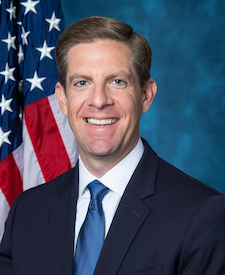
Rep. Mike Levin
Sponsored bills
Maddy summaryThis joint resolution seeks to officially reject a final rule issued by the Department of Education regarding federal student loan programs. If passed, the measure would prevent the new regulations from taking effect, leaving the previous rules in place. The bill directly impacts borrowers, lenders, and the Department of Education by nullifying the specific changes outlined in the "Reimagining and Improving Student Education" proposal. It is a procedural action that uses the Congressional Review Act to disapprove the agency's policy without altering the underlying law.
Maddy summaryThis resolution honors the victims of the May 18, 2026, mass shooting at the Islamic Center of San Diego and expresses condolences to their families. It specifically recognizes the bravery of security guard Amin Abdullah and community members Nader Awad and Abul Izz, who died while protecting others. The measure also condemns the violence and Islamophobia that led to the attack and affirms support for the affected Muslim community. As a symbolic gesture, the bill does not create new laws or funding but serves to officially acknowledge the tragedy and unite against hate.
Maddy summaryThis bill authorizes the U.S. Mint to produce commemorative $5 gold and $1 silver coins marking the 25th anniversary of the September 11, 2001, terrorist attacks. The coins must feature designs honoring victims and first responders (including the inscription "Never Forget") and will be sold only during 2027-2028. All surcharges ($35 per gold coin, $10 per silver coin) collected from sales will fund the National September 11 Memorial and Museum at the World Trade Center, with no net cost to the federal government. The coins are legal tender but primarily intended for collectors, not circulation.
Maddy summaryThis bill nullifies a specific decision made by the Endangered Species Committee regarding oil and gas operations in the Gulf of America. It immediately cancels any exemptions previously granted to these activities under the Endangered Species Act and bars federal agencies from using funds to enforce the canceled order. For a three-year period starting when the bill is enacted, the committee is prohibited from issuing any new exemptions for Gulf oil and gas projects. Consequently, all standard environmental protections required by the Endangered Species Act will continue to apply fully to these activities.
Maddy summaryThe No Taxpayer-Funded Settlement Slush Funds Act of 2026 prohibits the use of federal money to pay specific settlements involving high-ranking government officials and their close associates. It bars payments to the President, Vice President, their immediate families, cabinet members, senior executive staff, political appointees, and individuals connected to these roles, as well as any entity owned by the President or Vice President. Additionally, the bill restricts settlements related to claims about the January 6 Capitol attack, foreign election interference, or previously dismissed lawsuits, while requiring Treasury reports for large settlements and allowing the government to seek repayment if rules are broken.
Hemp Planting Predictability Act This bill extends by two years the implementation of changes to the regulation of hemp products, which reimpose certain federal controls over some hemp products. Specifically, Congress enacted the FY2026 agriculture appropriations act (P.L. 119-37) on November 12, 2025. Effective November 12, 2026, the act modifies the statutory definition of hemp products that are considered to be lawful. This bill extends the effective date to November 12, 2028. As background, the 2018 farm bill excluded hemp from the Controlled Substances Act definition of marijuana and defined hemp . As a result, hemp and hemp-derived products at or below the 0.3% delta-9 tetrahydrocannabinol (THC, the psychoactive component of marijuana) concentration threshold were no longer regulated as Schedule I controlled substances and registration with the Drug Enforcement Administration was no longer required to cultivate or handle hemp and hemp-derived products. However, hemp remained subject to Department of Agriculture and Food and Drug Administration regulation. The 2025 changes to the definition of hemp, include changing the limit to a total THC concentration of not more than 0.3% on a dry weight basis rather than only delta-9 THC, explicitly including industrial hemp, excluding seeds from a cannabis plant that exceed a certain THC concentration, and excluding various types of hemp-derived cannabinoid products. Cannabinoids refer to unique chemical compounds that are found in hemp and marijuana (e.g., THC) and are known to exhibit a range of psychological and physiological effects.
Maddy summaryThis bill protects funding and staffing at the Department of Veterans Affairs (VA). It prevents the government from holding back or redirecting VA funds without new law, and requires the VA to notify Congress if funding shortfalls approach. The bill exempts the VA from hiring freezes through 2029, mandates reinstating veterans fired between 2025 and the bill’s enactment, and requires special legal authorization for layoffs (including probationary employees). The VA must also submit annual compliance reports to Congress.
Maddy summaryThis bill restores veterans' education benefits for periods spent at institutions later found to have fraud, closure, or approval issues. It prevents those periods from counting against a veteran's total benefit entitlement or lifetime limit. Educational institutions must repay the VA if they received benefits for veterans during these covered periods, including cases where courts found fraud or the school was closed for violations. The law applies to veterans using benefits under chapters 30, 31, 32, 33, 35, or 1606/1607 of title 38.
Dental Care for Veterans Act This bill expands eligibility for veterans for dental care provided by the Department of Veterans Affairs (VA). Specifically, the bill makes all veterans who are enrolled in the VA health care system eligible for VA-provided dental services. Currently, only veterans who have a service-connected dental issue or meet other narrow criteria are eligible for certain dental services. The bill phases in eligibility over four years based upon existing eligibility, degree of service-connected disability or other disability, prisoner of war status, award of a Purple Heart, financial need, or VA health care eligibility.