

Fire Fighters and EMS Employer-Employee Cooperation Act This bill requires the Federal Labor Relations Authority to determine whether a state substantially provides fire and emergency medical services (EMS) personnel the right to form and join a labor organization; recognition by fire and EMS employers of the employees' labor organization, agreement to bargain with the organization, and reduction of any agreements to writing in a contract or memorandum of understanding; the right to bargain over hours, wages, and terms and conditions of employment; and arbitration or other mechanisms to resolve an impasse in collective bargaining negotiations. The bill makes the authority responsible for (1) determining the appropriateness of units for labor representation; (2) supervising elections; (3) conducting hearings and resolving complaints of unfair labor practices; and (4) protecting the right of employees to form, join, or assist any labor organization, or to refrain from doing so. An employer, fire and EMS personnel, or labor organization may not engage in a lockout, sickout, work slowdown, strike, or any other organized job action that will measurably disrupt the delivery of emergency services and is designed to compel an employer, fire and EMS personnel, or labor organization to agree to the terms of a proposed contract.
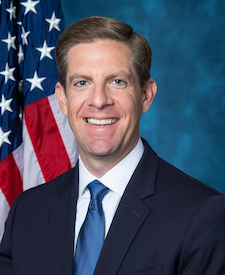
Rep. Mike Levin
Sponsored bills
Affordable Housing Credit Improvement Act of 2021 This bill revises provisions of the low-income housing tax credit and renames it as the affordable housing credit . The bill increases the per capita dollar amount of the credit and its minimum ceiling amount beginning in 2021 and extends the inflation adjustment for such amounts. The bill modifies tenant income eligibility requirements and the average income formula for determining such income. It also revises rules for student occupancy of rental units and tenant voucher payments, and prohibits any refusal to rent to victims of domestic abuse. The bill further modifies the credit to increase state allocations of the credit; repeal the qualified census tract population cap; prohibit local approval and contribution requirements; increase the credit for certain projects designated to serve extremely low-income households; increase the credit for certain bond-financed projects designated by state agencies; eliminate the basis reduction for properties that receive certain energy-related tax benefits; and increase the population cap for difficult development areas (i.e., areas with high construction, land, and utility costs relative to area median gross income). The bill also includes Indian and rural areas as difficult development areas and modifies other requirements relating to casualty losses, acquisition credits, and foreclosures.
Equal Pay for Servicewomen Act This bill requires the Department of Defense (DOD) to address out-of-pocket cost inequities for military service uniforms. Specifically, the bill requires DOD to implement the four recommendations made by the Government Accountability Office in its report titled Military Service Uniforms DOD Could Better Identify and Address Out-of-Pocket Cost Inequities (GAO-21-120). The recommendations made in the report are related to reducing differences in out-of-pocket costs incurred by enlisted service members across the services and by gender. The bill requires DOD to prescribe regulations to ensure that out-of-pocket uniform costs to officers or enlisted members may not exceed costs to other officers or members in their branch solely based on gender; and if a change to a uniform affects only officers or enlisted members of one gender, the officers or members must be entitled to an allowance equal to the out-of-pocket cost related to the change. DOD must provide a one-time allowance to female officers and enlisted members in an amount based on gender disparities in out-of-pocket uniform costs during the past 10 years and proportional to the length of service of the officer or member.
Martha Wright Prison Phone Justice Act This bill establishes requirements related to certain charges, practices, classifications, or regulations in connection with confinement facility (i.e., jail or prison) communications services. Specifically, the bill requires the Federal Communications Commission (FCC) to establish maximum rates and charges that a provider of prison communications services may charge for such services. The bill provides interim rate caps until the FCC establishes such rates and charges. The bill requires a provider of prison communications services to assess all charges for communications on a per-minute basis for the actual duration of the communication, and it prohibits a provider from charging a per-communication or per-connection charge. A provider also may not charge an ancillary service charge except in certain circumstances. Further, the bill prohibits a provider from assessing a site commission, which is a payment or donation made to certain entities that operate or oversee a confinement facility.
Lowest Price for Patients Act This bill requires pharmacies to disclose to consumers when dispensing a prescription drug (1) the cost of the drug under the consumer's insurance plan, and (2) the cost of the drug without using their plan.
Commission to Study and Develop Reparation Proposals for African Americans Act This bill establishes the Commission to Study and Develop Reparation Proposals for African Americans. The commission shall examine slavery and discrimination in the colonies and the United States from 1619 to the present and recommend appropriate remedies. The commission shall identify (1) the role of the federal and state governments in supporting the institution of slavery, (2) forms of discrimination in the public and private sectors against freed slaves and their descendants, and (3) lingering negative effects of slavery on living African Americans and society.
Supporting Eating Disorders Recovery Through Vital Expansion Act or the SERVE Act This bill provides for inpatient and outpatient treatment of eating disorders under TRICARE for dependents of members of the uniformed services. Dependents are eligible for such care regardless of (1) their age, except with respect to residential service; and (2) whether the eating disorder is their primary or secondary diagnosis. The bill also requires the Department of Defense (DOD) and the Department of Homeland Security (with respect to the Coast Guard) to identify, treat, and rehabilitate members of the armed forces who have an eating disorder. Finally, DOD and the Department of Veterans Affairs must jointly develop, publish, and disseminate clinical practice criteria and guidelines on the identification and treatment of eating disorders.
Better Way for Providers To Repay Act of 2021 This bill modifies recoupment provisions under the Medicare Accelerated and Advance Payment Program during the public health emergency relating to COVID-19. The program provides Medicare payments in advance to eligible providers experiencing claims or cash flow disruptions, such as during national emergencies; the program was specifically expanded in response to COVID-19 to encompass more types of providers, subject to certain recoupment and repayment provisions. The bill provides for an additional 3 months before recoupment of advance payments (through claims offsets) begins, so that recoupment begins 15 months (rather than 12 months) after payments are made. The bill also applies repayments that providers have already made toward the collection of offsets for a corresponding amount of time.
Providing Responsible Emergency Plans for Animals at Risk of E merging Disasters Act or the PREPARED Act This bill establishes requirements governing the care of animals by entities, such as zoos, in emergencies or disasters. Specifically, the bill requires each research facility, dealer, exhibitor, intermediate handler, and carrier to develop and follow a contingency plan to provide for the humane handling, treatment, transportation, housing, and care of their animals in the event of an emergency or disaster.
Studying Outcomes and Benchmarks for Effective Recovery Homes Act or the SOBER Homes Act This bill requires the Substance Abuse and Mental Health Services Administration to contract with the National Academies of Sciences, Engineering, and Medicine (NASEM) to study and make recommendations on recovery housing. Recovery housing refers to shared living environments free from alcohol and illicit drug use and centered on peer support and connection to services that promote sustained recovery from substance use disorders. As part of the study, NASEM must identify relevant research and data gaps that hinder reporting on the quality and effectiveness of recovery housing. After publication of the study, the Department of Health and Human Services must contract with an appropriate entity to conduct research to fill those gaps.