

Maddy summaryThe Space Infrastructure Act requires the Secretary of Homeland Security to designate space systems, services, and technology as a critical infrastructure sector within 30 days of enactment. It mandates that the Secretary issue detailed guidance within 180 days, defining the scope (including satellites, launch facilities, and related infrastructure), appointing a Sector-Specific Agency, and establishing coordinating committees. This procedural bill affects federal agencies managing critical infrastructure and the space industry by formally integrating space systems into existing national security frameworks under the Homeland Security Act.
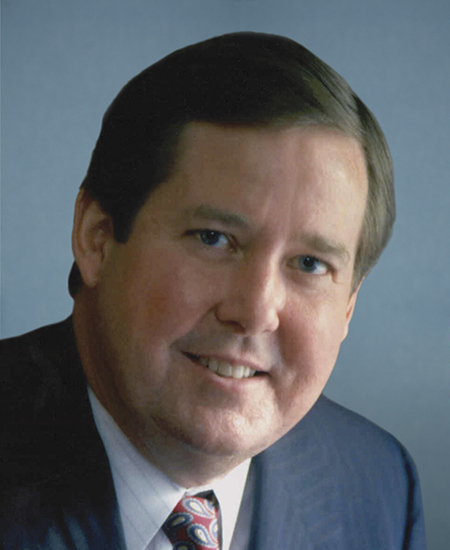
Rep. Ken Calvert
Sponsored bills
Maddy summaryThis bill expands 529 college savings account flexibility by allowing funds to cover costs for industry-recognized postsecondary credentials, not just traditional degrees. It defines "qualified expenses" to include tuition/fees for recognized credential programs (like certifications or apprenticeships), required testing fees, and continuing education needed to maintain credentials. To qualify, programs must meet specific criteria, such as appearing on state lists under the Workforce Innovation and Opportunity Act or being listed in VA or Defense directories. The change applies to 529 distributions made after the law's enactment, giving families more options to use these accounts for job-focused training.
Maddy summaryThis resolution (HRES 120) expresses the U.S. House of Representatives' condemnation of Azerbaijan's treatment of Dr. Gubad Ibadoghlu, a detained academic and economist. It urges Azerbaijan to immediately release Dr. Ibadoghlu, who was arrested in 2023 without evidence, subjected to severe beatings, poor prison conditions, denied medical care and legal access, and later placed under house arrest with a travel ban. The resolution specifically calls for his "immediate and unconditional release" and directs the Secretary of State to prioritize his well-being and release in diplomatic engagements with Azerbaijan. It directly addresses the Azerbaijani government's actions toward Dr. Ibadoghlu and his family, who face ongoing harassment.
Maddy summaryHR 1046, the Marc Fischer Memorial Act, requires the Bureau of Prisons to implement digital mail scanning technology at all federal prisons to detect fentanyl and other synthetic drugs in inmate mail. It mandates a strategy within 90 days of an evaluation, including 100% scanning of all mail, digital copies of mail to inmates within 24 hours, and physical mail delivery within 30 days for non-contaminated items. The bill directly affects federal prison staff, inmates, and the Bureau of Prisons by aiming to reduce drug-related overdoses and alleviate staff workload tied to mail processing. Implementation must be completed within three years, with annual reports tracking detected drugs and strategy efficiency. The legislation focuses on concrete technological and procedural changes to enhance safety, referencing a successful pilot program at two facilities.
Maddy summaryHR 1057, the Safe Passage on Interstates Act of 2025, creates a new federal criminal offense for intentionally obstructing interstate highways. It makes it illegal to deliberately delay traffic, stand near vehicles, or endanger movement on interstates with the intent to block normal use. The bill directly affects individuals who engage in such obstruction, with penalties including fines up to $15,000 or imprisonment up to 20 years (or life if death results). Exceptions cover lawful activities authorized by federal, state, or local governments. This bill amends Title 18 of the U.S. Code to establish specific penalties for highway obstruction.
Maddy summaryThe CONSTRUCTS Act of 2025 creates a federal grant program to fund training programs at community colleges and career schools focused on residential construction careers. It targets rural areas and underserved populations - including veterans, low-income individuals, and groups with historically low representation in construction - to develop skills in trades like carpentry, plumbing, electrical work, and HVAC. Grants, totaling $20 million annually from 2026-2030, require flexible scheduling, partnerships with construction employers, and plans to increase affordable housing supply through workforce development. The bill directly affects community colleges in rural or underserved regions and their students seeking residential construction careers.
Fair Access to Banking Act This bill places restrictions on certain banks, credit unions, and payment card networks if they refuse to do business with a person who complies with the law. Restrictions include prohibiting the use of electronic funds transfer systems and lending programs, termination of an institution's depository insurance, and specified civil penalties. Banks and other specified financial institutions are allowed to deny financial services to a person only if the denial is justified by a documented failure of that person to meet quantitative, impartial, risk-based standards established in advance by the institution. This justification may not be based upon reputational risks to the institution. The bill establishes the right for a person to bring a civil action for a violation of this bill.
Maddy summaryHR 833 creates a federal tax credit for individuals and corporations that contribute to scholarship granting organizations (SGOs) providing scholarships for elementary and secondary education. The credit allows taxpayers to deduct up to 10% of their adjusted gross income or $5,000 (whichever is less) for contributions to SGOs serving students from households with income up to 300% of the area median income. The bill establishes a $10 billion annual cap on the tax credit program, requires SGOs to verify student eligibility and maintain separate accounts, and prohibits government control over SGOs or private schools. It ensures scholarships can be used at public, private, or religious schools without discrimination based on religious character. The tax credit would be available for contributions made after December 31, 2025, with annual volume cap increases based on usage.
Maddy summaryHR 723, the Protect American Election Administration Act of 2025, prohibits states from accepting or using funds, property, or services from private entities for administering federal elections. This directly affects state election offices, which would no longer be allowed to take private donations for activities like voter education, outreach, or registration. The bill includes an exception allowing states to accept private donations of physical space for polling places or early voting sites. It amends the Help America Vote Act of 2002 to add this prohibition, effective for federal elections after the law's enactment.
Maddy summaryHR 21, the Born-Alive Abortion Survivors Protection Act, requires medical staff at abortion facilities to provide the same immediate care and hospital admission to any infant born alive during an abortion as they would for any newborn. It mandates reporting failures to provide this care to law enforcement and imposes penalties of up to 5 years in prison for violations, with harsher penalties for intentional killing. The bill also allows women who undergo abortions to sue for civil damages, including triple the abortion cost, and provides for attorney fees. It defines "abortion" to exclude procedures performed after viability to preserve a live birth. This law directly affects healthcare providers at abortion facilities and creates new federal legal obligations for them.