

Sanctioning Russia Act of 2025 This bill imposes penalties on certain persons (individuals and entities) if the President determines that the Russian government or a person acting at Russia's direction is involved with (1) refusing to negotiate a peace agreement with Ukraine; (2) violating a negotiated peace agreement; (3) initiating another invasion of Ukraine; or (4) overthrowing, dismantling, or seeking to subvert the Ukrainian government. If the President makes such a determination, the bill requires certain actions including the President must impose visa- and property-blocking sanctions on specified persons such as the Russian president, certain Russian military commanders, and any foreign person that knowingly provides defense items to the Russian armed forces; the President must increase the rate of duty on all goods and services imported from Russia into the United States to at least 500% relative to the value of such goods and services; the President must increase the rate of duty on all goods and services imported into the United States from countries that knowingly engage in the exchange of Russian-origin uranium and petroleum products to at least 500% relative to the value of such goods and services; the Department of the Treasury must impose property-blocking sanctions on any financial institution organized under Russian law and owned wholly or partly by Russia, and any financial institution that engages in transactions with those entities; and the Department of Commerce must prohibit the export, reexport, or in-country transfer to or in Russia of any U.S.-produced energy or energy product.
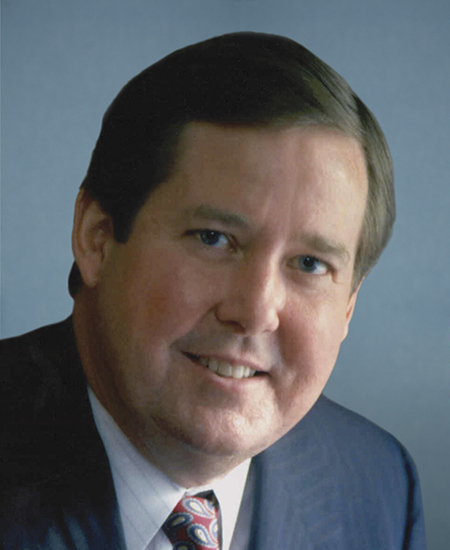
Rep. Ken Calvert
Sponsored bills
Maddy summaryHR 1762, the Forest Service Accountability Act, is a procedural bill changing how the Forest Service Chief is appointed. It requires the President to nominate a candidate with substantial forest management experience for Senate confirmation, with nominations referred jointly to the Senate Agriculture and Energy Committees. The bill also mandates that the President submit a new nomination within 30 days of enactment, applying to the current Chief. This affects the President, Senate committees, and the current Forest Service leadership.
Save America's Forgotten Equines Act of 2025 or the SAFE Act of 2025 This bill permanently prohibits the slaughter of equines (e.g., horses and mules) for human consumption. (Current law prohibits the slaughter of dogs and cats for human consumption. This bill extends the prohibition to equines.) Specifically, this bill prohibits a person from knowingly (1) slaughtering an equine for human consumption; or (2) shipping, transporting, possessing, purchasing, selling, or donating an equine to be slaughtered for human consumption or equine parts for human consumption. The bill subjects a violator to a fine. The bill applies to conduct in or affecting interstate or foreign commerce or within the special maritime and territorial jurisdiction of the United States. However, it does not apply to an activity carried out by an Indian for a religious ceremony. As background, in recent years, the appropriations acts have prohibited the Department of Agriculture (USDA) from using federal funds to inspect horses before they are slaughtered for human consumption. Therefore, there are currently no USDA-inspected horse slaughter facilities in the United States.
Maddy summaryHR 2477, the Portable Ultrasound Reimbursement Equity Act of 2025, would amend Medicare rules to require equal reimbursement for portable ultrasound transportation and setup services as is currently provided for portable X-ray services. This change directly affects Medicare beneficiaries needing portable ultrasound exams and healthcare providers (like mobile clinics) who offer these services. The bill mandates that Medicare pay separately for portable ultrasound transportation and setup in the same way and to the same extent as portable X-ray services, using similar supplier requirements as existing regulations. The policy change would take effect for services provided on or after January 1, 2027.
Maddy summaryHRES 254 is a non-binding resolution recognizing the 250th anniversary of the United States Marine Corps, to be observed on November 10, 2025. The resolution honors the Corps' founding at Tun Tavern in Philadelphia on November 10, 1775, its history of service in major conflicts, and its values of honor, courage, and commitment. It encourages public participation in commemorative events and local recognition of Marines' contributions to national defense.
Maddy summaryHR 2257 authorizes the U.S. Mint to produce three commemorative coins (a $5 gold coin, a $1 silver coin, and a half-dollar) to honor fallen firefighters, with specific quantity limits and specifications. The bill requires a surcharge ($35 for gold, $10 for silver, $5 for half-dollar) on each coin sold, which is directed entirely to the National Fallen Firefighters Foundation to support its programs. The coins must be issued in 2026, will be legal tender, and the government must recover all costs through sales before distributing funds to the Foundation. This is a commemorative coin program, not a direct legislative policy change affecting broader public programs.
Maddy summaryHR 2093 sets new maximum terms for wastewater pollution permits under the Clean Water Act. It limits permits issued to states or municipalities to 10 years and permits issued to other entities (like factories or businesses) to 5 years. This directly affects all facilities requiring federal permits to discharge pollutants into waterways. The bill also makes minor technical corrections to existing permit language to clarify references within the law. These changes update the duration rules for pollution permits without altering the core permitting process.
Maddy summaryThe FOCA Act of 2025 prohibits federal agencies from requiring or banning contractors from using union agreements in construction project bids or contracts. It directly affects federal agencies, contractors, and subcontractors working on federally funded or assisted construction projects (like buildings or infrastructure). The law requires bid documents to not favor or penalize contractors based on whether they have union agreements, aiming to promote open competition and prevent discrimination. This changes how agencies structure bids but does not affect union agreements themselves. The bill applies to all new contracts and subcontracts after enactment, with limited exemptions only for public health/safety emergencies or national security.
Maddy summaryHR 2111 would exempt premium cigars from certain federal tobacco regulations under the Federal Food, Drug, and Cosmetic Act. It redefines "premium cigar" to include only cigars meeting strict criteria: made entirely of tobacco leaf (no filters, additives, or flavorings), handmade, and weighing over 6 pounds per 1,000 units. This exemption directly affects small, family-owned premium cigar manufacturers, shifting regulatory oversight from federal to state levels as determined by a recent court ruling. The bill cites data showing premium cigars are used primarily by adults (1% of U.S. adults), involve lower health risks than other tobacco products, and are rarely used by youth.
Homes for Every Local Protector, Educator, and Responder Act of 2025 or the HELPER Act of 2025 This bill establishes a program administered by the Department of Housing and Urban Development to provide mortgage assistance to law enforcement officers, elementary and secondary school teachers, firefighters, or other first responders. Specifically, these individuals may be eligible for a first-time mortgage on a primary family residence with no down payment. Instead, the mortgage is subject to a one-time, up-front mortgage insurance premium.