

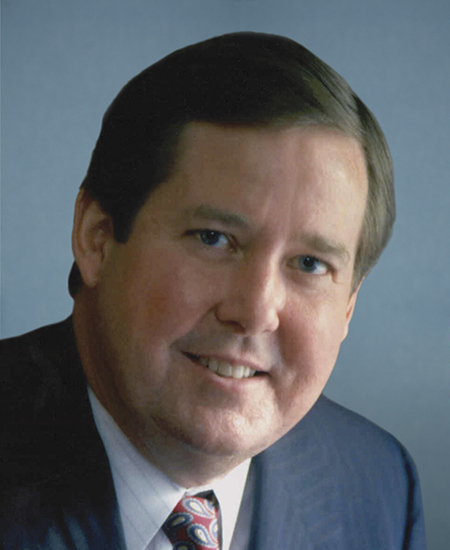
Photo of Ken Calvert
R United States House · District 41 · California On the 2026 ballot

Rep. Ken Calvert

Compare
Total votes
2,818
all sessions
Attendance
99%
22 missed
Higher than 90% of chamber peers
With party
92%
of cast votes
Near the chamber average
Bipartisan score
4%
crosses aisle rarely
Near the chamber average
Sponsored
752
bills & resolutions
Near the chamber average
Committees
3
assignments
752 bills and resolutions

Sponsored bills

Total
752
Primary
69
Co-sponsor
683
This page
752
matching current filters
Co-sponsor HR 5257
In committee · Oklahoma House · Co-sponsor
To reaffirm the trust status of land taken into trust by the United States pursuant to the Act of June 18, 1934, for the benefit of an Indian Tribe that was federally recognized on the date that the land was taken into trust.

Maddy summaryThis bill reaffirms that certain lands taken into trust by the U.S. for federally recognized tribes under the 1934 Indian Reorganization Act remain in trust status. It specifically applies to land taken into trust before the bill's enactment for tribes that were federally recognized at the time the land was acquired. The bill does not create new policy but formally confirms existing trust status for these specific parcels. It directly affects tribes that held federal recognition when their land was taken into trust under the 1934 Act.

In committee Sep 10, 2025 1 co-sponsor
Co-sponsor HR 4669
In committee · Oklahoma House · Co-sponsor
FEMA Act of 2025

Maddy summary# Summary of Proposed FEMA Reform Legislation (FEMA Act of 2025) This comprehensive legislative document proposes significant reforms to the Robert T. Stafford Disaster Relief and Emergency Assistance Act, with four main sections addressing: ## 1. Disaster Assistance Reforms - **Expanded eligibility** for assistance, including clarifying that absence of a fixed address doesn't disqualify individuals from sheltering assistance - **Improved rental assistance** with consideration of local post-disaster rent increases - **Direct assistance** for those unable to use financial assistance, with no requirement to show other assistance can cover costs (except insurance) - **Enhanced notices** for applicants, including documentation of denial decisions - **Clarification of displacement assistance** eligibility, stating insurance shouldn't be considered a duplication of benefits ## 2. Mitigation Program Enhancements - **Preapproved project mitigation plans** requiring states to develop plans with peer review processes - **Improved allocation of funds** with formulas prioritizing vulnerable communities, high-risk areas, and rural/economically distressed communities - **Resilient buildings** requirements for housing retrofits using the latest building codes - **Streamlined application processes** for hazard mitigation funds across multiple programs - **Study on mitigation benefits** to evaluate cost savings and effectiveness ## 3. Transparency and Accountability Measures - **Public dashboards** for both individual assistance (431) and public assistance (432) showing application status, approvals, denials, and funding - **Transparency requirements** for disaster declarations with detailed justifications for approvals/denials - **GAO studies** on numerous topics including: - Identity theft in disaster assistance (409) - Insurance utilization for public assistance facilities (410) - Wildfire management plans (411) - Effectiveness of alerting systems (412) - Cost savings of repair/rebuilding reforms (415) - **Prohibition on political discrimination** in assistance distribution ## 4. Workforce and Operational Improvements - **Study on workforce retention** in noncontiguous communities - **Pilot program** for preliminary damage assessments in remote communities - **Fast-moving disasters working group** to develop best practices for rapid response The legislation focuses on improving efficiency, transparency, and effectiveness of disaster relief programs while prioritizing vulnerable populations and communities with higher risk of disasters. It also emphasizes data-driven decision making through required studies and reports to continuously improve disaster management policies.

In committee Sep 3, 2025 1 co-sponsor
Co-sponsor HR 1569
In committee · Oklahoma House · Co-sponsor
CATCH Fentanyl Act

Maddy summaryHR 1569, the CATCH Fentanyl Act, establishes a 5-year pilot program to test nonintrusive inspection technologies at U.S. border ports of entry. The bill requires U.S. Customs and Border Protection (CBP) to evaluate at least five technology enhancements - including AI, machine learning, and quantum sensing - to improve detection of contraband, drugs, weapons, and threats while reducing inspection wait times. Pilot projects must prioritize cost-effective solutions that integrate with existing systems, adhere to privacy protections, and report findings on performance metrics like detection rates and throughput. The program mandates detailed reports to Congress on effectiveness, implementation plans, and privacy impacts, using existing funding without new appropriations.

In committee Aug 15, 2025 1 co-sponsor
Co-sponsor HR 4831
In committee · Oklahoma House · Co-sponsor
ENFORCE Act

Maddy summaryHR 4831 (ENFORCE Act) strengthens federal enforcement against specific child exploitation crimes. It removes the statute of limitations for offenses involving obscene visual representations of child sexual abuse, adds these crimes to sex offender registration requirements, and mandates courts to handle related evidence in ways that protect victims (e.g., keeping depictions with the government or court). The bill also creates a presumption for pretrial detention and extended supervised release for violations of these specific provisions. These changes directly affect individuals convicted under sections 1466A, 2252A, and related child exploitation laws, as well as federal courts handling such cases.

In committee Aug 1, 2025 1 co-sponsor
Co-sponsor HRES 604
In committee · Oklahoma House · Co-sponsor
A resolution unequivocally condemning nationwide violent attacks on Federal agents enforcing America's immigration laws.

Maddy summaryHRES 604 is a House resolution condemning violent attacks against U.S. immigration enforcement agents. It specifically references documented incidents in 2025 where ICE and CBP officers were assaulted, injured, or targeted by mobs in cities like San Jose, Los Angeles, and Portland. The resolution formally recognizes the work of these agents and calls for support from elected officials, but it does not create new laws or policies. As a symbolic resolution, it has no legal force and solely expresses the House's position on these incidents.

In committee Jul 23, 2025 1 co-sponsor
Co-sponsor HR 4676
In committee · Oklahoma House · Co-sponsor
Modern Firearm Safety Act

Maddy summaryHR 4676, the Modern Firearm Safety Act, preempts state and local laws that require specific handgun design features not mandated by federal law. It directly affects handgun manufacturers, sellers, and consumers in jurisdictions with such requirements, such as those mandating loaded indicators, magazine safety mechanisms, or identification systems. The bill prohibits any state or local government from enforcing or creating regulations that require handguns to include features like cartridge identification, magazine insertion sensors, or other mechanisms not required by federal statute. This law establishes federal standards as the sole requirement for handgun design, overriding conflicting state or local regulations.

In committee Jul 23, 2025 1 co-sponsor
Co-sponsor HR 740
In committee · Oklahoma House · Co-sponsor
Veterans’ ACCESS Act of 2025

Veterans' Assuring Critical Care Expansions to Support Servicemembers Act of 2025 or the Veterans' ACCESS Act of 2025 This bill addresses the administration of the Veterans Community Care Program (VCCP) and other Department of Veterans Affairs (VA) health care matters. Among other provisions regarding the VCCP, the bill establishes in statute access standards that determine when a veteran is eligible to receive non-VA care through the VCCP, requires the VA to notify veterans regarding their eligibility for care within two business days after the VA is aware the veteran is seeking care, and extends the deadline for the submittal of claims under the VCCP by health care entities and providers. The VA must address its mental health treatment programs by establishing a standardized screening process to determine whether a veteran satisfies criteria for priority or routine admission to a mental health residential rehabilitation treatment program or a program for residential care for mental health and substance abuse disorders, tracking the performance of medical facilities and Veterans Integrated Service Networks in meeting the requirements for mental health treatment screenings and timely admission to treatment programs under such screenings, and establishing an appeal process for when a veteran is denied admission to a covered treatment program or is accepted into a program but not offered bed placement in a timely manner. Additionally, the VA must establish an online self-service module for veterans to request and manage appointments, track referrals, and appeal and track decisions related to requests for care.

In committee Jul 23, 2025 1 co-sponsor
Co-sponsor HR 672
Passed · Oklahoma House · Co-sponsor
To establish new ZIP Codes for certain communities, and for other purposes.

Maddy summaryHR 672 directs the United States Postal Service to assign a single unique ZIP Code to 14 specific communities within 270 days of enactment. These communities include Eastvale (CA), Scotland (CT), Castle Pines and Silver Cliff (CO), Hollywood, Miami Lakes, and Ocoee (FL), Urbandale (IA), Franklin, Greenfield, Caledonia, Mount Pleasant, and Somers (WI), and Mills (WY). This change will update mail delivery systems and address identifiers for residents and businesses in these areas, streamlining postal operations.

Passed Jul 22, 2025 1 co-sponsor
Co-sponsor HR 4382
In committee · Oklahoma House · Co-sponsor
America’s Olympic and Paralympic Games Commemorative Coins Act

Maddy summaryHR 4382 authorizes the U.S. Mint to produce commemorative coins for the 2028 Los Angeles Olympics/Paralympics and 2034 Salt Lake City Winter Olympics/Paralympics. It specifies gold, silver, and half-dollar coin designs with defined mintage limits (e.g., up to 100,000 $5 gold coins for each event), all bearing inscriptions like "2028" or "2034" and standard coin features. A surcharge ($5-$50 per coin) is added to sales, with all funds directed to the respective Olympic committees to support event hosting and legacy programs like youth sports. The bill ensures no net cost to the government by requiring surcharge revenues to cover all design, production, and marketing expenses before funds are disbursed.

In committee Jul 14, 2025 1 co-sponsor
Showing 131 to 140 of 752 bills
Previous 1 13 14 15 76 Next