Stop Subsidizing Multimillion Dollar Corporate Bonuses Act This bill extends the $1 million limit on the deductibility of executive compensation to all employees of publicly traded corporations.
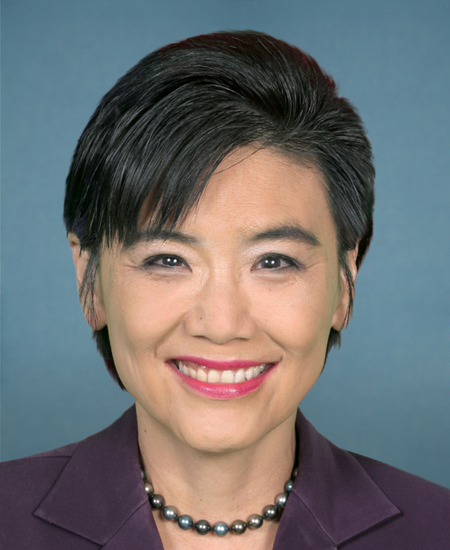
Rep. Judy Chu
Sponsored bills
Electric Vehicle Charging Helps Access to Renewable Green Energy Act of 2021 or the EV CHARGE Act of 2021 This bill reinstates and extends through 2026, the 30% tax credit for the cost of alternative fuel vehicle refueling property. The bill allows an additional 20% credit for excess costs attributable to refueling property that is intended for general public use or for use exclusively by fleets of commercial or government vehicles.
USPS Fairness Act This bill repeals the requirement that the U.S. Postal Service annually prepay future retirement health benefits.
Anti-Racism in Public Health Act of 2021 This bill establishes within the Centers for Disease Control and Prevention (CDC) a National Center on Antiracism and Health and a law enforcement violence prevention program. Among other activities, the new center must declare racism a public health crisis, collect and analyze data, and administer research and grant programs to address racism and its impact on health and well-being. Additionally, the bill specifically directs the CDC's National Center for Injury Prevention and Control, in coordination with the Department of Justice and other relevant stakeholders, to carry out the law enforcement violence prevention program by conducting research and supporting other activities pertaining to law enforcement violence and public health.
Community Health Center Mental Health Screening Act This bill authorizes the Department of Health and Human Services to award grants for mental and behavioral health screenings and mental health services to federally qualified health centers.
Advancing Connectivity during the Coronavirus to Ensure Support for Seniors Act or the ACCESS Act This bill provides funding to increase access to telehealth services and virtual visits in skilled and other nursing facilities during the COVID-19 (i.e., coronavirus disease 2019) emergency. The bill designates the funding as emergency spending, which is exempt from discretionary spending limits. Specifically, the bill provides additional funding for FY2021, to remain available through FY2022, to the Telehealth Resource Center Program to address barriers to telehealth faced by skilled and other nursing facilities. The Office for the Advancement of Telehealth within the Federal Office of Rural Health Policy in the Health Resources and Services Administration manages this program. In addition, the bill provides funding for FY2021, to remain available through one month after the emergency period ends, to the Department of Health and Human Services (HHS) for grants to nursing facilities to support virtual visits for residents during the COVID-19 emergency. HHS must develop relevant guidance for these grants within 15 days. HHS must also coordinate with the Federal Communications Commission to ensure grantees have access to telecommunications and broadband services.
Quality Care for Nursing Home Residents and Workers During COVID-19 and Beyond Act This bill modifies several requirements for Medicare skilled nursing facilities (SNFs) and Medicaid nursing facilities (NFs) to address the public health emergency relating to COVID-19 (i.e., coronavirus disease 2019) and the overall standard and administration of care in such facilities. Specifically, during the public health emergency, SNFs and NFs must comply with specified quality of care, worker safety, and transparency requirements, subject to civil penalties. Requirements include (1) testing residents and employees for COVID-19 weekly or before shifts, respectively, and reporting any lack of available testing kits on a daily basis; (2) providing at least two weeks of paid sick leave to each employee; and (3) reporting the number of COVID-19 cases and deaths, including demographic information, on a daily basis. The bill also establishes general requirements for SNFs and NFs with respect to minimum staffing levels and protections for whistleblowers and residents, subject to civil penalties, as well as training requirements for nurses. It also requires specific consent procedures in relation to the administration of certain psychotropic drugs and prohibits the use of pre-dispute arbitration agreements in such facilities.

Emergency Water is a Human Right Act This bill creates a grant program, administered by the Department of Health and Human Services, to provide funds to states and Indian tribes to assist low-income households that pay a high proportion of household income for drinking water and wastewater services. Further, any entity receiving financial assistance under this grant program must ensure that no home energy service or public water system service is or remains disconnected or interrupted during the COVID-19 (i.e., coronavirus disease 2019) public health emergency.
Ally's Act This bill requires private health insurance plans to cover certain hearing devices and systems (e.g., bone-anchored auditory implants) and related items and services. The bill also imposes limits on cost sharing.
Mental Health Access Improvement Act of 2021 This bill provides for coverage of marriage and family therapist services and mental health counselor services under Medicare. It also excludes such services from the skilled nursing facility prospective payment system, and authorizes marriage and family therapists and mental health counselors to develop discharge plans for post-hospital services.