

Motorcyclist Advisory Council Reauthorization Act This bill provides statutory authority for the establishment of the Motorcyclist Advisory Council whose duties are to advise the Department of Transportation on transportation issues of concern to motorcyclists, including (1) barrier design; (2) road design, construction, and maintenance practices; and (3) the architecture and implementation of intelligent transportation system technologies.
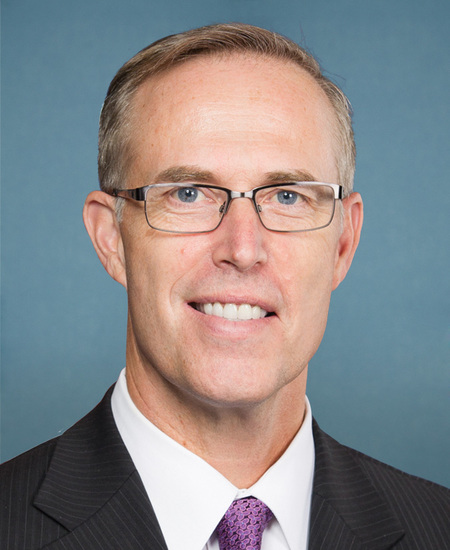
Rep. Jared Huffman
Sponsored bills
Safe Hydration is an American Right in Energy Development Act of 2021 This bill requires hydraulic fracturing operations to test for and report on underground sources of drinking water that are contaminated by such operations. Hydraulic fracturing, or fracking, is a process to extract underground resources such as oil or gas from a geologic formation by injecting water, a propping agent (e.g., sand), and chemical additives into a well under enough pressure to fracture the formation. Specifically, this bill revises requirements governing state underground injection control programs. In order to obtain primary enforcement responsibility for such programs, states must prohibit the underground injection of fluids or propping agents pursuant to hydraulic fracturing operations related to oil, gas, or geothermal production activities unless the hydraulic fracturing operations agree to test for and report on contamination of drinking water. Hydraulic fracturing operations are exempted from those testing and reporting requirements if there is no accessible underground source of drinking water within a radius of one mile of the site where the operations occur. The Environmental Protection Agency must establish and maintain a publicly accessible and searchable database of the testing results.
Focused Reduction of Effluence and Stormwater runoff through Hydrofracking Environmental Regulation Act of 2021 or the FRESHER Act of 2021 This bill addresses stormwater runoff from mining, oil, or gas operations. Specifically, it eliminates a prohibition on the Environmental Protection Agency from requiring a permit under the National Pollutant Discharge Elimination System for discharges of certain collected, uncontaminated stormwater runoff from mining operations or oil and gas operations. In addition, the Department of the Interior must study stormwater runoff associated with oil or gas operations, including an analysis of (1) measurable contamination, (2) groundwater resources, and (3) the susceptibility of aquifers to contamination from stormwater runoff associated with the operations.
CLEANER Act of 2021 or the Closing Loopholes and Ending Arbitrary and Needless Evasion of Regulations Act of 2021 This bill eliminates the exemption of waste associated with the exploration, development, or production of crude oil, natural gas, or geothermal energy from regulations governing the disposal of hazardous waste. Within a year of enactment, the Environmental Protection Agency (EPA) must determine whether such waste meets the criteria for hazardous waste, promulgate regulations concerning the disposal of such waste if the EPA determines it is hazardous, and revise regulations applicable to solid waste management and disposal facilities (e.g., landfills) to address such waste that is nonhazardous.
Children and Media Research Advancement Act or the CAMRA Act This bill requires the National Institutes of Health to fund research regarding the effects of media on infants, children, and adolescents. Such research must examine the impact of media (e.g., social media, television, video games) on cognitive, physical, and social-emotional development.
Quit Because of COVID-19 Act This bill provides for Medicaid and Children's Health Insurance Program (CHIP) coverage of certain tobacco cessation services. Specifically, the bill provides for coverage, without cost-sharing, of diagnostic, therapy, and counseling services and pharmacotherapy, including prescription and nonprescription tobacco cessation agents, that are provided under medical supervision and in accordance with specified guidelines. It also applies a 100% Federal Medical Assistance Percentage (i.e., federal matching rate) for such items and services during the public health emergency relating to COVID-19 and for two years after the emergency period ends.
This joint resolution eliminates the deadline for the ratification of the Equal Rights Amendment, which prohibits discrimination based on sex. The amendment was proposed to the states in House Joint Resolution 208 of the 92nd Congress, as agreed to in the Senate on March 22, 1972. The amendment shall be part of the Constitution whenever ratified by the legislatures of three-fourths of the states.
Neighborhood Homes Investment Act This bill establishes a new business-related tax credit to finance home building and rehabilitation in neighborhoods that meet certain eligibility criteria relating to poverty rates, income, and home values. The credit is limited to 35% of the lesser of the qualified development cost (i.e., the cost of construction, substantial rehabilitation, demolition, and environmental remediation of residential properties) or 80% of the national median sale price for new homes. The credit applies to single family homes containing four or fewer residential units, condominiums, or houses or apartments owned by cooperative housing corporations.
Housing Supply and Affordability Act This bill allows the Department of Housing and Urban Development to award grants to states, local governments, Indian tribes, and Native Hawaiian organizations for the development and implementation of housing policy plans. These plans must increase the housing supply while avoiding resident displacement, increase housing affordability, and reduce barriers to housing development. The amounts provided by the bill are designated as an emergency requirement pursuant to the Statutory Pay-As-You-Go Act of 2010 (PAYGO) and the Senate PAYGO rule. (This excludes the budget effects from being counted for the purposes of enforcing the PAYGO rules.)
Emancipation Statue Removal Act This bill directs the Department of the Interior to ensure that the Emancipation Memorial is removed from Lincoln Park in the District of Columbia. Interior shall donate the Emancipation Memorial to a museum or other similar entity. The recipient of the Emancipation Memorial may not store, display, or exhibit the memorial outside, but if the memorial is stored, displayed, or exhibited outside, ownership of the memorial will revert back to the federal government.