

Maddy summarySB 1022 specifies that Oklahoma's Secretary of State must create rules about who qualifies to circulate and collect signatures for citizen-initiated bills and referendums. This bill directly affects individuals and groups seeking to gather signatures for statewide voter initiatives. The law requires the Secretary of State to establish these qualification rules, clarifying the process for signature gatherers under Oklahoma's initiative and referendum system. It is a procedural change with no substantive policy impact.
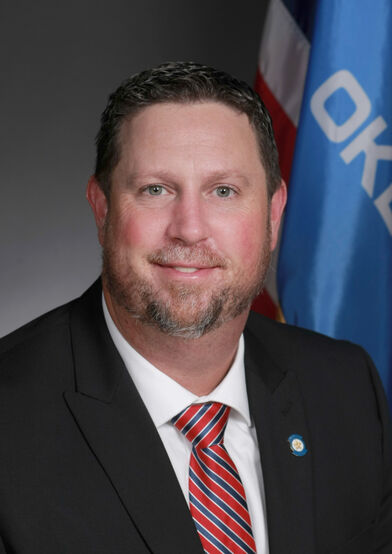
Sen. David Bullard
Sponsored bills
Maddy summaryHB 1164 requires Oklahoma's Department of Human Services (DHS) to return children to parents or guardians within 72 hours if criminal charges against them are dismissed, dropped, or result in a not-guilty verdict. It also mandates DHS to delete all related case records within 72 hours and prohibits keeping records of dismissed cases. Exceptions allowing continued separation are only permitted if DHS files an emergency court motion with clear evidence of an "imminent threat" to the child, requiring a court order within 72 hours. Noncompliance by DHS may trigger civil lawsuits, criminal penalties for staff, or funding audits.
Maddy summaryHB 1361 requires Oklahoma public school personnel and students to use pronouns or names consistent with a person's "assigned sex at birth" (defined by biological sex documented on a birth certificate) without written parental permission. It prohibits school staff from asking students about preferred pronouns or names, and students from requesting staff to use non-birth-sex pronouns or names, unless parents provide written consent. Violations must be reported to administrators within 24 hours, who then notify parents. The bill applies to all public K-12 schools and school employees, excluding students with certain medically documented conditions, and takes effect July 1, 2025.
Maddy summaryHB 1148 strengthens whistleblower protections in Oklahoma by prohibiting retaliation against employees who report wrongdoing by state agencies, public entities, or private employers with supervisory roles. It makes retaliation - such as termination, demotion, or intimidation - a misdemeanor punishable by up to one year in jail, a $5,000 fine, and civil liability for economic, emotional, and mental harm, including punitive damages. Whistleblowers who successfully sue under this law are entitled to attorney fees and court costs, and violators are barred from holding public office or employment. The law takes effect November 1, 2025.
Maddy summarySB 27 exempts specific healthcare practitioners from Oklahoma's electronic prescription requirement for controlled substances. It directly affects veterinarians, practitioners in hospitals/nursing facilities/hospice programs, those serving medically underserved areas (as defined by federal standards), and practitioners facing temporary technology issues - provided they document exceptions in patient records. The bill requires licensing boards to coordinate with drug control authorities and mandates that non-electronic prescriptions use Bureau-approved forms. Practitioners must register with the Oklahoma State Bureau of Narcotics and Dangerous Drugs Control to obtain these forms, and exemptions are denied to those with disciplinary history related to controlled substance prescriptions. The bill updates existing law but does not change the core electronic prescription requirement for most practitioners.
Maddy summarySB 852 reorganizes Oklahoma's militia structure by creating defined categories: the National Guard, Oklahoma State Guard, and Unorganized Militia. It requires each county to establish an Oklahoma State Guard unit with a coordinator, mandates that members may use privately owned firearms meeting military-standard specifications (e.g., magazine capacity, ergonomic features) during service, and specifies compensation for state-mandated training or activation. The bill directly affects Oklahoma State Guard members, county coordinators, and Unorganized Militia participants by altering service requirements, firearm policies, and compensation rules. Key provisions include removing age exemptions for militia service (except for specific exemptions), authorizing the Adjutant General to set firearm standards for emergencies, and requiring county units to be ready for immediate deployment.
Maddy summaryHB 1361 restricts the use of pronouns or alternate names inconsistent with a student's or school personnel's "assigned sex at birth" (defined as gender on a birth certificate) in Oklahoma public schools. It prohibits school staff from asking students about preferred pronouns or using inconsistent pronouns without parental written consent, and similarly bars students from requesting such usage without parental permission. The bill requires school administrators to notify parents within 24 hours of any violation and allows disciplinary action against staff for violations, including license suspension. It excludes students with certain genetic conditions (e.g., disorders of sex development) and takes effect July 1, 2025.
Maddy summarySB 850 requires Oklahoma public school teachers to include specific historical quotes about the founding fathers' views on Christianity in U.S. history lessons. It mandates using primary sources from figures like John Adams and George Washington, including 14 exact quotes emphasizing the Bible's influence on America's founding documents. The bill affects all public school social studies curricula in Oklahoma, while maintaining existing requirements for teaching diverse historical perspectives including African American and Native American history.
Maddy summaryHB 1146 allows Oklahoma counties to levy a severance tax of up to $0.10 per ton on surface-mined materials (excluding coal) for specific public projects. It requires voter approval via election or initiative petition before implementation and exempts materials extracted by individuals for personal use, agricultural limestone, and sand used in fracking. Revenue collected must be split equally: 50% for county road and bridge improvements, and 50% for municipal infrastructure projects based on population. The bill also mandates 60-day notice of tax rate changes by the Oklahoma Tax Commission and prohibits counties from imposing additional fees on mining operations. It becomes effective November 1, 2025.
Maddy summarySB 852 reorganizes Oklahoma's militia structure by creating a formal Oklahoma State Guard (OSG) as a distinct state military force separate from the National Guard. It expands eligibility to all able-bodied Oklahoma residents aged 16-70 who are U.S. citizens or intend to become citizens, requiring each county to establish an OSG unit with a coordinator. The bill allows members to use privately owned semiautomatic firearms meeting specific standards (e.g., >10-round magazines, ergonomic features) during service, and mandates state compensation for training attendance and activation. It also updates rules for membership, equipment, and emergency firearm use while removing previous age restrictions on militia service.