

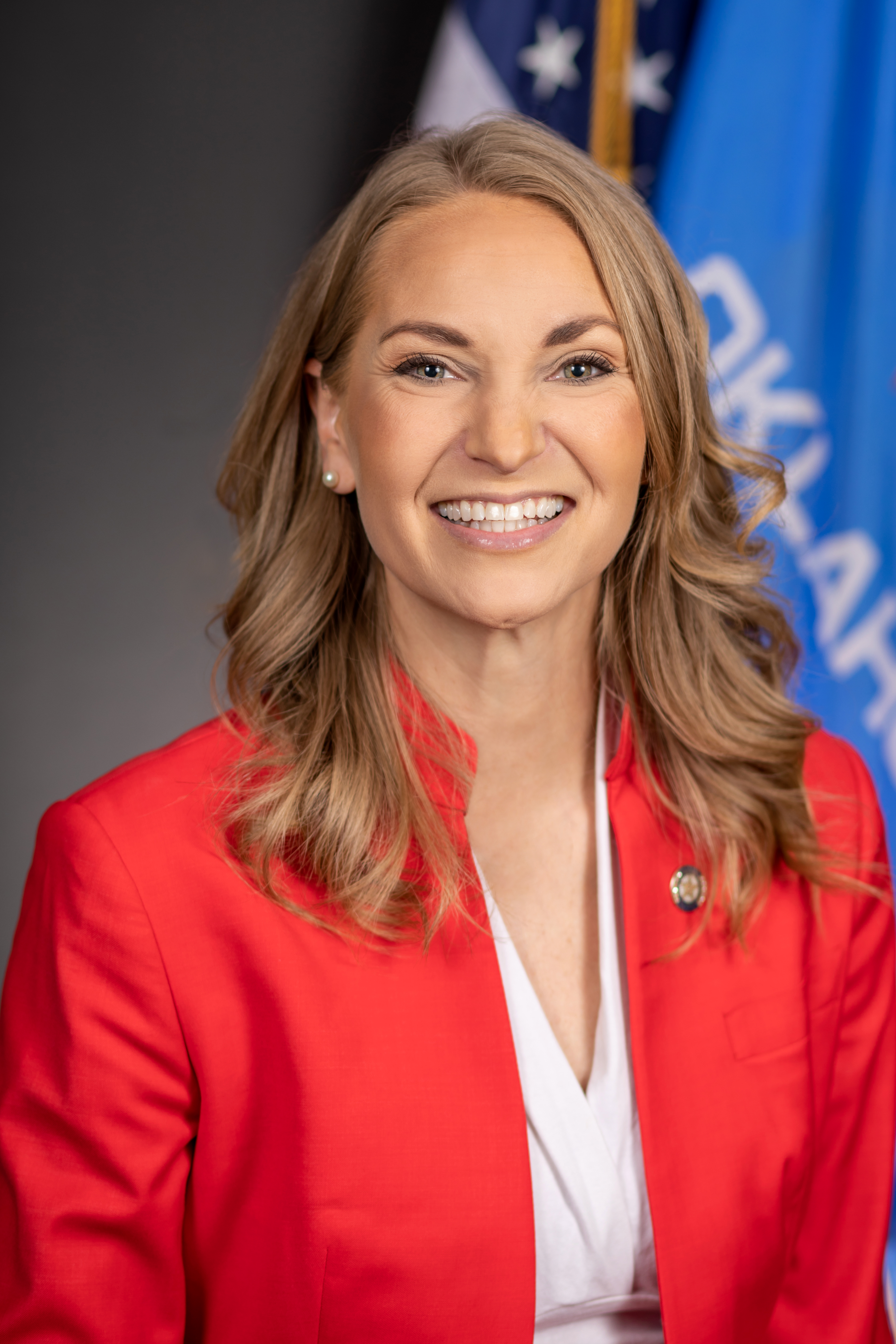
Photo of Carri Hicks
D Oklahoma Senate · District 40 On the 2026 ballot

Sen. Carri Hicks

Compare
Total votes
5,676
all sessions
Attendance
96%
179 missed
Near the chamber average
With party
97%
of cast votes
Near the chamber average
Bipartisan score
3%
crosses aisle rarely
Near the chamber average
Sponsored
364
bills & resolutions
Near the chamber average
Committees
7
assignments
364 bills and resolutions

Sponsored bills

Total
364
Primary
364
Co-sponsor
0
This page
364
matching current filters
Primary SB 155
In committee · Oklahoma Senate · Lead sponsor
State Department of Health; making appropriations; stating purpose. Effective date. Emergency.

Maddy summarySB 155 appropriates $1.1 million to Oklahoma's State Department of Health for a public information campaign about diabetes care and free/reduced-price diabetes supplies, directly affecting Oklahomans managing diabetes. It also allocates $340,222 to federally qualified community health centers serving underserved populations. The funds are designated for the 2023 fiscal year and take effect July 1, 2025. The bill establishes specific funding mechanisms without altering existing laws or creating new requirements.

In committee Feb 13, 2025 0 co-sponsors
Primary SB 347
In committee · Oklahoma Senate · Lead sponsor
Cities and towns; restricting certain municipal powers. Effective date.

Maddy summarySB 347 amends Oklahoma's municipal land use regulations (11 O.S. § 43-103) to update the objectives cities and towns must consider when creating zoning rules, including reducing street congestion, promoting health, preserving history, and facilitating public infrastructure. The bill specifically prohibits municipalities from imposing minimum parking requirements when implementing these regulations. It directly affects all Oklahoma cities and towns that develop zoning or land use codes, requiring them to align with the updated objectives starting November 1, 2025. The change removes parking mandates as a tool for local governments to shape development patterns.

In committee Feb 13, 2025 0 co-sponsors
Primary SB 155
In committee · Oklahoma Senate · Lead sponsor
State Department of Health; making appropriations; stating purpose. Effective date. Emergency.

Maddy summarySB 155 allocates $1.1 million to Oklahoma's State Department of Health for a public information campaign about diabetes care and free/reduced-price diabetes supplies. It also allocates $340,222 to federally qualified health centers (as defined by Oklahoma law) for the 2023 fiscal year. The bill directs these funds for specific health outreach and supply support, targeting diabetes management. It becomes effective July 1, 2025, with an emergency declaration to expedite implementation. This is a funding bill, not a new policy.

In committee Feb 13, 2025 0 co-sponsors
Primary SB 168
In committee · Oklahoma Senate · Lead sponsor
State property; creating a differential pricing preference for the cost of goods manufactured or produced in the United States of America. Effective date.

Maddy summarySB 168 requires Oklahoma state agencies to purchase iron, steel, and aluminum made entirely in the U.S. for public construction projects exceeding $100,000, including buildings, roads, and infrastructure. It defines "made in the U.S." as requiring all manufacturing processes and components to originate domestically. Agencies may seek exemptions if materials aren't available domestically, would increase costs by over 25%, or conflict with public interest, with a 7-day public comment period for appeals. This applies to all state procurement contracts for public works but excludes projects covered by reciprocal trade agreements.

In committee Feb 11, 2025 0 co-sponsors
Primary SB 168
In committee · Oklahoma Senate · Lead sponsor
State property; creating a differential pricing preference for the cost of goods manufactured or produced in the United States of America. Effective date.

Maddy summarySB 168 requires Oklahoma state agencies to use iron, steel, and aluminum manufactured entirely in the U.S. for public construction projects (like roads, schools, or bridges) with contracts exceeding $100,000. Contractors must confirm they understand this requirement in their bids, and agencies must include it in all solicitation documents. Exceptions are allowed if materials aren’t available domestically, using U.S. materials would increase costs by over 25%, or it harms the public interest, with a formal appeal process involving public comment. The law applies to all state public works projects starting November 2025.

In committee Feb 11, 2025 0 co-sponsors
Primary HB 1019
died · Oklahoma House · Lead sponsor
Public health; Oklahoma Rare Disease Advisory Council; purpose; appointment procedures; membership requirements; annual report; membership terms; vacancies; term; effective date.

Maddy summaryHB 1019 creates the Oklahoma Rare Disease Advisory Council within the State Department of Health to address the needs of Oklahomans with rare diseases. The council, composed of 15 members including patients, caregivers, medical professionals, industry representatives, and health officials, will provide recommendations on healthcare access, emergency planning, and research. It must submit annual reports to the Legislature and Governor, including public comment periods, and hold quarterly meetings with public input opportunities. The council will operate starting February 2026, with members serving up to four years during the initial staggered rollout. This bill directly affects rare disease patients, caregivers, and healthcare providers across Oklahoma by establishing a formal advisory body to guide state policy.

died Feb 7, 2025 0 co-sponsors
Primary HB 1019
died · Oklahoma House · Lead sponsor
Public health; Oklahoma Rare Disease Advisory Council; purpose; appointment procedures; membership requirements; annual report; membership terms; vacancies; term; effective date.

Maddy summaryHB 1019 establishes the Oklahoma Rare Disease Advisory Council within the State Department of Health to address the needs of Oklahomans living with rare diseases. The Council, composed of 17 diverse members including patients, caregivers, healthcare providers, researchers, and industry representatives, will conduct public hearings, develop policy recommendations, and create emergency care protocols for rare disease patients. It must submit an annual report to the Governor, Senate President Pro Tempore, and House Speaker - after public comment - with recommendations to improve care access, diagnostics, and health equity. The Council’s first meeting is required by February 1, 2026.

died Feb 7, 2025 0 co-sponsors
Primary HB 1981
In committee · Oklahoma House · Lead sponsor
Schools; Strong Readers Act; changing the number and timing of reading screenings for kindergarten students; effective date; emergency.

Maddy summaryHB 1981, the "Strong Readers Act," changes reading screening requirements for Oklahoma public school students. It requires kindergarten students to be screened at the middle and end of the school year (with the first screening by December), while grades 1-3 must be screened at the beginning, middle, and end of each year. The bill mandates state-approved screening tools that assess phonological awareness, decoding, fluency, vocabulary, and comprehension, and requires schools to provide individual reading intervention plans within 30 days for students not meeting grade-level targets. These plans must include research-based instruction, progress monitoring, and free online literacy resources for families.

In committee Feb 6, 2025 0 co-sponsors
Primary HB 1981
In committee · Oklahoma House · Lead sponsor
Schools; Strong Readers Act; changing the number and timing of reading screenings for kindergarten students; effective date; emergency.

Maddy summaryHB 1981, the "Strong Readers Act," requires Oklahoma public schools to screen all kindergarten through third-grade students for reading skills at specific times each year: beginning, middle, and end for grades 1-3, and middle and end (with first screening by December) for kindergarten. It mandates the State Board of Education to approve at least two screening tools for kindergarten and three for grades 1-3, ensuring they assess phonological awareness, decoding, fluency, vocabulary, and comprehension. Students not meeting grade-level reading targets must receive an individualized intervention plan within 30 days, including research-based instruction and access to free online literacy resources for families. The bill directly affects K-3 students in Oklahoma public schools and their educators, focusing on early identification and support for reading deficiencies.

In committee Feb 6, 2025 0 co-sponsors
Primary HB 2092
In committee · Oklahoma House · Lead sponsor
Schools; school lunch programs; Healthy, Hunger-Free Kids Act of 2010; definitions; mandating participation in the community eligibility provision; effective date; emergency.

Maddy summaryHB 2092 requires Oklahoma public, charter, and private schools meeting specific poverty thresholds to participate in the federal Community Eligibility Provision (CEP) for school meals. Schools with at least 25% "identified students" (children in programs like SNAP, TANF, or homeless programs) must join CEP, which provides free meals to all students without individual applications. School districts must group schools to maximize eligibility, though schools already offering universal free meals are exempt. The law takes effect July 1, 2025, aligning Oklahoma with the federal Healthy, Hunger-Free Kids Act of 2010.

In committee Feb 4, 2025 0 co-sponsors
Showing 51 to 60 of 364 bills
Previous 1 5 6 7 37 Next