

Maddy summaryOklahoma's SB 463, the "Sportsman Hearing Protection Act," exempts firearm suppressors manufactured entirely within the state from federal regulations, including registration requirements. It requires "Made in Oklahoma" stamping on suppressors sold in-state and prohibits state/local governments from enforcing federal laws that conflict with this exemption. The bill also allows citizens to file complaints if local entities enforce conflicting federal rules, with the Attorney General empowered to seek court orders and recover legal costs. This directly affects Oklahoma suppressor manufacturers, local law enforcement, and state agencies by creating a legal framework to resist federal oversight of in-state manufactured suppressors.
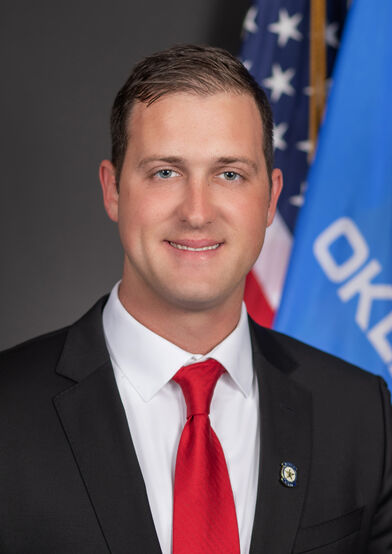
Sen. Tom Woods
Sponsored bills
Maddy summarySB 210 requires child care facilities receiving funding from Oklahoma's Department of Human Services (including child care subsidies) to remove all materials containing content related to sexual orientation or gender identity from their premises. Facilities found noncompliant after an investigation would lose eligibility for child care subsidies and other Department funding until they comply. The bill authorizes the Department to create implementing rules and takes effect on November 1, 2025. It directly affects licensed child care centers and providers participating in state-funded programs.
Maddy summarySB 526 (Oklahoma Senate Bill 526) prohibits Oklahoma courts and law enforcement from enforcing any order requiring firearm confiscation from law-abiding citizens, declaring such actions an infringement on Second Amendment rights. It mandates that law enforcement officers may refuse to follow orders violating the Second Amendment or their oath, and prohibits retaliation or budget cuts against officers or police departments that refuse such orders or designate their area as a "Second Amendment sanctuary." The bill defines "law-abiding citizen" as someone legally permitted to possess firearms and lawfully present in the U.S. It takes immediate effect as an emergency measure.
Maddy summarySB 127 clarifies that if a truck tractor separates from a trailer in an accident, both parts remain legally defined as a "combination vehicle" under Oklahoma law. This affects police officers and towing services, requiring them to document in accident reports whether a separated truck and trailer is treated as a combination vehicle for towing purposes. The bill amends Oklahoma Statutes to explicitly define "combination vehicle" and update related terms like "wrecker" to ensure consistent handling during accident response. It takes effect November 1, 2025, aiming to standardize reporting and towing procedures after collisions involving commercial vehicles.
Maddy summarySB 73 amends Oklahoma's vehicle license fee distribution rules to cap the percentage of funds apportioned to school districts at the level established for the 2015 fiscal year (ending June 30, 2015). For fiscal years beginning July 1, 2019, and later, school districts will continue to receive 36.20% of vehicle registration fees, but the total amount cannot exceed what was distributed in 2015. Any excess funds above this cap will be directed to the Rebuilding Oklahoma Access and Driver Safety Fund instead of school districts. This bill directly affects school districts that receive vehicle registration fee distributions under Oklahoma law.
Maddy summarySB 126 appropriates $2 million from Oklahoma's General Revenue Fund to the Department of Transportation for improving access to industrial areas experiencing major developments. The funding is specifically intended to enhance transportation access in these growing industrial zones. The bill takes effect on July 1, 2025, and includes an emergency declaration for immediate implementation upon approval. This is a straightforward funding measure with no additional policy provisions or voting record impact.
Maddy summarySB 1011 allows Oklahoma legislators entering active military duty for over 30 days to select a temporary replacement from their same political party. The replacement serves all legislative duties, receives the same pay and benefits as the absent legislator, and serves until either the military service ends or the legislator’s term concludes, whichever is shorter. The absent legislator does not receive pay during their military service. The bill takes effect November 1, 2025.
Maddy summaryHB 1106 requires Oklahoma electric utilities (including cooperatives) to create and maintain "electrical wildland fire protection plans" detailing risk areas, infrastructure inspections, vegetation management, and facility upgrades to prevent wildfires. Utilities can recover related costs through rate adjustments approved by the Corporation Commission. The bill shifts liability by shielding utilities from negligence claims if they have a valid plan and followed its fire mitigation steps, but property owners can still sue if a utility lacks a plan. It directly affects utilities managing infrastructure in wildfire-prone areas and property owners impacted by utility-caused fires, effective November 1, 2025.
Maddy summarySB 968 modifies Oklahoma's signature requirements for citizen-initiated petitions. It requires signatures to include the signer's birth date and voter registration address, sets a 90-day deadline for gathering signatures after circulation begins, and limits signatures to 25% from any single county for both initiatives (proposing new laws) and referendums (challenging existing laws). The bill applies directly to citizens or groups collecting signatures to start these petitions. These changes clarify the process for verifying signatures and ensure broader geographic representation in petition support.
Maddy summarySB 968 modifies Oklahoma's rules for gathering signatures on initiative and referendum petitions. It sets a clear 90-day deadline for collecting signatures after all legal challenges to a petition are resolved, requires signatures to be submitted within 90 days of the legislative session ending for referendums, and limits signatures from any single county to 25% of the total required. The bill also allows petition proponents to stop collecting signatures early if all required signatures have already been submitted. These changes directly affect citizens or groups seeking to place measures on the ballot through petitions.