

Maddy summarySB 1011 allows Oklahoma legislators called to active military duty for over 30 days to select a temporary replacement from their same political party, subject to legislative approval. The replacement serves all duties and receives the same pay as the absent legislator during the military service period or until the legislator's term ends, whichever is shorter. The original legislator does not receive compensation during their military service. This bill affects Oklahoma legislators entering active duty and ensures their legislative duties continue without vacating their seat. It becomes effective November 1, 2025.
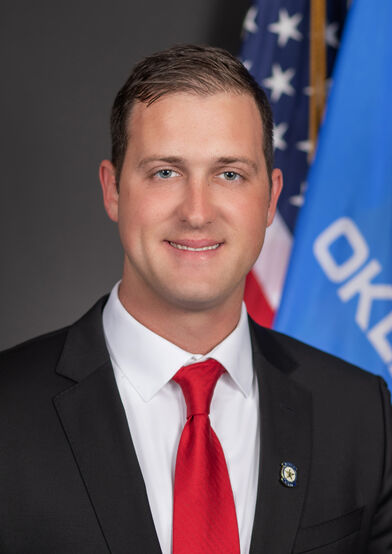
Sen. Tom Woods
Sponsored bills
Maddy summaryHB 1418 amends Oklahoma's motor fuel tax code to exempt marine gasoline from taxation. This directly affects boat owners, marinas, and marine fuel suppliers who sell gasoline specifically for use in boats. The bill adds "marine gasoline" to the list of tax-exempt fuels under Section 500.3 of the Motor Fuel Tax Code, clarifying that this fuel is not subject to the state's motor fuel tax. The exemption applies to gasoline sold for marine use, not general vehicle fuel.
Maddy summarySB 126 appropriates $2 million from Oklahoma's General Revenue Fund to the Department of Transportation for the 2023 fiscal year. The funds are specifically designated to improve road access in industrial areas undergoing major development projects. The bill takes effect on July 1, 2025, and includes an emergency declaration to allow immediate implementation upon approval. This is a funding measure directly affecting transportation infrastructure projects in growing industrial zones.
Maddy summarySB 526 prohibits any federal, state, county, or municipal order requiring firearm confiscation from law-abiding citizens, declaring it a violation of Second Amendment and Oklahoma constitutional rights. It mandates courts and law enforcement to protect these rights and forbids officers from enforcing such orders. The bill also prohibits retaliation against officers who refuse to enforce confiscation orders and bans budget cuts to police departments for refusing to comply or designating "Second Amendment sanctuary" areas. It defines "law-abiding citizens" as those legally permitted to possess firearms under federal or state law. The law takes immediate effect due to an emergency declaration.
Maddy summarySB 210 requires child care facilities receiving Oklahoma Department of Human Services funding (including child care subsidies) to remove all materials containing content related to sexual orientation or gender identity. This affects facilities that rely on state funding for operations. Noncompliant facilities would lose eligibility for child care subsidies and other state funding until they comply with the requirement. The bill authorizes the Department of Human Services to create implementing rules and takes effect November 1, 2025.
Maddy summarySB 127 clarifies that a truck tractor separated from its trailer in an accident must still be treated as a "combination vehicle" under Oklahoma law. It requires law enforcement officers to document in accident reports whether a towed vehicle qualifies as a combination vehicle, which affects how such vehicles are handled during towing. The bill amends Oklahoma Statutes Section 951 to define "combination vehicle" as a truck tractor with attached trailers and specifies reporting requirements for officers. This applies directly to police officers and towing services when responding to accidents involving commercial vehicles. The changes focus on standardizing terminology and reporting procedures without altering penalties or creating new obligations.
Maddy summarySB 175 imposes a $100 annual fee on commercial vehicles registered under the International Registration Plan that report mileage in Oklahoma. The fee directly affects commercial vehicle operators who register in Oklahoma. Five percent of the collected fee funds the Uninsured Commercial Vehicle Recovery Reimbursement Fund, which reimburses wrecker and tower operators for towing uninsured commercial vehicles. The remaining 95% of the fee goes to the Rebuilding Oklahoma Access and Driver Safety Fund. The bill takes effect July 1, 2025.
Maddy summarySB 110 allocates $389,040 from Oklahoma's General Revenue Fund to the Board of Medicolegal Investigations for the 2025-2026 fiscal year. The funding will create one new death investigation district and hire three additional death investigators to support the agency's operations. The bill takes effect on July 1, 2025, and is designated as an emergency measure to allow immediate implementation. This is a budgetary appropriation with no substantive policy changes beyond funding specific staffing needs.
Maddy summarySB 463, the "Sportsman Hearing Protection Act," exempts firearm suppressors manufactured entirely within Oklahoma from federal regulations, including registration requirements. It defines "manufactured in Oklahoma" as using only state-sourced basic materials (excluding generic parts like screws), requires "Made in Oklahoma" stamping on such suppressors, and directs the state Attorney General to seek federal court rulings on the exemption's constitutionality. The bill prohibits Oklahoma state and local entities from enforcing federal laws that regulate suppressors in ways inconsistent with this state law, and bans enforcement of conflicting federal rules by local officials or agencies. This law applies directly to suppressor manufacturers in Oklahoma and state/local government bodies.
Maddy summarySB 73 caps the amount of Oklahoma Vehicle License and Registration Act collections that can be apportioned to school districts at the level allocated for the fiscal year ending June 30, 2015. For fiscal years beginning July 1, 2019, and later, the percentage for school districts remains at 36.20%, but any amount exceeding the 2015 apportionment is redirected to the Rebuilding Oklahoma Access and Driver Safety Fund. This change directly affects how vehicle registration revenue is distributed between school districts and the state fund. The bill takes effect immediately as an emergency measure.