

Maddy summaryHB 2118 updates Oklahoma's military department structure by amending statutes governing the Adjutant General's role. It requires the Adjutant General to hold the rank of Major General with corresponding federal pay rates, revises appointment qualifications (including minimum service requirements), and establishes new positions like Executive Assistant and Assistant Adjutants General for Army/Air. The bill also modifies procedures for military personnel discipline, court-martial convening, and clarifies command authority within the state military forces. These changes directly affect the Oklahoma National Guard leadership and administrative operations under the Military Department.
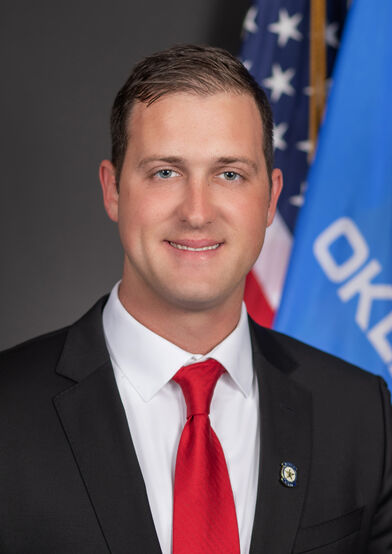
Sen. Tom Woods
Sponsored bills
Maddy summaryHB 2762 creates the "International Corporation Agent Political Activity Oversight Act of 2025," requiring individuals representing foreign corporations (those incorporated outside the U.S. or with over 51% foreign ownership) to file a form with Oklahoma's Secretary of State before lobbying state lawmakers or seeking state funding for their clients. These agents must pay a $25 filing fee and submit details like the corporation's name and the advocacy period. The law aims to increase transparency by making it public who is influencing Oklahoma's laws on behalf of foreign businesses. It became law without the Governor's signature on May 15, 2025.
Maddy summaryHB 2118 updates laws governing the Oklahoma Military Department, the Adjutant General, and members of the state's militia, including the Oklahoma National Guard. The bill modifies the appointment, eligibility, and compensation of the Adjutant General and defines their authority over National Guard programs and facility security. It also updates military justice procedures, establishing guidelines for nonjudicial punishment and courts-martial, and adopts the Oklahoma State Manual for Courts-Martial. Additionally, the bill addresses specific offenses for militia members, such as prohibiting marijuana use and establishing policies for domestic violence.
Maddy summaryHouse Bill 2762, also known as the "International Corporation Agent Political Activity Oversight Act of 2025," requires individuals representing foreign-owned or foreign-headquartered businesses to register with the Oklahoma Secretary of State. These "international corporation agents" must pay a fee and submit a completed filing before they can advocate to influence state laws or seek state funding for their associated international corporation. The Secretary of State will develop the necessary forms and procedures for this new registration process. This measure aims to create oversight for political activities undertaken by agents of international corporations within the state.
Maddy summarySB 723 updates Oklahoma law to clarify which positions at the Oklahoma Department of Veterans Affairs are exempt from standard civil service rules. It adds 11 specific healthcare and administrative roles - including physician assistants, pharmacists, occupational therapists, and Veterans Center administrators - to the list of exempt positions. The bill removes outdated references to previous exemption methods and confirms existing exempt positions remain unaffected. This change takes effect November 1, 2025.
Maddy summarySB 723 updates Oklahoma law concerning the Department of Veterans Affairs. It modifies a statutory reference for unclassified positions within the department, updating it to the "Civil Service and Human Capital Modernization Act." The bill also clarifies that certain positions previously exempted from civil service rules remain unaffected by referencing a specific section of the law. These changes primarily affect the administrative framework for designated employees and positions within the Oklahoma Department of Veterans Affairs.
Maddy summaryHB 1588 creates the Spring Creek Watershed Study Act, requiring the Oklahoma Conservation Commission to conduct a comprehensive water quality study in the Spring Creek watershed (spanning Cherokee, Delaware, and Mayes counties) by June 1, 2026. The study will identify voluntary, incentive-based conservation practices - such as riparian restoration and soil conservation - to protect water quality and fish habitats. It establishes a revolving fund in the State Treasury to accept public and private grants for this work, with funds managed by the Commission. The bill directly affects residents and stakeholders in the Spring Creek area, aiming to address declining water quality through collaborative, non-regulatory solutions.
Maddy summaryHouse Bill 1588, known as the Spring Creek Watershed Study Act, directs the Oklahoma Conservation Commission to undertake a comprehensive water quality plan for the Spring Creek watershed, located in Cherokee, Delaware, and Mayes counties. This plan aims to improve and protect the water quality and aquatic habitat through voluntary, incentive-based conservation programs. The Commission is required to publish an electronic report of its findings by June 1, 2026, and may partner with federal agencies and accept grants. A dedicated revolving fund is established in the State Treasury to support these study and implementation efforts.
Maddy summaryHouse Bill 1374 directs the Corporation Commission to establish minimum fire safety standards for electric vehicle (EV) charging stations located in multistory buildings. It requires operators of these stations to annually attest their compliance with specific safety measures. Key provisions include mandating that charging stations be on the ground floor, within 25 feet of an entry, and equipped with emergency call boxes, fire extinguishers, sufficient lighting, and continuous video surveillance. The bill allows the Commission to set rules for annual reporting, third-party inspections, and fees, with penalties for non-compliance. This legislation directly affects charging station operators who provide EV charging in multistory structures.
Maddy summarySB 469 modifies eligibility requirements for Oklahoma's Emission Reduction Technology Rebate Program, which provides up to 25% rebates for businesses implementing qualifying emission-reduction projects within the state. The bill clarifies submission deadlines (requiring documentation within six months after fiscal year-end completion) and adds a preliminary review process for applications before project funding is spent. It also specifies that applicants must have filed all required Oklahoma tax returns and maintain $1 million general liability insurance with workers' compensation coverage. The changes apply to businesses seeking rebates administered by the Department of Environmental Quality and Oklahoma Tax Commission, using funds from dedicated revolving funds. The bill takes effect July 1, 2025.