

Maddy summarySB 207 establishes the Oklahoma Rare Disease Advisory Council within the State Department of Health to address the needs of Oklahomans living with rare diseases (defined as conditions affecting fewer than 200,000 people nationally). The Council, composed of 13 diverse members including patients, caregivers, healthcare providers, researchers, and industry representatives, will conduct public hearings, develop policy recommendations, and create emergency care protocols to improve access to specialists, diagnostics, and equitable treatment. The bill also modifies Oklahoma’s newborn screening program to require an educational initiative for treatable genetic disorders, aiming to prevent intellectual disabilities and reduce infant mortality through early intervention. This legislation directly affects rare disease patients, their families, healthcare providers, and state agencies responsible for public health programs in Oklahoma.
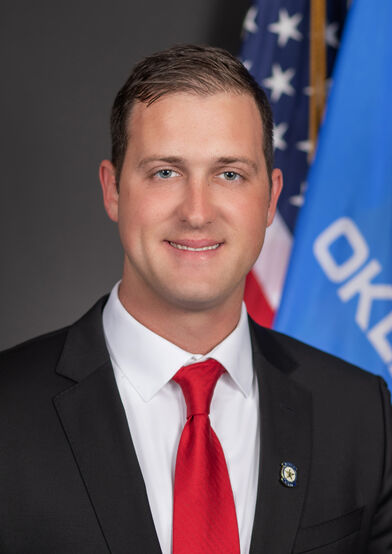
Sen. Tom Woods
Sponsored bills
Maddy summarySB 207 proposed creating the Oklahoma Rare Disease Advisory Council to advise state health officials on rare disease issues and updated requirements for the state's newborn screening program. The bill would have directly affected Oklahomans with rare diseases and newborns receiving screening, by establishing a formal council for policy input and modifying screening protocols. However, the bill was pocket vetoed by the Governor on June 15, 2025, meaning it did not become law. This veto prevents the proposed council from forming and the newborn screening changes from taking effect. The bill remains inactive as it was not enacted.
Maddy summaryHB 1543 expands the Oklahoma Conservation Commission's authority to coordinate conservation efforts, specifically adding requirements to include tribal governments in its work and removing restrictions on the Conservation District Consolidation Fund. The bill allows the Commission to enter contracts with tribes, federal agencies, counties, and other entities to administer statewide conservation programs and secure funding. It directly affects Oklahoma's 157 conservation districts, tribal governments, and state agencies collaborating on resource conservation. The key change requires the Commission to actively coordinate with tribes and manage funds for district programs, while maintaining its existing role in supporting local conservation planning and reporting.
Maddy summaryHB 1356 requires property owners or users of livestock gates on easements to close gates after opening them, directly affecting ranchers and landowners who maintain such gates. Violating this rule incurs escalating penalties: a $500 fine or up to 90 days in jail for a first offense, increasing to $1,500 or one year in jail for third offenses. The Oklahoma Department of Agriculture must create implementing rules, and the law takes effect November 1, 2025. This is a safety measure to prevent livestock escape, not a procedural or commemorative bill.
Maddy summaryHB 1543 expands the Oklahoma Conservation Commission's authority to coordinate conservation efforts across state, tribal, and local entities. It specifically adds language requiring the Commission to include tribal nations in its work, removes restrictions on the Conservation District Consolidation Fund, and strengthens the Commission's ability to enter contracts for shared staffing, statewide programs, and funding. This bill directly affects conservation districts, tribal nations, state agencies, and local governments working on resource conservation. The key change is enhancing coordination mechanisms to avoid duplication and improve efficiency in managing conservation programs statewide.
Maddy summaryHB 1356 requires anyone using gates on properties with livestock to close them after entry. Violations carry fines up to $1,500 or jail time (up to 1 year for third offenses), with penalties increasing for repeat violations. The Oklahoma Department of Agriculture must create implementing rules, and the law takes effect November 1, 2025. It directly affects landowners, farmers, and anyone accessing properties with livestock gates.
Maddy summaryHB 1422 increases the maximum bond capacity for Oklahoma's Grand River Dam Authority (GRDA) from $1.41 billion to up to $3.6 billion, subject to Oklahoma Department of Commerce approval under specific economic development criteria. The bill authorizes GRDA to issue bonds to fund infrastructure projects like dams, hydroelectric power plants, transmission lines, and facility improvements. It updates outdated language to be gender-neutral and declares an emergency to expedite the process. This change directly affects GRDA's ability to finance major energy and water infrastructure projects across Oklahoma.
Maddy summaryHB 1422 increases the Grand River Dam Authority's (GRDA) maximum bond capacity from $1.41 billion to $3.6 billion under specific conditions, directly affecting GRDA's ability to finance infrastructure projects. The bill amends Oklahoma statute to allow GRDA to issue bonds for facilities like dams, hydroelectric plants, and transmission lines, with the higher limit applying if the Oklahoma Department of Commerce approves certain economic development applications. This change enables GRDA to secure more funding for energy infrastructure without requiring new legislative approval for each project. The bill was designated an emergency measure and signed into law by the Governor on May 28, 2025.
Maddy summaryHB 1419 defines "street-legal utility vehicles" in Oklahoma law as motor vehicles meeting specific safety and performance standards (e.g., 400cc+ engine, safety belts, 50 mph capability). It requires these vehicles to be registered as motor vehicles but exempts operators from needing an "M" license endorsement. The bill allows registered street-legal utility vehicles to operate on U.S. Highways in counties with populations under 75,000 (per 2020 census), excluding interstate highways. This law, effective November 1, 2025, modifies existing restrictions on utility vehicles and minibikes.
Maddy summaryHB 1419 creates a new "street-legal utility vehicle" category in Oklahoma, defined by specific requirements like a 400cc+ engine, safety belts, and registration as a motor vehicle. It allows these registered vehicles to operate on U.S. highways in counties with populations under 75,000 (per 2020 Census), excluding interstates and highways with speed limits over 35 mph. The bill removes the need for an "M" endorsement on a driver’s license for operators aged 16+ but requires standard registration and safety equipment. This directly affects owners of utility vehicles seeking to use them on rural U.S. highways, expanding their legal operation beyond previous restrictions.