

Maddy summaryHB 3297 requires highway remediation and cleanup companies operating in Oklahoma to maintain $3 million in liability insurance with pollution coverage, including completed operations coverage. It mandates these companies publish a clear, annual price list online for their top 50 frequently billed services, including standard charges and surcharges. The bill also establishes a lien system allowing companies to claim payment for nonconsensual roadside cleanup services, requiring written notice within 10 days and formal filing within 30 days to enforce the lien. Additionally, it amends towing fee rules to align with existing Corporation Commission rate structures for wrecker services.
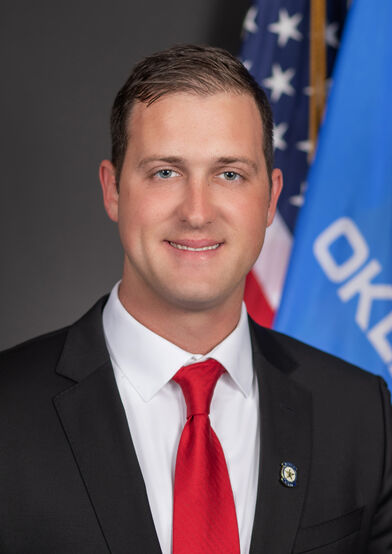
Sen. Tom Woods
Sponsored bills
Maddy summarySB 1035 limits penalties for construction licensing violations in Oklahoma. It caps first-time administrative fines at $2,000 per violation (up from $5,000 under previous rules) and requires the Board to provide educational materials to first-time offenders. The bill also mandates non-adversarial meetings to help first-time violators comply with licensing rules, without affecting penalty amounts in hearings. These changes apply to home inspectors, plumbers, roofing contractors, and others regulated under construction licensing laws, directly affecting licensed professionals who face enforcement actions. The bill sets specific daily penalty limits (e.g., $1,000 per day for noncompliance) and aligns penalty structures across multiple licensing statutes.
Maddy summarySB 1346 creates a state program to provide competitive loans for water and wastewater infrastructure projects in Oklahoma. It establishes a $250 million revolving fund administered by the Oklahoma Water Resources Board, which will allocate funds based on community size: 50% to projects in areas with under 30,000 residents, 25% to medium-sized communities (30,000-400,000), and 25% to large cities (over 400,000). The program requires loan applicants to meet criteria like project urgency, conservation efforts, and matching funds, with a reimbursement requirement if projects fail to meet terms. The Board must publish an interactive map showing project status, locations, and timelines on its website.
Maddy summaryHB 2975 requires Oklahoma poultry feeding operations to create detailed Nutrient Management Plans for handling poultry waste. These plans must include specific waste storage methods (like covered storage during emergencies), strict rules against applying waste during rain, saturated ground, or on frozen land, and soil/waste testing data. Farms must renew these plans every six years and maintain records of all waste applications. The bill directly affects all poultry operations in Oklahoma by setting concrete environmental handling requirements.
Maddy summaryHB 3342, the "Oklahoma Medicaid Audit Bill of Rights Act," establishes new rules for Medicaid audits of healthcare providers. It requires auditors to provide at least one week's notice before an audit, limits audit scope to 50 claims or 0.25% of a provider's billed claims (whichever is greater), bans the use of extrapolation to calculate overpayments, and mandates that audits involving clinical judgment be conducted by specialists in the same field. The bill also guarantees providers 60 days to respond to audit findings, prohibits recoupment for simple clerical errors, and requires clear appeals processes. These changes directly protect healthcare providers who bill Oklahoma's Medicaid program by making audit procedures more transparent and fair.
Maddy summaryHB 4280 increases annual funding for Oklahoma's Rebuilding Oklahoma Access and Driver Safety Fund (ROADS Fund) to support road and bridge construction and maintenance. It sets specific annual funding levels: $575 million for fiscal year 2021, $590 million for 2022, $610 million for 2025, and $670 million starting in 2026. The bill requires the Department of Transportation to use these funds first for debt payments on highway obligations, then for road/bridge construction, maintenance, and matching federal funds. The legislation directly affects Oklahoma's highway infrastructure and the DOT's budget allocation process, with funding adjustments triggered by revenue shortfalls.
Maddy summaryHB 1374 requires operators of electric vehicle (EV) charging stations in multistory buildings to meet specific fire safety standards. Key provisions include compliance with national electrical and fire safety codes, placement on the ground floor within 25 feet of an accessible entry point, installation of emergency call boxes, fire extinguishers, lighting, fire alarms, and 72-hour video surveillance. Operators must annually attest to compliance with these standards and file reports with the Corporation Commission. Violations may result in daily administrative penalties up to $500, with fees collected deposited into a state revolving fund. The law becomes effective November 1, 2025.
Maddy summarySB 175 imposes a $100 fee on commercial vehicles registered under the International Registration Plan that report mileage in Oklahoma. The fee revenue is split: 5% funds a new "Uninsured Commercial Vehicle Recovery Reimbursement Fund" to reimburse tow operators who provide nonconsensual towing services to uninsured commercial vehicles, while 95% goes to an existing driver safety fund. The bill creates this fund in the state treasury as a continuing account with no fiscal year limits. It takes effect July 1, 2025, and is declared an emergency. The bill directly affects commercial vehicle operators using the International Registration Plan in Oklahoma.
Maddy summaryHB 2989, the Wildland Fire Mitigation Act, requires Oklahoma electric utilities to develop and maintain public "electrical wildland fire mitigation plans" addressing risks like vegetation management and infrastructure upgrades. These plans must cover geographic risk areas, inspection procedures, facility modifications, and fire response protocols, with utilities able to recover related costs through rate adjustments. The bill limits liability for utilities in fire-related lawsuits by shielding them from negligence claims if they followed safety codes, and caps property damage awards at restoration costs rather than market value. It also establishes a state program to incentivize landowners to adopt fire mitigation practices, directly affecting utilities, property owners, and land managers across Oklahoma.
Maddy summaryHB 3319 expands Oklahoma's debt collection system by allowing certain qualified entities - including municipal public authorities, public trusts, and courts - to deduct unpaid debts directly from state income tax refunds. It specifically permits collection of court fines/costs (minimum $50), delinquent utility charges (90+ days overdue with disconnection), and other debts from taxpayers who filed state tax returns. The Oklahoma Tax Commission would deduct the amount from refunds after sending written notice, with a 5% collection fee withheld, and taxpayers retain the right to contest claims within 30-60 days. This affects taxpayers with outstanding debts to these entities and streamlines collections for local governments and courts.