

Maddy summaryHB 1103 updates Oklahoma's Department of Transportation's rules for selling surplus property, such as land acquired for highways or unused equipment. It requires the DOT to notify original property owners (or their successors) of surplus land for sale, offering to sell at the original purchase price for five years before moving to public auction. For small parcels (under 3 acres) with only one adjacent owner, that owner must also be notified. The bill additionally mandates the DOT to seek federal approval before selling land held as surplus for ten years or more at below market value. These changes aim to ensure fair treatment of affected property owners during disposal processes.
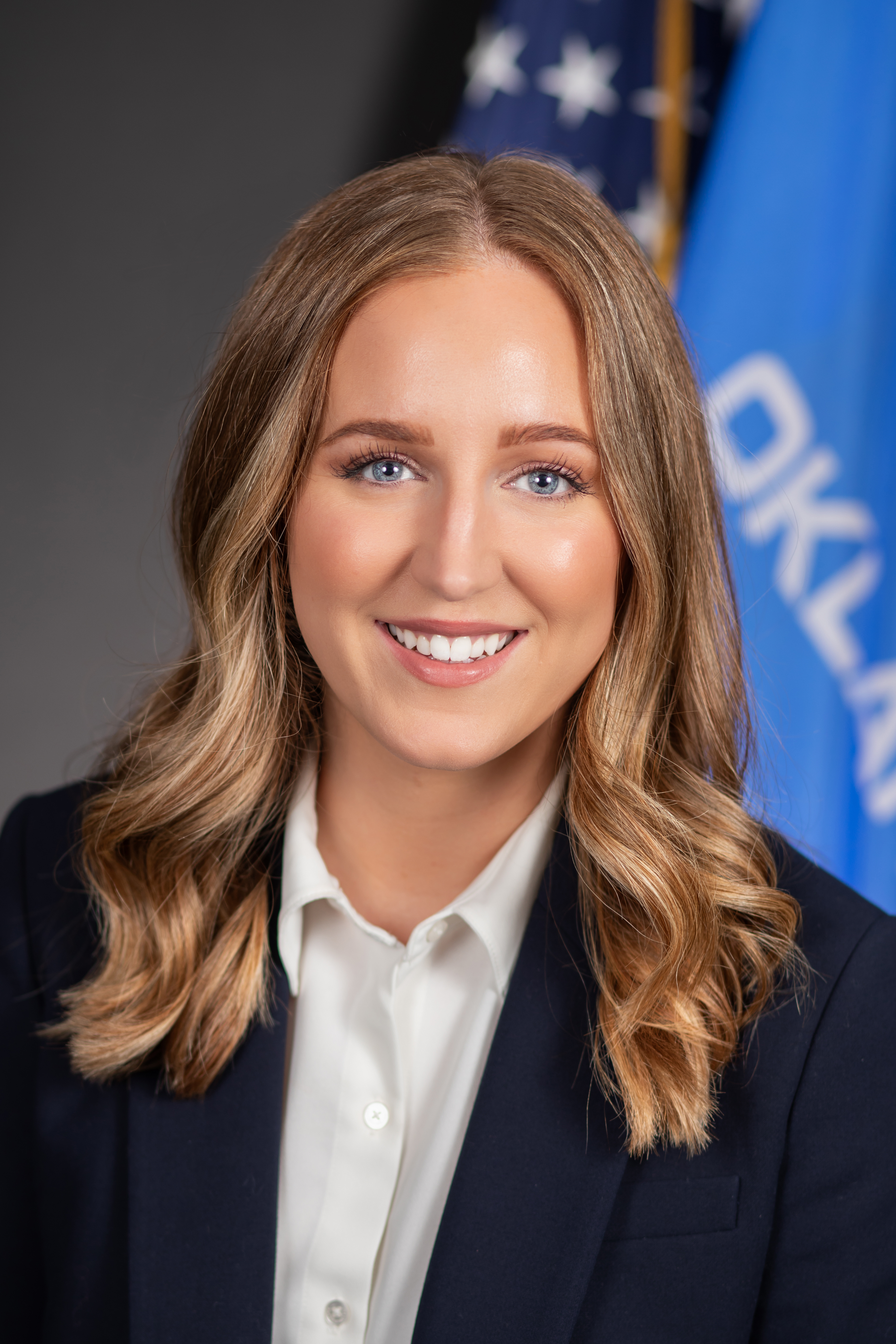
Sen. Ally Seifried
Sponsored bills
Maddy summaryHB 1103 modifies the procedures for how the Oklahoma Department of Transportation (DOT) disposes of land and property it no longer needs. It requires the DOT to first offer surplus land that was a partial taking back to the original owner (or successor) at its original acquisition price for five years, or at fair market value afterward, extending the response time from 30 to 90 days. For total takings under three acres with only one abutting owner, that owner must also receive a similar offer. Additionally, the bill mandates the DOT to annually request federal waivers to sell long-held surplus land for less than fair market value if federal rules prevent it.
Maddy summaryHB 1275 requires social media platforms meeting its definition (e.g., those using algorithms, infinite scrolling, and enabling public social interaction) to verify users are at least 18 years old before granting access. It specifically affects platforms used by Oklahoma residents, excluding email services, gaming platforms, educational tools, and professional networking sites. Key mechanisms include using state-approved digital ID verification and prohibiting "dark patterns" that trick users into sharing age data. The bill explicitly states it does not restrict content or minors' ability to post content on platforms they legally access, focusing solely on age verification for platform access.
Maddy summaryHouse Bill 1275 proposes to regulate social media access for minors in Oklahoma. It would prohibit individuals under 16 years old from creating social media accounts and require parental or guardian consent for minors aged 16 and 17 to use these platforms. Social media companies would be mandated to implement age verification processes, potentially utilizing third-party vendors. Non-compliant companies could face liability and civil action, aiming to safeguard minors from platforms identified as having adverse effects on mental well-being.
Maddy summarySB 6 modifies election dates for school district boards of education in Oklahoma. It moves the general election for school board members from April to the second Tuesday in February (except when a Presidential Primary occurs in February, aligning with that primary instead). The bill also adjusts primary election timing and candidate filing deadlines to occur in December and January. These changes directly affect all public school districts and technology center school districts in Oklahoma, with the law taking effect November 1, 2025.
Maddy summarySB 6 modifies election dates for school board members in Oklahoma school districts and technology center school districts. It changes general elections to occur on the first Tuesday in April during odd-numbered years and the first Tuesday after the first Monday in November during even-numbered years. Primary elections would now be held on the second Tuesday in February during odd-numbered years (or the same day as the Presidential Primary if held in February) and on the fourth Tuesday in August during even-numbered years. Candidates must file declarations of candidacy between December 1st and April 30th annually, with the bill taking effect November 1, 2025.
Maddy summaryHB 1276 requires Oklahoma school districts to adopt policies banning student use of cell phones and personal electronic devices (like tablets, smartwatches, or laptops) during the entire school day and on school grounds by the 2025-2026 school year. Exceptions are allowed for documented medical emergencies with a licensed professional's approval. Districts may opt out of the ban through annual board approval, but must still follow the policy framework. The bill defines "personal electronic devices" broadly (excluding school-issued devices used for instruction) and takes effect July 1, 2025.
Maddy summaryThis bill modifies Oklahoma's alcohol licensing rules by changing ownership thresholds for businesses applying to the ABLE Commission. It replaces "more than 15%" with "15% or more" in restrictions on shared ownership between alcohol manufacturers, wholesalers, and retailers - banning common ownership across these tiers unless permitted by the Oklahoma Constitution. The changes specifically apply to license application requirements and directly affect alcohol businesses seeking to operate in Oklahoma's three-tier system. The bill does not alter existing constitutional exceptions or other licensing procedures.
Maddy summarySB 531 modifies Oklahoma's alcohol licensing rules by prohibiting common ownership between manufacturing, wholesaling, and retailing alcohol businesses, unless permitted under the Oklahoma Constitution. It directly affects alcohol industry license holders who operate in multiple tiers of the supply chain. The bill clarifies that this ownership restriction applies specifically to applications submitted to the ABLE Commission. Key provisions adjust percentage thresholds (changing "more than 15%" to "15% or more") in licensing requirements but center on preventing consolidated ownership across industry tiers. The bill does not change licensing fees or existing constitutional exceptions.
Maddy summaryHB 2800 is a technical amendment to an existing property owners association law, not a substantive policy change. The bill corrects punctuation by deleting the word "or" between "fines" and "assessments" and inserting a comma, changing "fines or assessments" to "fines, assessments" in the text. This minor grammatical adjustment has no impact on fees, disclosures, or legal obligations for homeowners or property associations. The amendment passed unanimously in the House and is now moving to the Senate for consideration.