

Maddy summarySB 617 requires that new permanent administrative rules in Oklahoma automatically expire one year after taking effect, unless renewed by the Legislature. Agencies must request renewal at least four months before expiration, providing a justification and cost-benefit analysis, and publish the request online. The Legislature can renew rules via a joint resolution for up to one year or repeal them at any time before expiration. The law takes effect November 1, 2025, directly affecting state agencies that create rules and the Legislature's renewal process.
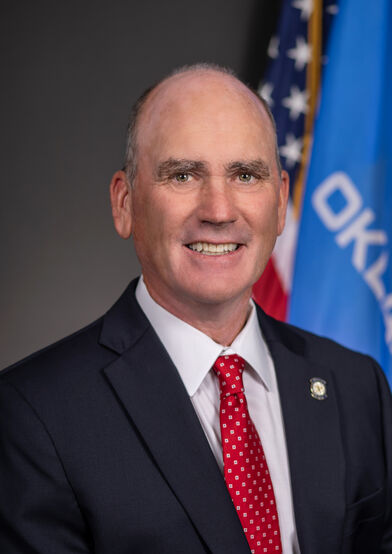
Sen. Jerry Alvord
Sponsored bills
Maddy summarySB 468 requires municipalities in Oklahoma counties with over 450,000 residents (per the latest U.S. Census) to send electronic copies of building permits to county assessors within 30 days of issuance. This applies to cities located in large counties, such as Oklahoma City (which is in Oklahoma County, exceeding the population threshold). The bill mandates electronic submission where feasible, aiming to improve data sharing between local governments. It becomes effective on November 1, 2025.
Maddy summarySB 467 amends Oklahoma law to clarify when county commissioners' discussions are exempt from the Open Meeting Act. It allows commissioners to discuss administrative, operational, and procedural matters (such as scheduling, staffing, internal processes, and employee reports) during meetings - even with a quorum present - as long as they don’t appropriate funds or take official action. The bill also permits separate meetings with county employees about management and exempts certain conferences or events where no official action is taken. These changes apply directly to county commissioners and their meeting procedures across Oklahoma.
Maddy summaryHB 1202 amends Oklahoma's sales and use tax remittance rules by reducing the vendor retention rate from 1% to 0.5% for certain tax collections. This change directly affects businesses (vendors) that collect sales tax on transactions, requiring them to remit a lower percentage of collected taxes to the state. The key provision modifies the statutory rate in the tax code to decrease the amount vendors must hold back from customer payments. The bill is currently pending in the Appropriations and Budget Finance Subcommittee.
Maddy summarySB 587 requires Oklahoma public school districts to provide students in grades 9-12 with specific instruction on human growth and development starting in the 2025-2026 school year. The bill mandates that this instruction include four key elements: human biology related to pregnancy, fetal development inside the womb, a 3-minute high-definition ultrasound video of early fetal organ development, and a computer-generated animation of fertilization and pregnancy stages. School districts may integrate this content into existing courses rather than creating new ones, and the law takes effect July 1, 2025, with an emergency declaration. This directly affects all Oklahoma public high school students and school districts under state education guidelines.
Maddy summaryThis bill creates a special revolving fund within the Oklahoma Department of Environmental Quality to finance a study of the Blue River and Little Blue Creek. The study aims to assess the health of these waterways, which are connected to a sensitive sole-source aquifer, by working with researchers at Baylor University and other relevant agencies. Money for the project will come from state appropriations, donations, and federal grants, and the fund is designed to continue beyond a single fiscal year. The law takes effect immediately upon approval, allowing the department to begin planning and executing the assessment right away.
Maddy summaryThis bill creates an investment rebate program in Oklahoma designed to encourage large manufacturing projects in smaller cities. To qualify, businesses must invest at least $800 million in real property located within a municipality of 20,000 to 30,000 people and have already spent at least 20% of their planned investment. The Oklahoma Department of Commerce will review applications and may offer a rebate equal to 6.25% of the qualified capital expenditure costs. Funding for these rebates comes from a new state fund initially seeded with $50 million, with any remaining funds transferred to the general revenue after 2030.
Maddy summaryThis bill adds the Department of Environmental Quality to a list of state agencies allowed to purchase passenger vehicles and buses with public funds. Currently, most state departments are restricted from buying these vehicles unless they are already on an exempt list, but this change specifically includes the Department of Environmental Quality alongside other agencies like the Department of Public Safety and the Department of Corrections. The legislation also updates existing rules regarding vehicle ownership for other institutions and clarifies definitions for station wagons used for property transport. These changes take effect on November 1, 2024.
Maddy summaryThis bill updates Oklahoma's Employment Security Act to strengthen rules for receiving unemployment benefits by requiring claimants to actively search for work and accept job offers. It mandates that the state maintain an online jobs center where applicants must create profiles, pass skills tests, and apply to at least four weekly job referrals, with failure to participate resulting in benefit termination. To prevent fraud, the legislation requires the Commission to verify identities, cross-check claims against multiple databases including death and inmate records, and investigate offers of suitable work from employers. These changes take effect on November 1, 2024, and directly impact individuals filing for unemployment insurance and the state agency administering those benefits.