

Maddy summarySB 743 addresses criminal disturbance offenses. The bill aims to specify the range of punishment for certain offenses within this category. Additionally, it modifies the elements required to prove certain criminal disturbance offenses.
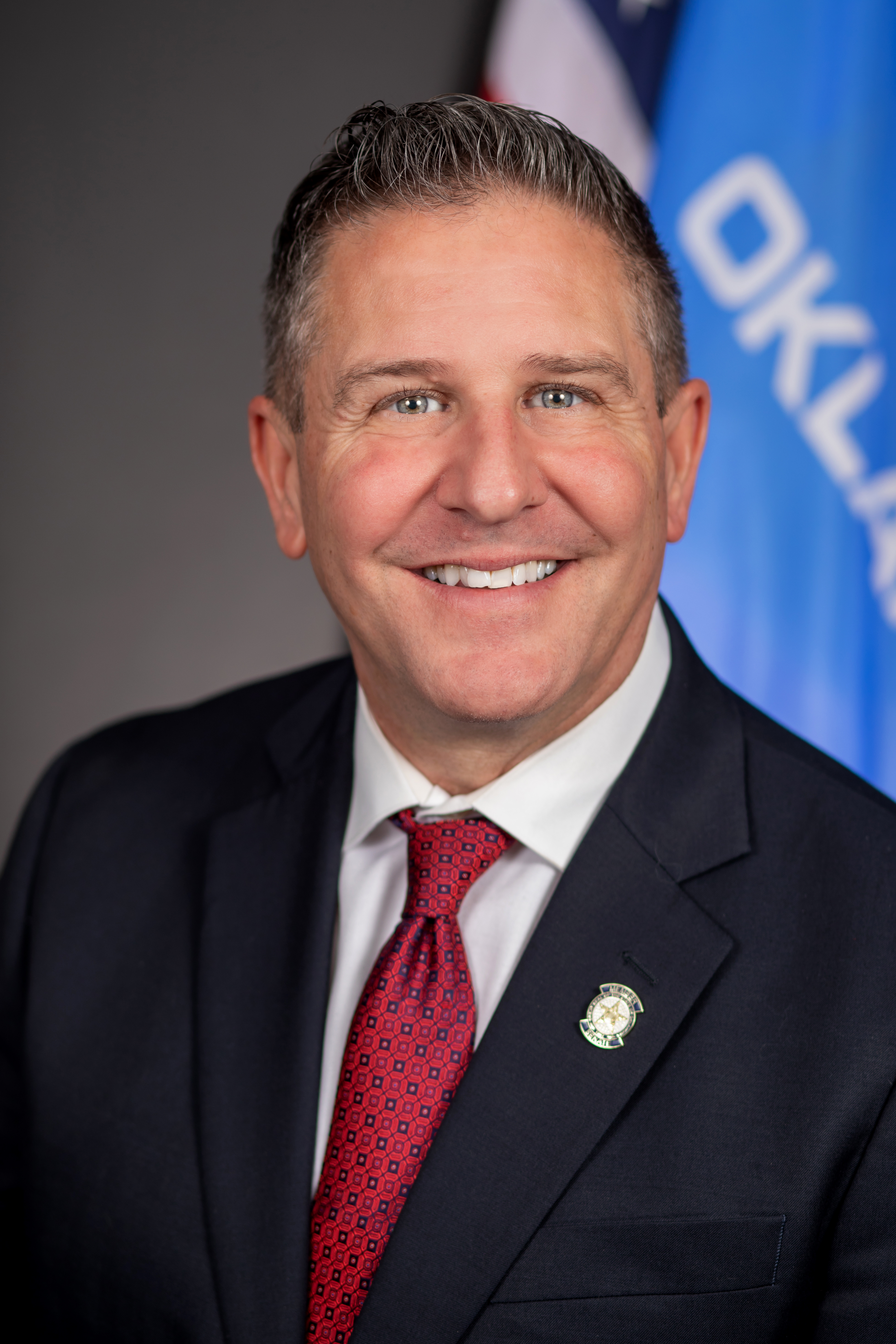
Sen. Todd Gollihare
Sponsored bills
Maddy summarySB 600 amends existing Oklahoma law concerning flat fees for civil cases filed in district courts. The bill increases a specific additional assessment from $5.00 to $10.00. This increased fee applies to litigants in certain case types, including divorce, probate, adoption, and various civil actions. The funds collected from this higher assessment are credited to the Oklahoma Court-Appointed Special Advocates (OCASA). The bill is scheduled to become effective on November 1, 2025.
Maddy summarySenate Bill 742 modifies Oklahoma's laws regarding where firearms can be lawfully carried. The bill specifies that at temporary public events on public property without minimum security provisions, individuals are limited to concealed carry of a handgun unless the event holder authorizes otherwise. It also allows individuals to carry concealed handguns, but not openly, in municipal zoos and parks. These changes affect individuals who carry firearms and visit these types of public locations.
Maddy summarySB 490, Oklahoma's Student Athlete Name, Image, and Likeness Rights Act, allows student athletes at public colleges to earn compensation for using their name, image, or likeness (NIL) without penalty to their athletic eligibility or grant-in-aid. It requires written NIL agreements to include clear terms and fees, mandates disclosure of such contracts within 72 hours or before the next athletic event, and prohibits public colleges from using state funds to pay athletes for NIL activities. The bill also bans requiring athletes to sign NIL releases for broadcasts of games and prevents colleges from revoking athletic benefits if athletes secure unauthorized NIL deals. These changes aim to clarify rights and obligations while keeping state resources separate from NIL compensation.
Maddy summarySB 814 expands access to emergency absentee ballots for military service members deployed during active duty. It allows these voters to request ballots after the standard deadline by submitting a written request with valid ID to their county election office. Ballots must be returned in person or by mail by 7:00 p.m. on election day, following the same processing rules as other emergency absentee ballots. Signed into law on May 5, 2025, this amendment to Oklahoma’s election code (26 O.S. § 14-115.6) specifically adds uniformed-service members to the existing eligibility category that previously covered first responders during emergencies.
Maddy summarySenate Bill 814 expands eligibility for emergency absentee ballots to include uniformed service members who are deployed after the standard request deadline. Previously, this option was primarily for first responders and emergency workers deployed for disaster or emergency relief. Under this bill, eligible uniformed service members can make a written request for an emergency absentee ballot to their county election board. They must present proof of identity when receiving their ballots, which can be returned in person, by mail, or other approved methods by 7:00 p.m. on election day. This act includes an emergency clause, making it effective immediately upon passage and approval.
Maddy summarySB 490 modifies the Student Athlete Name, Image, and Likeness Rights Act, affecting student athletes, postsecondary institutions, and third parties involved in NIL agreements. The bill permits postsecondary institutions or authorized third parties to provide professional representation and compensate student athletes for their NIL, provided it aligns with collegiate association rules and institutional policy. Crucially, it prohibits the use of state funds by postsecondary institutions for such compensation. The bill also allows institutions to revoke agreements with student athletes who receive unauthorized compensation without liability and adjusts terms for contract disclosure and the post-eligibility use of NIL by institutions for promotional content.
Maddy summaryHB 1849 creates a temporary Teacher Recruitment and Retention Program (expiring November 1, 2028) administered by Oklahoma Partnership for School Readiness. It directly affects childcare facility employees by exempting their household income from eligibility calculations for the Child Care Subsidy Program, waiving copayments for qualifying workers, and requiring childcare providers to notify the Department of Human Services within 30 days if an employee leaves. The bill ensures childcare workers qualify for subsidies without income limits, while maintaining all other standard eligibility requirements for the subsidy program.
Maddy summaryHB 1849 establishes the Teacher Recruitment and Retention Program until November 1, 2028, administered by the Oklahoma Partnership for School Readiness. This program aims to support employees of licensed childcare facilities by exempting their household income when determining eligibility for the state's Child Care Subsidy Program. Additionally, the Department of Human Services will waive copayments for these qualifying employees. Childcare facilities must notify the Department within 30 days if an employee leaves, while all other existing eligibility conditions for the Child Care Subsidy Program remain in effect.
Maddy summarySB 521 updates Oklahoma's franchise law by clarifying key definitions in Section 6005 of Title 59. It defines "franchisor" to include subfranchisors who handle both pre-sale and post-sale activities, and specifies that a "franchise" requires trademark use, franchisor control or assistance, and a payment. Crucially, the bill explicitly states that franchisors are not employers of franchisee employees, and franchisee employees are not considered employees of the franchisor. This directly affects franchise businesses and their workers in Oklahoma by clarifying legal employer-employee relationships. The bill takes effect November 1, 2025.