

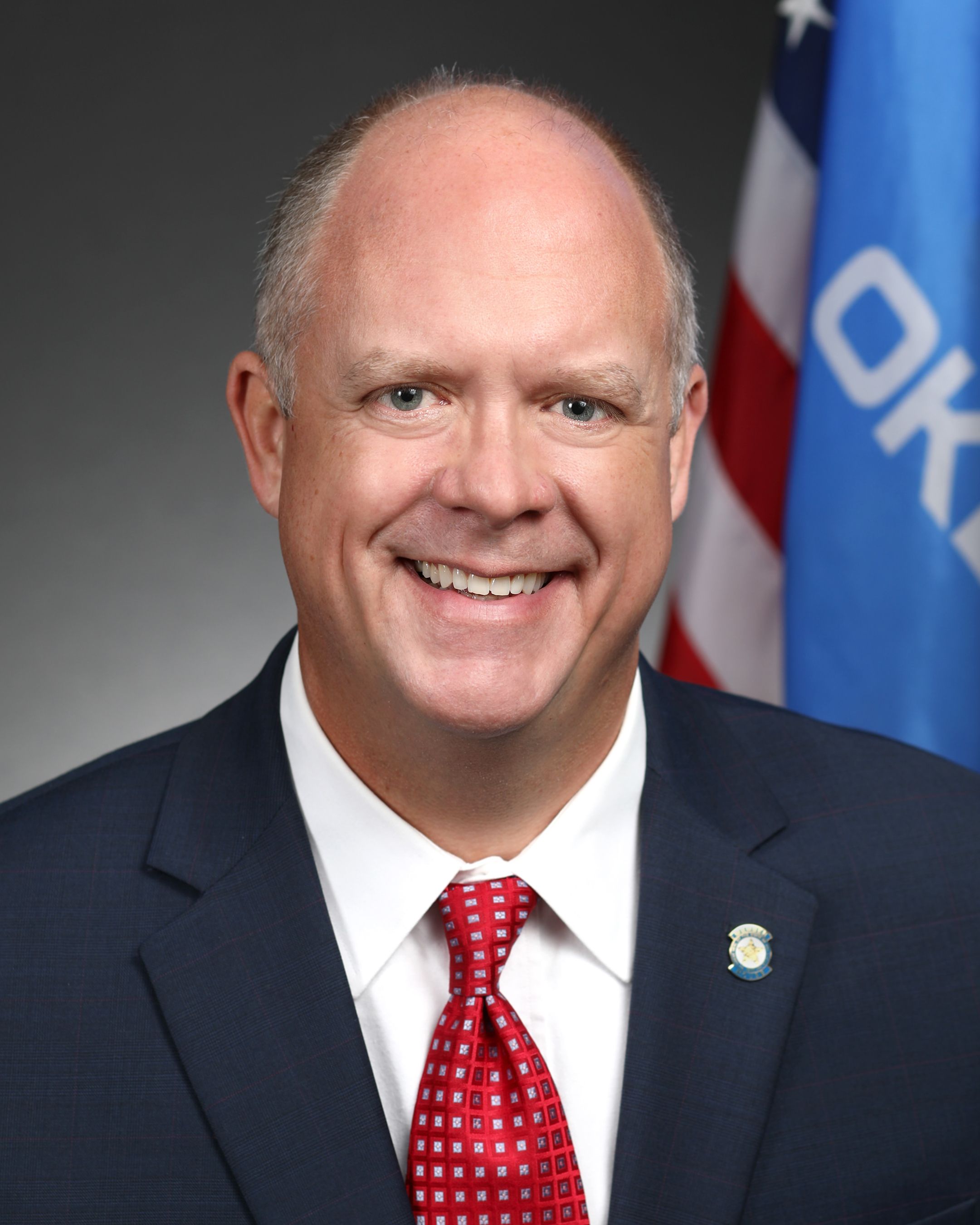
Photo of Preston Stinson
R Oklahoma House · District 96 On the 2026 ballot

Rep. Preston Stinson

Compare
Total votes
4,465
all sessions
Attendance
61%
1,451 missed
Lower than 88% of chamber peers
With party
97%
of cast votes
Higher than 84% of chamber peers
Bipartisan score
2%
crosses aisle rarely
Lower than 91% of chamber peers
Sponsored
208
bills & resolutions
Higher than 82% of chamber peers
Committees
5
assignments
208 bills and resolutions

Sponsored bills

Total
208
Primary
208
Co-sponsor
0
This page
208
matching current filters
Primary SB 1019
Passed · Oklahoma Senate · Lead sponsor
Health insurance; requiring certain coverage. Effective date.

Maddy summarySenate Bill 1019 requires health insurance providers to cover certain anesthesia services without imposing time limits or restricting payment for "anesthesia time." The bill defines "anesthesia time" as the period an anesthesia practitioner prepares and furnishes services to a patient, and "payments for anesthesia service" based on prevailing medical coding standards. This directly affects health insurers and individuals undergoing medical or surgical procedures requiring anesthesia. Specifically, insurers cannot enforce policies that limit the duration of covered anesthesia or exclude its payment. The law became effective on November 1, 2025.

Passed May 12, 2025 0 co-sponsors
Primary SB 56
Passed · Oklahoma Senate · Lead sponsor
Home care; directing Oklahoma Health Care Authority to establish certain family caregiver reimbursement program. Effective date. Emergency.

Maddy summarySB 56 directs Oklahoma's Health Care Authority to create a program reimbursing family caregivers for providing home care services to Medicaid-eligible individuals under age 21 who qualify for private duty nursing. Family caregivers must pass background checks, work under a Registered Nurse's supervision, and be coordinated through a licensed home care agency. The program establishes reimbursement rates for these services and requires the Authority to seek federal approval for Medicaid funding. It amends existing definitions in Oklahoma's Home Care Act to clarify terms like "family member" and "home care agency." The bill takes effect immediately as an emergency measure.

Passed May 12, 2025 0 co-sponsors
Primary SB 875
Vetoed · Oklahoma Senate · Lead sponsor
State Medicaid program; making contracted entities ineligible for capitated contracts for failure to meet certain minimum expense requirement. Effective date. Emergency.

Maddy summarySB 875 addresses the State Medicaid program. It proposes that entities contracted to provide Medicaid services would become ineligible for future capitated contracts if they fail to meet a specified minimum expense requirement. This bill directly affects organizations that contract with the state to manage and deliver Medicaid benefits.

Vetoed May 12, 2025 0 co-sponsors
Primary SB 331
Passed · Oklahoma Senate · Lead sponsor
Schools; creating the Emerson Kate Cole Act; requiring a school employee to call 911 if Epinephrine is administered to a student; requiring certain training. Effective date. Emergency.

Maddy summarySB 331, the Emerson Kate Cole Act, requires Oklahoma school employees to call 911 immediately after administering epinephrine to a student experiencing an allergic reaction. It also mandates that schools notify a student’s parent or legal guardian if a possible allergic reaction occurs and requires annual training for staff on recognizing allergic reactions and using epinephrine. The bill updates existing school medication policies (70 O.S. 2021, Section 1-116.3) to include these specific protocols for epinephrine use and allergic reaction response. These provisions directly affect all Oklahoma public school districts, employees handling medication, and students with known allergies requiring epinephrine.

Passed May 12, 2025 0 co-sponsors
Primary HB 2049
Signed into law · Oklahoma House · Lead sponsor
Medicaid parity; coverage; mental health and substance use disorders; contract compliance; noncompliance reviews; Oklahoma Health Care Authority; complaints; publication of reports; effective date.

Maddy summaryHB 2049 requires Oklahoma's Medicaid managed care plans to comply with federal parity laws for mental health and substance use disorder coverage. It mandates regular compliance checks on nonquantitative treatment limitations (like prior authorization), creates a standardized process for handling parity complaints, and requires the Oklahoma Health Care Authority to publicly report on compliance. The law directly affects Medicaid managed care plans, the Oklahoma Health Care Authority, and Medicaid beneficiaries seeking mental health or substance use services. Key provisions include contract requirements for parity analysis, public disclosure of compliance reports, and a 30-day deadline for publishing federal reports. The bill became effective November 1, 2025.

Signed into law May 8, 2025 0 co-sponsors
Primary HB 2049
Passed · Oklahoma House · Lead sponsor
Medicaid parity; coverage; mental health and substance use disorders; contract compliance; noncompliance reviews; Oklahoma Health Care Authority; complaints; publication of reports; effective date.

Maddy summaryHouse Bill 2049 requires the Oklahoma Health Care Authority (OHCA) to ensure Medicaid managed care plans comply with federal and state parity laws for mental health and substance use disorder services. It mandates that contracts with these plans include provisions for regular compliance analysis of nonquantitative treatment limitations. The bill also tasks the OHCA with developing a process for investigating and resolving parity complaints and requires the public release of compliance reports and de-identified substantiated complaints. These changes aim to enhance oversight and transparency for mental health and substance use disorder coverage for individuals on Medicaid.

Passed May 8, 2025 0 co-sponsors
Primary HB 2050
Signed into law · Oklahoma House · Lead sponsor
Professions and occupations; foreign applicants and requirements; international medical school graduates; foreign licensure body; limited licensure; parameters; employment; training programs; supervision; full licensure; unprofessional conduct; professional competence; good moral character; effective date.

Maddy summaryHB 2050 creates a new temporary licensure pathway for international medical graduates in Oklahoma who cannot immediately qualify for full licensure. It allows these applicants to obtain a limited license if they meet ECFMG standards, provide evidence of three years of post-graduate training or clinical practice abroad, secure employment at an accredited health care provider, and pass an English competency exam. During the limited license period (up to three years), they must practice only under supervision at an approved training program. After three years with no disciplinary issues and passing all USMLE exams, they may qualify for full licensure without the prior practice restrictions. This directly affects foreign-trained physicians seeking to practice in Oklahoma.

Signed into law May 7, 2025 0 co-sponsors
Primary HB 2050
Signed into law · Oklahoma House · Lead sponsor
Professions and occupations; foreign applicants and requirements; international medical school graduates; foreign licensure body; limited licensure; parameters; employment; training programs; supervision; full licensure; unprofessional conduct; professional competence; good moral character; effective date.

Maddy summaryHB 2050 establishes new requirements and pathways for foreign-trained medical professionals seeking to practice in Oklahoma. It specifies criteria for full licensure for foreign applicants, including educational program equivalency and accredited clerkships. A key provision creates a limited licensure option for international medical school graduates, allowing them to practice under supervision at specific healthcare providers with accredited training programs after meeting experience and competency requirements. After three years under a limited license and passing required examinations, these graduates may apply for a full and unrestricted medical license. The bill also addresses English language proficiency, documentation, and grounds for disciplinary action for these applicants.

Signed into law May 7, 2025 0 co-sponsors
Primary HB 2051
Passed · Oklahoma House · Lead sponsor
Practice of medicine; creating the Supervised Physicians Act; limiting scope of supervised practice; directing specified Boards to promulgate certain rules; requiring collaborative practice arrangements; creating certain exemptions; effective date.

Maddy summaryHB 2051 creates Oklahoma's "Supervised Physicians Act," establishing a temporary pathway for medical school graduates to practice under supervision. It directly affects Oklahoma medical school graduates who have passed required exams but lack full licensure, requiring them to enter a collaborative practice arrangement with a fully licensed Oklahoma supervising physician who meets specialty qualifications. Key provisions include a two-year temporary license (non-renewable), mandatory identification as a "supervised physician" via name tags/lab coats, and prohibitions against independent practice without the approved arrangement. The bill does not create a full licensure alternative but sets specific rules for this supervised practice period, with oversight by the State Board of Medical Licensure.

Passed Apr 23, 2025 0 co-sponsors
Primary HB 2051
Passed · Oklahoma House · Lead sponsor
Practice of medicine; creating the Supervised Physicians Act; limiting scope of supervised practice; directing specified Boards to promulgate certain rules; requiring collaborative practice arrangements; creating certain exemptions; effective date.

Maddy summaryHouse Bill 2051, known as the "Supervised Physicians Act," creates a new temporary licensure pathway for medical school graduates in Oklahoma to practice medicine under direct supervision. It allows graduates from Oklahoma medical schools who have passed specific licensing exams to obtain a two-year, non-renewable temporary license. These "supervised physicians" must enter into a collaborative practice arrangement with a fully licensed supervising physician. The bill directs the State Board of Medical Licensure and Supervision and the State Board of Osteopathic Examiners to establish rules for this temporary licensure process, supervision requirements, and associated fees.

Passed Apr 23, 2025 0 co-sponsors
Showing 61 to 70 of 208 bills
Previous 1 6 7 8 21 Next