

Maddy summaryHB 1601, known as the Advancing Rights for Caregiving, Health, and Extended Recovery (ARCHER) Act, establishes new provisions for maternity leave protection for teachers and other eligible school district employees. It amends existing state law to allow teachers to utilize accumulated sick leave to extend their maternity leave. The bill clarifies that sick leave can be used for pregnancy and ensures these provisions align with the federal Family and Medical Leave Act. This measure aims to provide extended recovery and caregiving support for school personnel.
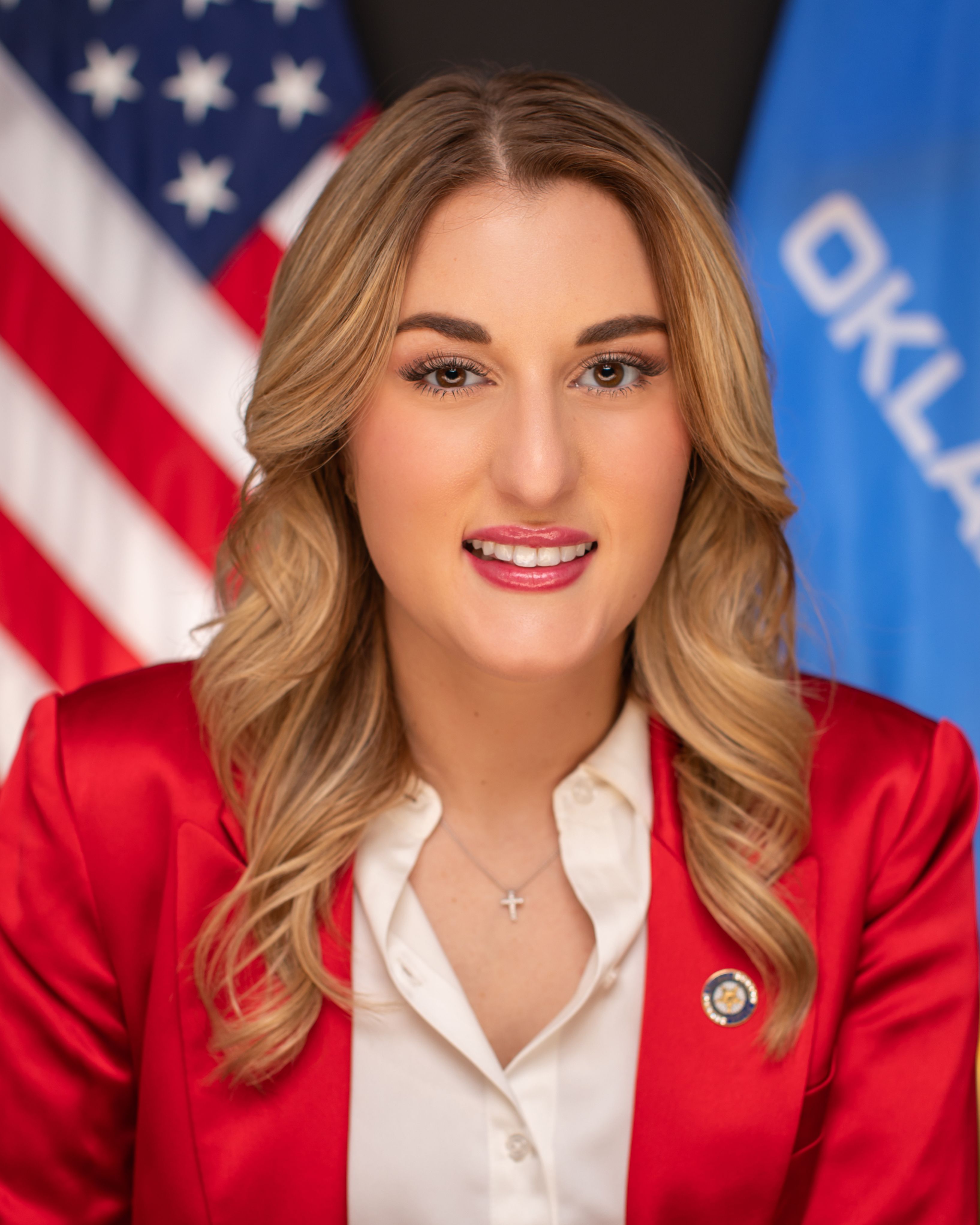
Rep. Emily Gise
Sponsored bills
Maddy summarySB 820 expands Oklahoma's sports league rebate program to include the WNBA, WPF, and NWSL, in addition to the existing NFL, NBA, NHL, and MLB. It allows qualifying professional sports teams (with specific payroll and employment thresholds) to receive quarterly rebates based on verified in-state payroll, capped at $10 million annually per team. The rebate requires teams to maintain operations in Oklahoma for eligibility and repay funds if they leave within three years. The bill is currently under review by the Appropriations and Budget Finance Subcommittee.
Maddy summarySB 820 expands Oklahoma's existing sports league rebate program to include women's professional leagues (WNBA, WPF, and NWSL) alongside the original five major men's leagues (NFL, NBA, NHL, MLB, MLS). It requires eligible teams to meet specific thresholds: an annual payroll of at least $10 million for sports-league jobs and 80% full-time staff in the state, with a yearly rebate cap of $10 million per team. Teams must apply through the Oklahoma Department of Commerce and repay all rebates if they leave the state within three years of receiving payments. The program also directs 5% of quarterly rebates to a state fund for economic development. This bill directly affects professional sports teams meeting these criteria operating in Oklahoma.
Maddy summaryHB 1604 updates Oklahoma's vehicle excise tax rules, changing rates for off-road vehicles (4.5% of sale price with a $5 minimum) and adjusting used vehicle tax brackets. It adds a $10 flat fee for heavy trucks (55,000+ pounds), trailers, and frac tanks used for highway transport, while clarifying this tax replaces sales/use taxes for commercial vehicles. The bill also allows tax credits for stolen or defective new vehicles within 90 days (theft) or six months (defect). These changes affect all Oklahoma vehicle buyers, sellers, and commercial truck operators, particularly for off-road vehicles and heavy freight equipment.
Maddy summaryHB 1603 requires Oklahoma public schools to teach a specific human growth and development curriculum, including a high-definition ultrasound video showing fetal development and a computer animation of cell/organ growth. It mandates this content be delivered in an age-appropriate manner, with parents able to opt their child out using a state-prescribed form two weeks before instruction. The bill affects all public school students in grades 9-12, as completion of this curriculum is required for graduation with a standard diploma unless a parent opts out. Schools must integrate this into health or science courses and align it with state academic standards, effective November 1, 2025.
Maddy summaryHB 1604 updates Oklahoma's vehicle excise tax rules. It changes tax rates for standard cars (based on value), sets a $5 minimum tax for off-road vehicles like ATVs and motorcycles, and adds a $10 tax for heavy trucks, cargo trailers, and frac tanks. The bill exempts family transfers (e.g., parent-to-child) and agricultural vehicles, and allows tax credits for stolen or defective new vehicles. Commercial vehicles will pay this tax instead of sales tax, streamlining payments for businesses.
Maddy summaryHB 1603 requires Oklahoma public schools to teach an age-appropriate human growth and development curriculum in health or science classes, directly affecting students in grades K-12, parents/guardians (via opt-out rights), and school districts (responsible for implementation). The curriculum must include specific content: human biology related to pregnancy, fetal development inside a womb, a 3-minute high-definition ultrasound video of fetal development, and computer-generated animations showing cell and organ growth. Parents may opt their child out of the curriculum two weeks before instruction using a state-prescribed form. Students in grades 9-12 must complete this instruction to graduate with a standard diploma unless an opt-out form was submitted. The law takes effect November 1, 2025.
Maddy summarySB 761, the Lori Brand Patient Bill of Rights Act of 2025, establishes specific rights for patients receiving care in Oklahoma hospitals and healthcare facilities. It requires hospitals to provide respectful care in safe environments, ensure patients understand treatment options (including risks and alternatives), and allow access to medical records in requested formats. The bill mandates clear communication about advance care planning, privacy protections, and the right to refuse treatment (with consequences explained), while requiring hospitals to inform patients over 65 about Medicare rights and research participation options. It also specifies that hospitals must honor advance directives where legally permissible and provide written grievance processes for care concerns. The law directly affects all patients in Oklahoma healthcare settings by codifying these patient protections into state statute.
Maddy summarySB 882 modifies bail rules for people arrested for driving under the influence (DUI), specifically targeting second or subsequent offenses under Oklahoma Statute 47 O.S. § 11-902. It requires courts to consider a defendant’s history of alcohol or drug dependence when setting bail, creating a rebuttable presumption that standard bail would not ensure public safety if dependence is proven. The bill also removes mandatory drug/alcohol testing requirements from accident reporting rules under § 47 O.S. § 10-104. These changes directly affect individuals with documented substance dependence facing repeat DUI charges.
Maddy summarySB 882 modifies Oklahoma's bail procedures for individuals arrested on second or subsequent driving under the influence (DUI) charges. It requires courts to consider alcohol or drug dependence when setting bail for these cases and establishes a rebuttable presumption that standard bail won't ensure public safety if dependence is proven. The bill also removes a requirement for drug and alcohol testing after traffic accidents (under Section 10-104) and updates timing rules for test administration (Section 11-902). These changes directly affect repeat DUI arrestees and aim to prioritize public safety in bail decisions.