

Maddy summaryHB 2270 requires all health insurance plans in Oklahoma (including state employee plans) to cover two specific services without cost-sharing: 1) Genetic testing for inherited cancer mutations when ordered by a provider following evidence-based guidelines (like NCCN Category 2A+ recommendations), for people with personal or family cancer history; 2) Evidence-based cancer imaging for high-risk individuals, also based on recognized medical guidelines. The law takes effect November 1, 2025, and applies to all health benefit plans offered in Oklahoma after that date. It directly affects Oklahomans with increased cancer risk and their insurers by mandating coverage for these preventive services.
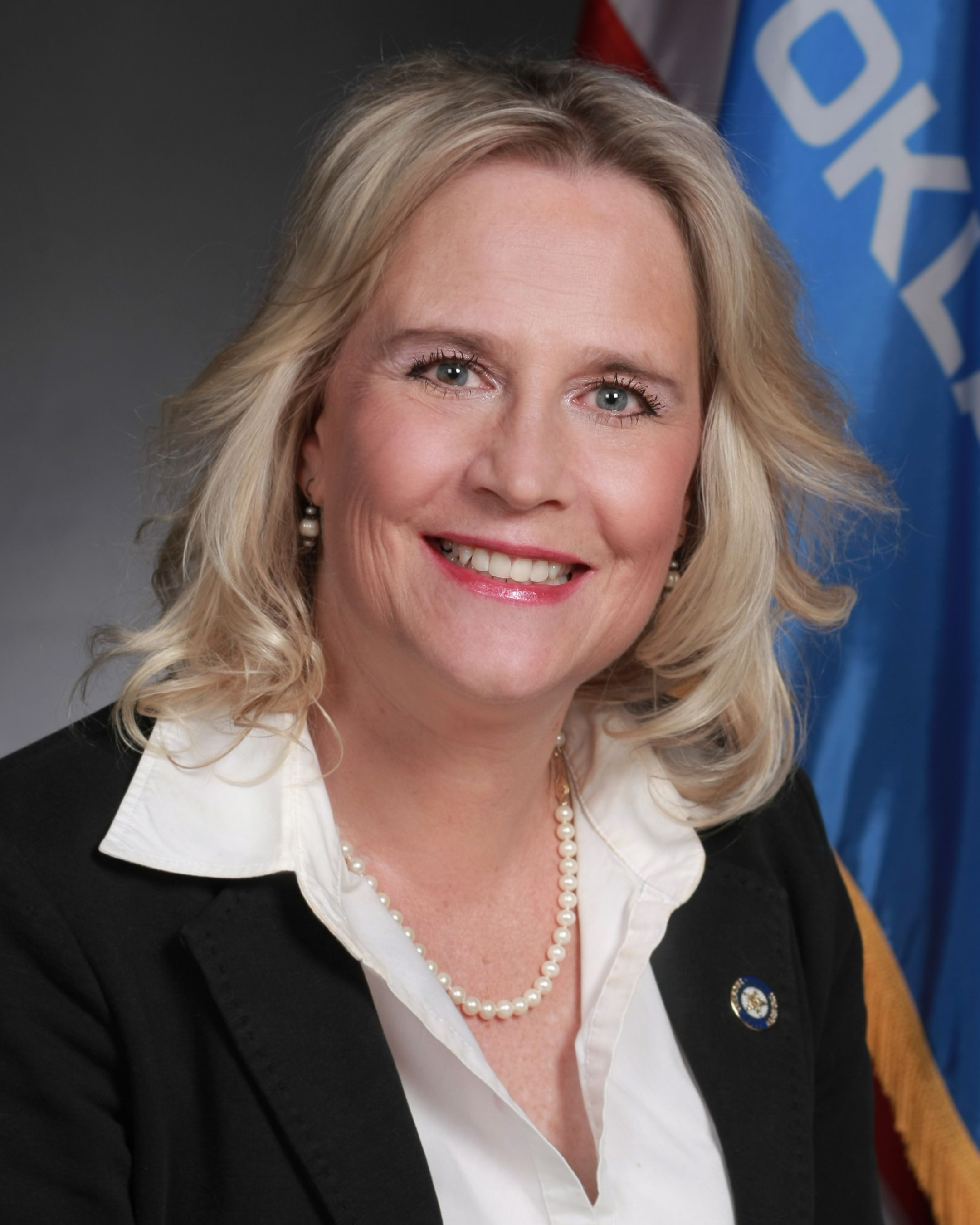
Rep. Nicole Miller
Sponsored bills
Maddy summaryHB 2281 is a procedural bill that names the "Transportation Reform Act of 2025" and sets its effective date as November 1, 2025. The bill text contains no substantive policy provisions or mechanisms, as it is explicitly stated to be "noncodified." It does not describe specific changes to transportation policy, funding, or regulations, nor does it identify who would be directly affected. This appears to be a naming and timing measure rather than a policy bill with concrete provisions.
Maddy summaryHB 2282 names the "Oklahoma Veterans Act of 2025" and sets its effective date as November 1, 2025. This procedural bill establishes the official title for future veteran-related legislation but does not create new benefits, services, or policy changes. It directly affects Oklahoma veterans by providing the framework for future laws under this named act. The bill contains no substantive provisions or mechanisms beyond naming the act and setting the effective date.
Maddy summaryHB 2273 creates the Oklahoma Department of Transportation Educational Assistance Program, providing tuition and fee coverage for Oklahoma students pursuing degrees in fields needed by the Department of Transportation (DOT). Eligible students must enroll in an Oklahoma higher education institution, maintain a 2.0 GPA, and agree to work for the DOT in an eligible profession for five years after graduation. The program covers up to 120 credit hours for undergraduate degrees or a master's program, with repayment required if students fail to complete their degree or work for the DOT as promised. Funding comes from DOT appropriations and private/public donations, with repayments deposited into a dedicated revolving fund.
Maddy summarySB 878 increases the authorized full-time-equivalent employee count for Oklahoma's State Board of Licensed Social Workers from 14 to a higher number specified in the amended statute. This bill directly affects the State Board of Licensed Social Workers by adjusting its staffing limit under Oklahoma law. The key provision amends Section 3601.1 of Title 74 of the Oklahoma Statutes to update the maximum authorized staff count for this specific board. The change takes effect July 1, 2025, and the bill declares an emergency to expedite implementation.
Maddy summarySB 57 amends Oklahoma's distracted driving law to prohibit using handheld electronic devices for texting, calling, or manually composing messages while driving. It reduces the maximum fine from $100 to $5 per violation, with additional court costs totaling up to $95. The bill specifies how these funds are distributed - covering court operations, prosecution costs, victim services, courthouse security, and highway safety programs. Violations will not add points to a driver's license record under this law.
Maddy summaryHB 2272 allocates $25 million from Oklahoma's General Revenue Fund for county bridge reconstruction and an additional $25 million for county road reconstruction on major collector routes, effective July 1, 2025. Projects must be submitted to the Department of Transportation for evaluation based on criteria like safety, structural condition, traffic volume, detour impacts, and school bus routes. Counties proposing projects must demonstrate financial participation as a factor in funding decisions, alongside objective distribution of funds. This bill directly affects county governments and residents by prioritizing infrastructure upgrades on key local roads and bridges.
Maddy summaryThis bill requires health insurance plans in Oklahoma to cover specific genetic testing and cancer imaging for individuals at risk of cancer. The coverage applies to tests ordered by doctors that align with recognized medical guidelines and must not be subject to deductibles, copayments, or coinsurance limits. The law defines genetic testing as multi-gene analysis for inherited cancer mutations and specifies that imaging must be evidence-based and clinically useful. It also includes provisions to ensure these benefits do not negatively impact eligibility for federal health savings accounts.
Maddy summaryThis document is a committee amendment to Senate Bill 1429, which proposes deleting a specific section of the bill and renumbering the remaining parts to align with changes made by Representative Nicole Miller. The text provided does not contain the full bill, so it is impossible to describe the original policy, the fund involved, or the specific authority being granted to the Department of Transportation. Consequently, no summary of the bill's substantive effects can be generated from the available information.
Maddy summaryThis bill modifies Oklahoma's state income tax code to clarify who can claim a financial credit for working in the aerospace sector. It updates the definition of a "qualified employee" to include individuals hired on or after January 1, 2009, who have earned an accredited engineering degree or professional engineering license and are employed by companies manufacturing aerospace hardware or providing related services. The legislation allows these eligible workers to claim a tax credit of up to $5,000 per year for a maximum of five years, with the flexibility to claim the credit in nonconsecutive years if they choose. Additionally, the bill clarifies that any unused portion of the credit can be carried over to the five subsequent tax years, and it sets the effective date for these changes to November 1, 2024.