

Maddy summarySB 1165 allocates $100,000 from Oklahoma's General Revenue Fund to the Department of Public Safety for the 2025-2026 fiscal year. The bill directly provides funding for the department's existing duties as defined by current law, with no new programs or policy changes specified. It includes an emergency declaration to allow immediate implementation upon approval, bypassing standard legislative timelines. This is a routine funding measure for an existing state agency, not a substantive policy change.
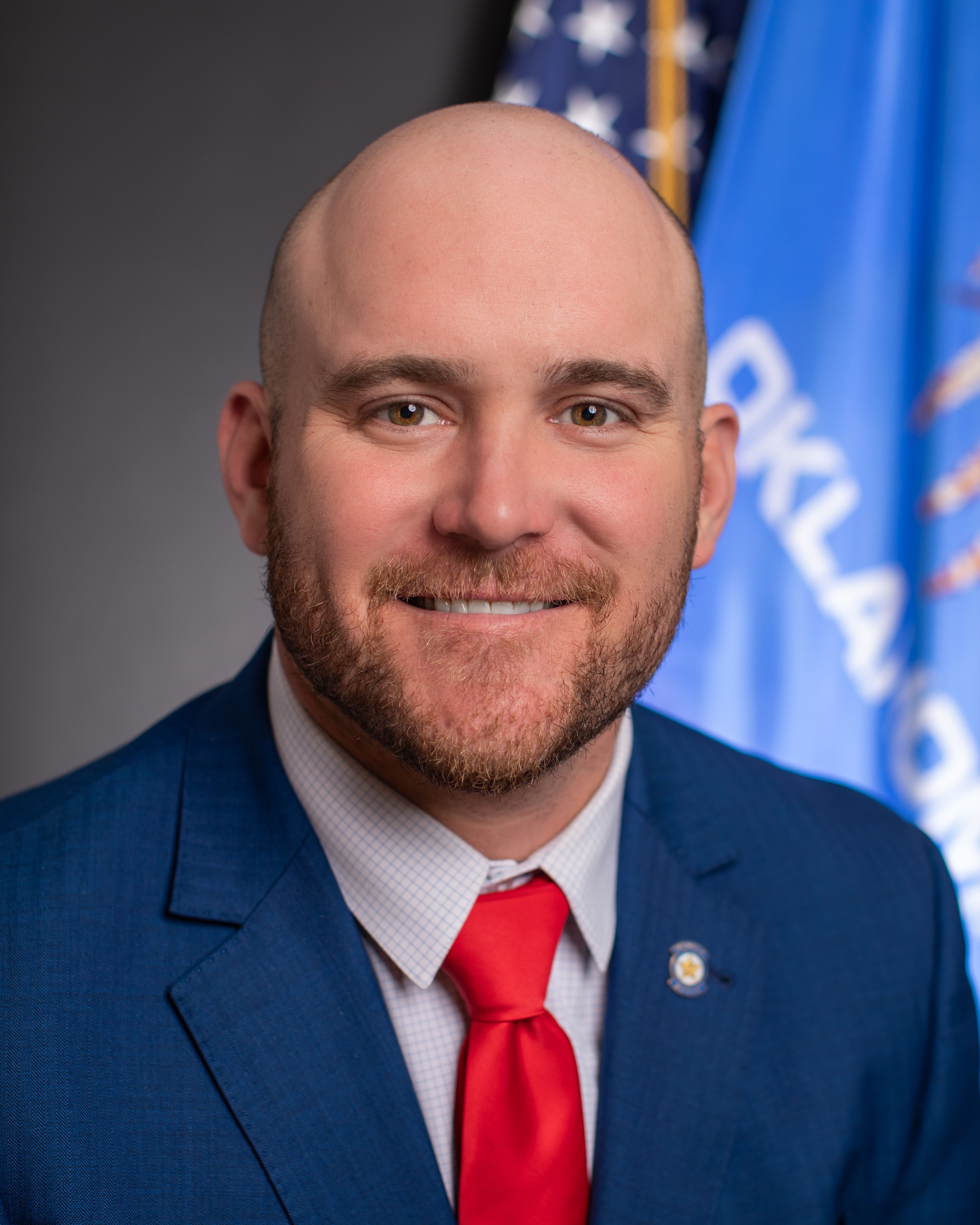
Rep. Trey Caldwell
Sponsored bills
Maddy summarySB 1161 allocates $100,000 from Oklahoma's General Revenue Fund to the Department of Corrections for the 2026 fiscal year. This funding supports the department's existing legal responsibilities, such as managing correctional facilities and staff operations. The bill declares an emergency to allow immediate use of these funds upon approval, bypassing standard budget timelines. It provides specific financial support for current Department of Corrections duties without creating new programs or altering existing laws.
Maddy summaryHJR 1076 is a procedural resolution creating the "State and Federal Governance Resolution of 2026." It requires the Chief Clerk of the House to file one copy with the Oklahoma Secretary of State and one copy with the Attorney General immediately after the resolution passes. This bill does not create new laws or policies; it solely establishes the administrative process for filing this specific resolution. As a procedural measure, it has no direct impact on citizens or policy outcomes.
Maddy summaryHJR 1079 is a procedural resolution that prepares ballot language for a future voter referendum. It establishes the official title and wording voters will see on the ballot for the "Public Finance Resolution of 2026," including the question: "SHALL THE PROPOSAL BE APPROVED?" The resolution requires the Chief Clerk to file this ballot wording with the Secretary of State and Attorney General after passage. This bill does not change any laws or policies - it only sets the format for how the referendum will be presented to Oklahoma voters.
Maddy summaryThis bill creates a procedural framework for a future public vote on a proposed amendment called the Public Finance Resolution of 2026. It establishes the official ballot title and instructions that will appear on any election ballot if the resolution advances to a vote. The resolution directs state officials to prepare and file copies of the document with the Secretary of State and Attorney General for administrative processing. This measure does not change any laws or policies itself but sets up the administrative steps needed to potentially place a finance-related question before Oklahoma voters in a future election.
Maddy summarySB 1992 creates a new income tax credit program for businesses constructing or expanding facilities in qualifying locations across Oklahoma, such as underpopulated counties (under 100,000 people) or near rail infrastructure. It allows a 10% tax credit on construction and expansion costs (up to $6 million per project) and a 50% credit for rail infrastructure projects (up to $3 million per project), with a total annual state cap of $12 million. The bill defines "strategic finance partner" as entities providing capital (like loans or investments) to qualifying projects, enabling them to claim the tax credit through assignment to the business. The credit expires after tax year 2027 and requires Oklahoma Department of Commerce approval for project eligibility.
Maddy summarySB 1991 redirects funds from oil/gas leases, royalties, and property sales into Oklahoma's Capital Assets Maintenance and Protection Fund (OCAMP Fund) instead of the previous Maintenance of State Buildings Revolving Fund. It consolidates capital maintenance programs by requiring state agencies, the Oklahoma State Regents for Higher Education, and the Long-Range Capital Planning Commission to develop five-year capital plans. The bill eliminates the old revolving fund, mandates electronic reporting, and authorizes OCAMP Fund reallocation for emergency projects. This affects all state agencies managing capital assets and higher education institutions that must coordinate with the Commission on infrastructure planning.
Maddy summarySB 1177 updates Oklahoma's rules for state agency payroll and claims processing. It authorizes the Director of the Office of Management and Enterprise Services (OMES) to create standard forms and electronic systems for agencies to submit payroll and claims, allowing agencies to charge multiple fund accounts on a single claim. The bill requires OMES to approve claims after audit and mandates payroll records show total earnings, withholdings, and net pay per employee, with withholdings permitted to be paid to entities in lump sums. This bill directly affects all state agencies that handle employee pay and financial claims.
Maddy summarySB 1480 requires all Oklahoma technology center school districts to appoint an apprenticeship coordinator. These coordinators must build employer relationships, help students access apprenticeships, and work with schools that offer apprenticeships under the AIM Act. The bill also mandates that schools serving technology centers must collaborate with these coordinators to improve student participation in apprenticeship programs. This directly affects technology center districts, their partner schools, and high school students seeking work-based learning opportunities.
Maddy summaryHB 3976 establishes a grant program under Oklahoma's State Department of Health to help rural and small hospitals open new facilities or keep existing ones open by funding infrastructure, equipment, or technology needs. Hospitals applying must contribute at least 20% of project costs through cash or in-kind donations. The program will be funded through a new revolving fund in the state treasury, which replenishes itself and can be used continuously without annual budget limits.