

Maddy summarySB 1392 modifies Oklahoma's income tax credit for qualified employees in the aerospace sector. It increases the annual credit from $5,000 (for tax years 2009-2026) to $10,000 (for tax years 2027-2031), allowing a maximum of $10,000 per year for up to five total years. Unused credits can be carried forward to future tax years, but the credit cannot reduce taxes below zero. The bill would take effect November 1, 2026, if passed.
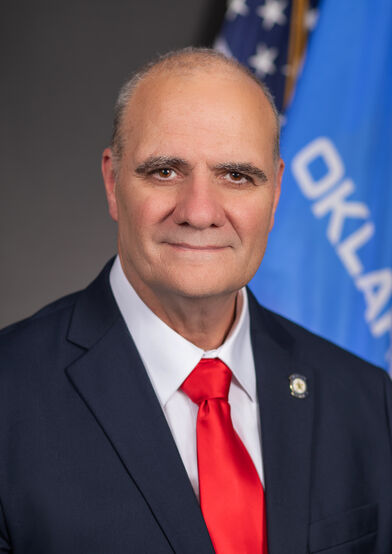
Rep. Daniel Pae
Sponsored bills
Maddy summaryHB 4309, the "Electronic Pull-Tab Device Act," regulates electronic pull-tab gaming devices used in Oklahoma charitable events. It requires all devices to have an ABLE Commission-approved seal, prohibits features like spinning reels, flashing lights, or sound effects designed to entice players, and mandates secure memory storage for critical game data. The bill also bans any physical or digital manipulation that could alter game outcomes and limits facilities to ten non-handheld devices per location. These rules directly affect charitable gaming venues operating electronic pull-tab systems under Oklahoma's Charity Games Act.
Maddy summaryThis bill, known as the Oklahoma Mental Health Reform Act of 2026, establishes a new legal framework for mental health services in Oklahoma but does not yet include specific policy provisions. The legislation creates a designated law that will become effective on November 1, 2026, though the current text does not detail what specific mental health reforms or programs it would implement. At this stage, the bill serves primarily as a placeholder that allows future legislation to be developed under this title without immediate codification in the state statutes.
Maddy summarySB 1259 requires Oklahoma public airports that own, operate, or lease parking facilities to provide free parking to veterans who were honorably discharged from the U.S. military or Oklahoma National Guard. The bill applies to vehicles driven or occupied by these veterans and defines "public airport" as one open to all without prior permission. It takes immediate effect upon approval, declared an emergency. This policy change directly affects eligible veterans and airport operators by mandating free parking access at designated facilities.
Maddy summarySB 209 creates the Taiwan Regional Trade Office within Oklahoma's Department of Commerce to facilitate business relationships between Oklahoma companies and Taiwan-based entities (excluding entities under authoritarian governments). The office will promote trade opportunities, organize business travel to Taiwan, provide market information, and coordinate with federal efforts to support Oklahoma businesses. It requires a physical office in Taipei, Taiwan, and mandates a cost/benefit analysis by January 2029 to determine if the office should continue operating. The bill becomes effective July 1, 2025, with no Governor's signature required.
Maddy summarySB 209 creates a "Taiwan Regional Trade Office" within the state's economic development agency to facilitate trade, investment, and business relations between the state and Taiwan. It directly affects state businesses, economic development officials, and agencies involved in international commerce by establishing a dedicated entity for these purposes. The bill defines the office's specific duties, including promoting bilateral economic partnerships and coordinating with relevant state departments. The legislation became law on May 29, 2025, without requiring the governor's signature.
Maddy summarySB 799 requires Oklahoma schools to include a student's parent, legal guardian, or designated alternate adult (like a shelter worker) in electronic communications about the student, unless the communication is on a school-approved platform for academic purposes. It mandates that schools must first send a 15-day notice to parents/guardians about designating an alternate adult for homeless students, obtain written verification of no objection, and update the student's status if circumstances change. Schools must train staff on these rules and use approved communication platforms to automatically include parents or designated adults. The bill applies directly to public and charter schools, their staff, and homeless students who lack a parent or guardian involved in their education. Exceptions only allow direct communication during emergencies, with schools required to notify parents or guardians afterward.
Maddy summarySB 535 amends Oklahoma's Open Records Act by removing a specific requirement (subparagraph "p") related to how public agencies must respond to certain public records requests. This change modifies the procedural steps public bodies must follow when fulfilling those requests. The bill, which became law without the Governor's signature on May 27, 2025, directly affects all Oklahoma public agencies that process public records requests. It streamlines the response process by eliminating the referenced provision.
Maddy summaryHB 2013, "Dylan's Law," requires health insurance companies to cover epilepsy treatments equally to other conditions, prohibits dropping coverage solely due to an epilepsy diagnosis, and mandates coverage for medically necessary neurostimulation devices. It also allows individuals with epilepsy (diagnosed by a licensed doctor) to voluntarily add a unique symbol to their Oklahoma driver's license or ID card by June 1, 2026, to help first responders identify their condition during emergencies. The symbol cannot be used for any other purpose and may be removed at any time. These provisions became law on May 25, 2025, without a gubernatorial signature. The bill directly affects people with epilepsy and insurers operating under the Affordable Care Act in Oklahoma.
Maddy summaryHB 2011, titled "Fighting Chance for Firefighters Act," actually expands health insurance benefits for firefighters rather than providing tax credits, as the title incorrectly states. The bill amends Oklahoma Statutes Section 1315 to explicitly include municipal fire departments (organized under 11 O.S. § 29-101) and county fire departments (under 19 O.S. § 351) in the Oklahoma Employees Insurance and Benefits Plans. This allows firefighters employed by these departments to access the same health insurance coverage available to state employees, including continuation of coverage after retirement or termination with eight years of service. The law, enacted without the Governor’s signature on May 27, 2025, directly affects firefighters in local fire departments by improving their access to health insurance benefits.