

Maddy summaryHB 1543 expands the Oklahoma Conservation Commission's authority to coordinate conservation efforts across state, tribal, and local entities. It specifically adds language requiring the Commission to include tribal nations in its work, removes restrictions on the Conservation District Consolidation Fund, and strengthens the Commission's ability to enter contracts for shared staffing, statewide programs, and funding. This bill directly affects conservation districts, tribal nations, state agencies, and local governments working on resource conservation. The key change is enhancing coordination mechanisms to avoid duplication and improve efficiency in managing conservation programs statewide.
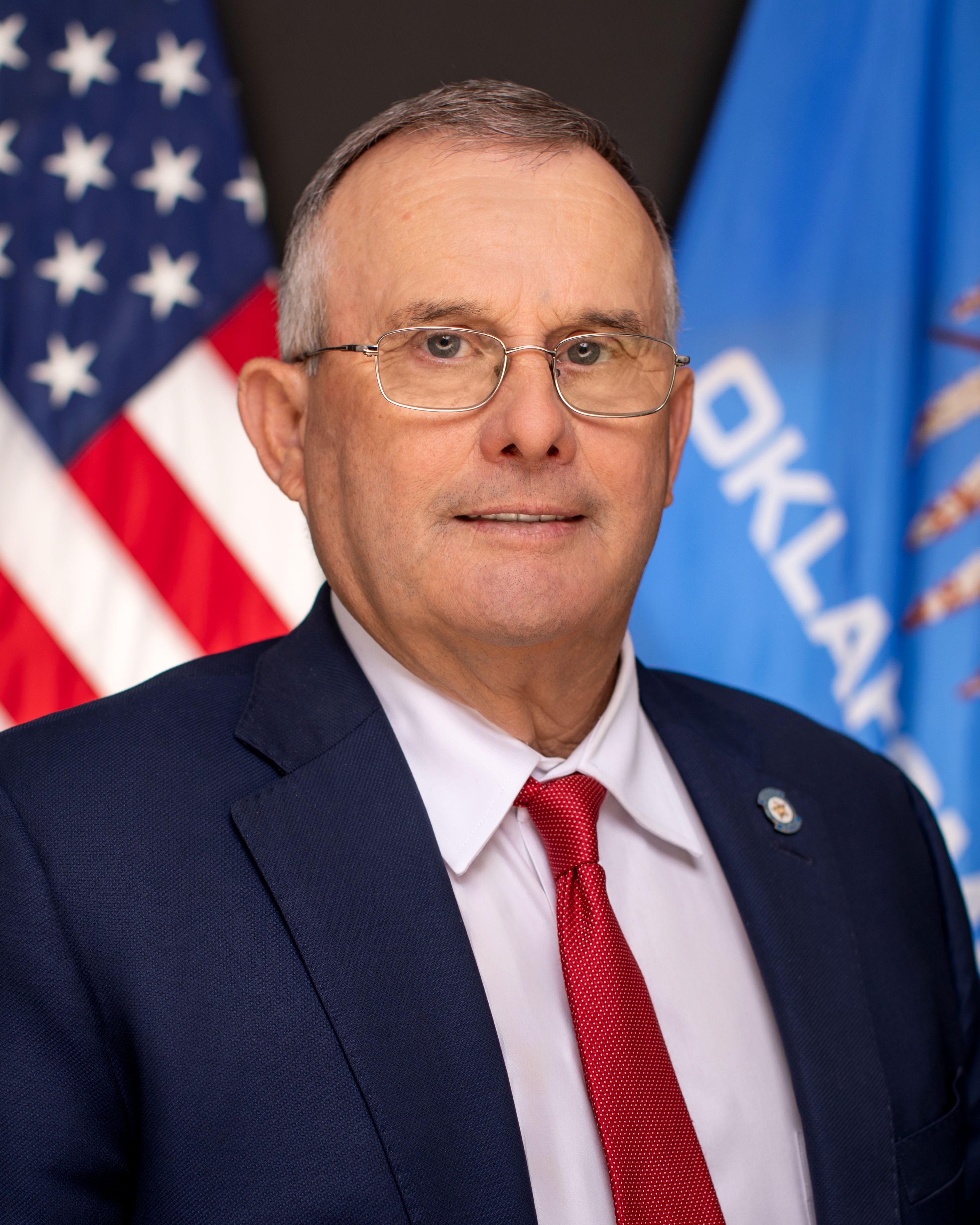
Rep. Kenton Patzkowsky
Sponsored bills
Maddy summaryHB 1541 is a procedural bill that clarifies definitions, procedures, and deposit amounts for Oklahoma's Agriculture Linked Deposits Program. It amends the bill's text to correct references to educational institutions and aligns the title with the changes. The bill became law on May 14, 2025, without requiring the Governor's signature. It does not establish new policy or directly affect specific groups; it solely adjusts the bill's wording and structure.
Maddy summaryThe provided text is an amendment to HB 1541, not the full bill text. The amendment specifically modifies the bill by striking language and punctuation related to "University," "Oklahoma," and "Education" from the bill's text. Without the full bill text, it is not possible to provide a complete summary of HB 1541, which is titled "Agriculture Linked Deposits Program; definitions; procedures; deposit amounts; effective date; emergency." The provided information only details a specific change made by an amendment, not the overall purpose or mechanisms of the Agriculture Linked Deposits Program itself.
Maddy summaryHB 1547 updates Oklahoma's rules for county agricultural fairs and funding. It allows fair associations to spend funds on digital communication tools (like internet and email) and clarifies that officers must attend at least 50% of meetings to retain their positions. The bill also adds a 12-hour voting window for electing fair association leaders and expands allowable expenses to include transporting exhibits between local and state fairs. Counties can now levy up to 1 mill per $1,000 in property value (or 0.25 mills in larger counties) to fund fair operations, premiums, maintenance, and advertising. These changes directly affect county fair associations, county excise boards, and local governments managing agricultural fairs across Oklahoma.
Maddy summaryHouse Bill 1547 updates the operational guidelines for agricultural fairs and expositions in Oklahoma. It expands the permissible uses of funds for free district, township, and county fairs to include digital and electronic communication, internet, and supporting equipment. The bill also revises the election process for county fair association officers, mandating a 12-hour voting window for leadership positions. Additionally, it establishes new conditions for officer removal, such as failure to attend at least 50% of meetings or through a unanimous vote of other members. These changes directly affect county fair associations, their leadership, and the allocation of funds for fair activities.
Maddy summaryHB 1542 updates Oklahoma's agricultural weights and standards law by removing the requirement for state officials to send reference standards to the National Institute of Standards and Technology (NIST) for certification. Instead, it allows qualified laboratories to certify weights and measures directly, streamlining the process for agricultural businesses and testing facilities that rely on standardized measurements. The bill takes effect on November 1, 2025, and primarily affects entities using official weights, measures, and testing devices in Oklahoma's agricultural sector.
Maddy summaryHB 1438 sets a monetary cap of $150,000 to $350,000 per entity per year for grants under Oklahoma's Rural Economic Action Plan program, which funds water quality projects like sewer line repairs, water treatment, and infrastructure improvements. The bill prioritizes small cities (under 1,750 population) and those with weaker fiscal capacity, while restricting eligibility to cities/towns under 7,000 population (based on census data) and unincorporated areas under 7,000. It requires the Oklahoma Water Resources Board to distribute all funds without administrative retention, establish separate accounts for specific economic development districts, and eliminate matching fund requirements for recipients.
Maddy summaryHouse Bill 1542 updates Oklahoma's laws regarding the state's official weights and measures standards. It removes the specific requirement for the Director of the Bureau of Standards to send reference standards to the National Institute of Standards and Technology (NIST) for certification. Instead, the bill allows these state standards to be certified by any "qualified laboratory." This change provides more flexibility in how the state's official weights, measures, and testing devices are maintained and verified, affecting the State Bureau of Standards and, indirectly, industries and consumers relying on accurate measurements.
Maddy summaryHB 1438 amends Oklahoma law concerning the Rural Economic Action Plan (REAP) grant program, which provides funding for water-related infrastructure projects. The bill raises the maximum grant amount an eligible entity can receive from the REAP Water Projects Fund from $150,000 to $350,000 within a twelve-month period. These funds, administered by the Oklahoma Water Resources Board, benefit cities, towns, and unincorporated areas, primarily those with populations under 7,000, with smaller communities receiving higher priority. The grants support projects like sewer and water line construction or repair, water treatment, and water acquisition, and do not require matching funds from recipients.
Maddy summaryHB 1546 prohibits non-U.S. citizens from specific countries (China, Iran, North Korea, Russia, or other U.S.-designated "foreign government adversaries") from owning agricultural land, forestry property, or real property within 200 miles of military installations or critical infrastructure facilities (like power plants, refineries, or water treatment plants). It requires sellers to submit a notarized affidavit verifying compliance with these restrictions when recording property deeds, with limited exceptions for deeds correcting title defects or securing debts. The bill applies to direct ownership and indirect ownership through business entities or trusts, effective November 1, 2025. This law directly affects foreign entities from the listed countries seeking to purchase or hold certain types of land in Oklahoma.