

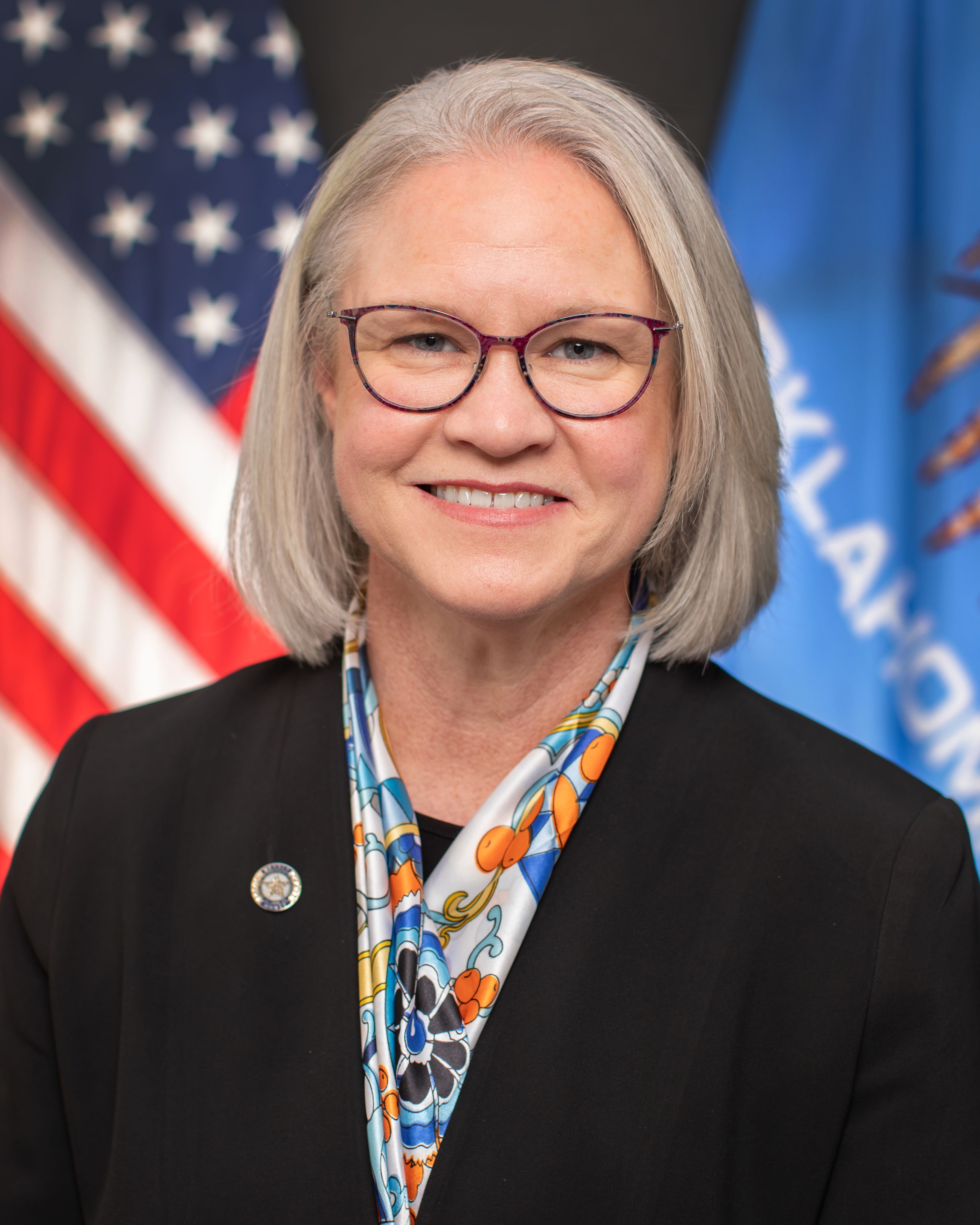
Photo of Trish Ranson
D Oklahoma House · District 34 On the 2026 ballot

Rep. Trish Ranson

Compare
Total votes
5,301
all sessions
Attendance
95%
191 missed
Near the chamber average
With party
97%
of cast votes
Higher than 81% of chamber peers
Bipartisan score
2%
crosses aisle rarely
Near the chamber average
Sponsored
112
bills & resolutions
Lower than 87% of chamber peers
Committees
6
assignments
112 bills and resolutions

Sponsored bills

Total
112
Primary
112
Co-sponsor
0
This page
112
matching current filters
Primary HB 1982
Passed · Oklahoma House · Lead sponsor
Schools; contracts for school materials; electronic textbook and instructional materials; contracts between vendors and schools; damages; definitions; effective date; emergency.

Maddy summaryHB 1982 updates Oklahoma school contracting rules for electronic educational materials. It requires vendors to guarantee materials are ready for immediate use at delivery, provide free replacements for defects within seven days, and supply updates/support within seven days of a school's notification. The bill also mandates that electronic files for textbooks must be in formats compatible with federal accessibility standards (like Braille conversion), ensuring materials can be adapted for students with disabilities. These rules apply to digital textbooks, software, and online learning tools purchased by school districts, effective July 1, 2025.

Passed Apr 1, 2025 0 co-sponsors
Primary HB 1982
Passed · Oklahoma House · Lead sponsor
Schools; contracts for school materials; electronic textbook and instructional materials; contracts between vendors and schools; damages; definitions; effective date; emergency.

Maddy summaryHB 1982 requires vendors selling electronic educational materials (like digital textbooks and software) to schools to include specific terms in contracts. It mandates that materials must be ready for immediate use upon delivery, defective items must be replaced within seven days at no cost, and technical support must be provided within seven days of a school's request. The bill directly affects vendors who supply digital learning resources to Oklahoma school districts and sets penalties including contract termination and financial damages for noncompliance. These requirements apply to all electronic materials listed by the State Textbook Committee or supporting approved curriculum standards. The law takes effect July 1, 2025.

Passed Apr 1, 2025 0 co-sponsors
Primary SB 367
In committee · Oklahoma Senate · Lead sponsor
Income tax; modifying calculation of the Oklahoma earned income tax credit. Effective date.

Maddy summarySB 367 modifies Oklahoma's earned income tax credit (EITC) calculation for tax years 2022 through 2025. It sets the state credit at 5% of the federal EITC amount and requires that the maximum credit be prorated based on how much a taxpayer's Oklahoma-adjusted gross income compares to their federal adjusted gross income. This change directly affects low-to-moderate income Oklahoma residents who claim the state EITC on their tax returns. The bill takes effect November 1, 2025.

In committee Mar 10, 2025 0 co-sponsors
Primary SB 367
In committee · Oklahoma Senate · Lead sponsor
Income tax; modifying calculation of the Oklahoma earned income tax credit. Effective date.

Maddy summarySB 367 modifies Oklahoma's earned income tax credit (EITC) calculation by setting it at 5% of the federal EITC amount under Section 32 of the Internal Revenue Code. This change applies to tax years beginning January 1, 2022, and later, directly affecting Oklahoma residents who qualify for the EITC - primarily low-to-moderate income workers and families. The bill clarifies that excess credit beyond state tax liability will be refunded, removes the option for advance payment, and updates statutory references. It becomes effective November 1, 2025.

In committee Mar 10, 2025 0 co-sponsors
Primary HB 1980
In committee · Oklahoma House · Lead sponsor
Higher education; Oklahoma Higher Education Fair Admissions Act; criminal history inquiries; State Regents for Higher Education; emergency.

Maddy summaryHB 1980, the Oklahoma Higher Education Fair Admissions Act, prohibits public colleges and universities from asking prospective online students about their past criminal records if those students will not reside on campus during their enrollment. The bill also bans institutions from inquiring about an applicant's juvenile behavioral history. These restrictions apply specifically to students enrolled exclusively in online programs, with the Oklahoma Regents for Higher Education responsible for enforcement and potential penalties for violations, including fines or loss of state funding. The law aims to remove barriers for certain students seeking higher education access.

In committee Mar 5, 2025 0 co-sponsors
Primary HB 1980
In committee · Oklahoma House · Lead sponsor
Higher education; Oklahoma Higher Education Fair Admissions Act; criminal history inquiries; State Regents for Higher Education; emergency.

Maddy summaryHB 1980, the Oklahoma Higher Education Fair Admissions Act, prohibits Oklahoma public institutions of higher education from asking online students about their criminal history if they will not reside on campus during enrollment. It also bans inquiries about juvenile behavioral conduct during admissions. The Oklahoma Regents for Higher Education will enforce compliance, with violations potentially resulting in fines or loss of state funding. This bill specifically affects online students who do not plan to live on campus, aiming to remove barriers to admission based on certain criminal records.

In committee Mar 5, 2025 0 co-sponsors
Primary HB 1983
In committee · Oklahoma House · Lead sponsor
Schools; media literacy and cybersecurity to be taught in sixth, seventh, or eighth grades; State Department of Education to adopt curriculum standards; effective date.

Maddy summaryHB 1983 requires Oklahoma public schools to teach media literacy and cybersecurity to students in sixth, seventh, or eighth grade starting in the 2027-2028 school year. It mandates a half-unit course covering specific topics like identifying online scams, fake news, deepfakes, password security, and protecting personal information. The State Department of Education must develop curriculum standards, guidelines, teacher training, and accessible resources to support this instruction, including accommodations for English learners and students with disabilities. The bill becomes effective November 1, 2025, with implementation beginning for incoming sixth graders in 2027.

In committee Feb 10, 2025 0 co-sponsors
Primary HB 1983
In committee · Oklahoma House · Lead sponsor
Schools; media literacy and cybersecurity to be taught in sixth, seventh, or eighth grades; State Department of Education to adopt curriculum standards; effective date.

Maddy summaryHB 1983 requires Oklahoma public schools to teach media literacy and cybersecurity to students in sixth, seventh, or eighth grade starting in the 2027-2028 school year. The bill mandates instruction covering topics like identifying online scams, fake news, deepfakes, password security, and protecting personal information. Schools must offer a one-half unit course meeting state-developed curriculum standards, with the State Department of Education creating guidelines, teacher training, and resources. The bill takes effect November 1, 2025, directly affecting all Oklahoma public school students in grades 6-8.

In committee Feb 10, 2025 0 co-sponsors
Primary HB 1981
In committee · Oklahoma House · Lead sponsor
Schools; Strong Readers Act; changing the number and timing of reading screenings for kindergarten students; effective date; emergency.

Maddy summaryHB 1981, the "Strong Readers Act," changes reading screening requirements for Oklahoma public school students. It requires kindergarten students to be screened at the middle and end of the school year (with the first screening by December), while grades 1-3 must be screened at the beginning, middle, and end of each year. The bill mandates state-approved screening tools that assess phonological awareness, decoding, fluency, vocabulary, and comprehension, and requires schools to provide individual reading intervention plans within 30 days for students not meeting grade-level targets. These plans must include research-based instruction, progress monitoring, and free online literacy resources for families.

In committee Feb 6, 2025 0 co-sponsors
Primary HB 1981
In committee · Oklahoma House · Lead sponsor
Schools; Strong Readers Act; changing the number and timing of reading screenings for kindergarten students; effective date; emergency.

Maddy summaryHB 1981, the "Strong Readers Act," requires Oklahoma public schools to screen all kindergarten through third-grade students for reading skills at specific times each year: beginning, middle, and end for grades 1-3, and middle and end (with first screening by December) for kindergarten. It mandates the State Board of Education to approve at least two screening tools for kindergarten and three for grades 1-3, ensuring they assess phonological awareness, decoding, fluency, vocabulary, and comprehension. Students not meeting grade-level reading targets must receive an individualized intervention plan within 30 days, including research-based instruction and access to free online literacy resources for families. The bill directly affects K-3 students in Oklahoma public schools and their educators, focusing on early identification and support for reading deficiencies.

In committee Feb 6, 2025 0 co-sponsors
Showing 11 to 20 of 112 bills