

Maddy summarySB 491 amends Oklahoma's Open Meeting Act to explicitly allow public bodies (like city councils, school boards, and county commissions) to hold private executive sessions specifically for discussing the sale, lease, or acquisition of real property. It adds a key restriction: no person who may profit directly or indirectly from the transaction can attend or participate in these sessions. This change clarifies when private discussions about property deals are permitted and prevents conflicts of interest during such meetings. The bill became law on May 19, 2025, without a gubernatorial signature.
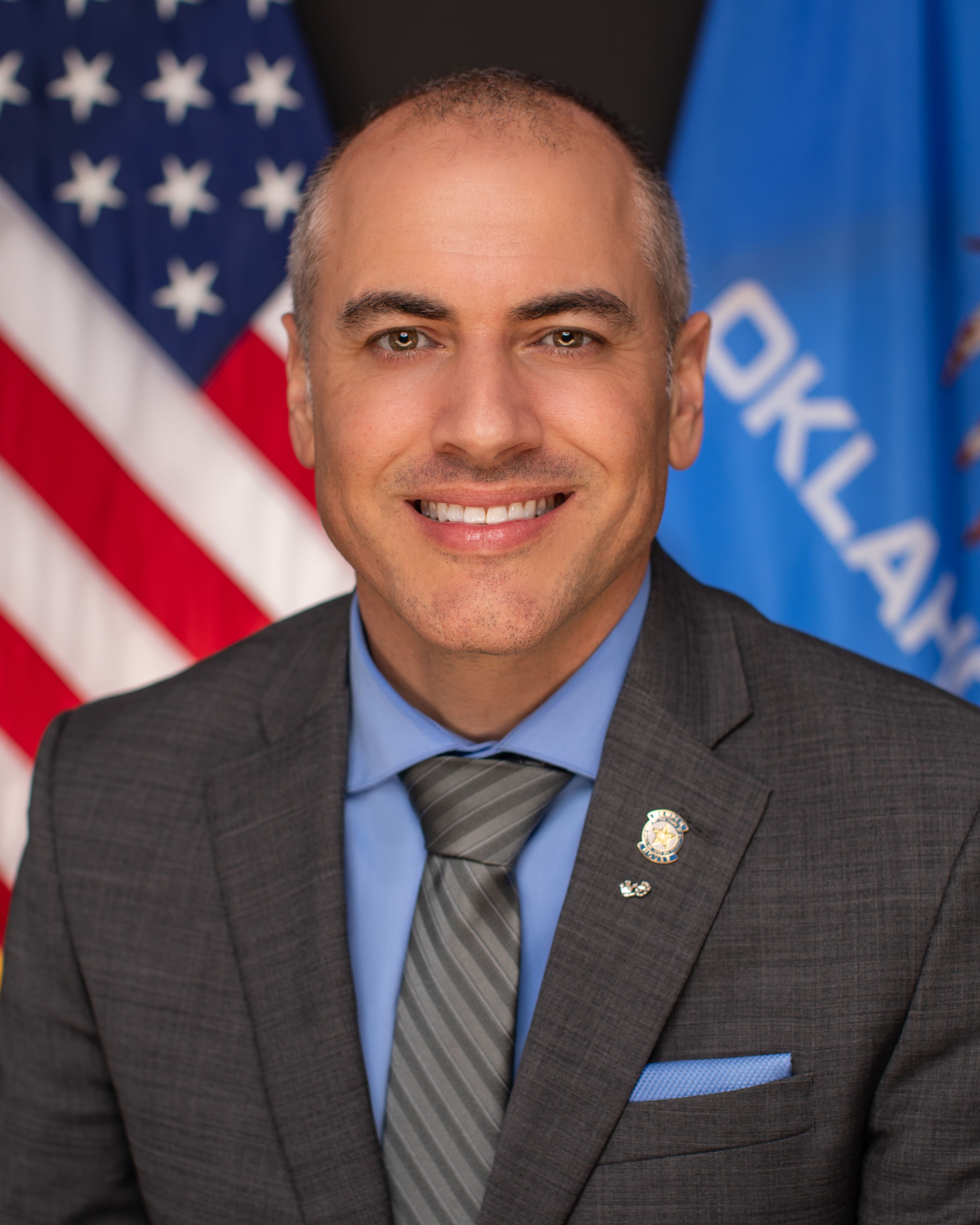
Rep. Derrick Hildebrant
Sponsored bills
Maddy summarySB 368 updates definitions in Oklahoma's vessel and motor registration law to clarify terms for users and businesses. It defines key terms like "boat livery" (businesses renting vessels for profit), "canoe" (a vessel propelled solely by a paddle), and "Service Oklahoma" (including tribal registration agencies). The bill also clarifies terms such as "Certificate of documentation" (U.S. Coast Guard proof of ownership) and "documented vessel" (requiring state registration decals). This technical update affects vessel owners, rental businesses, and tribal agencies handling registrations, without changing registration requirements or fees.
Maddy summarySB 491 amends the Oklahoma Open Meeting Act, which dictates how public bodies conduct their meetings. The bill expands the circumstances under which public bodies can hold closed-door executive sessions to include discussions about certain sales, leases, or acquisitions of property. It also places new limitations on who is permitted to participate in executive sessions for specific purposes. These changes affect the operational transparency of public bodies in Oklahoma.
Maddy summaryHB 1076, the "Food Truck Freedom Act," streamlines operations for mobile food vendors (food trucks) in Oklahoma. It requires local authorities to recognize valid state licenses within five business days and prohibits them from imposing conflicting rules - such as extra permits, GPS tracking, fingerprinting, or limiting vendor numbers. Vendors may operate on private property with owner permission (including residential zones under specific conditions), in locations approved by local authorities, and must follow cleanliness rules like waste disposal and license display. The bill, signed into law on May 5, 2025, also limits health inspections to twice yearly (unless violations exist) and bans local fees for inspections.
Maddy summaryHB 1076, the "Food Truck Freedom Act," authorizes mobile food vendors with a state food establishment license to operate across Oklahoma while limiting local government restrictions. It requires local authorities to recognize valid state licenses within five business days and prohibits them from imposing conflicting rules (like extra permits, GPS tracking, or distance limits from other businesses). Vendors may operate on private property in permitted zoning districts with owner permission or at residential gatherings (max 12 days/year), but must maintain waste disposal, display licenses, and notify health authorities 10 days before temporary events. The bill also clarifies that state health rules cannot mandate unnecessary requirements like handwashing sinks for prepackaged food vendors.
Maddy summarySB 628 modifies Oklahoma's laws on firearm carry by creating new exceptions to prohibited locations. It allows concealed carry on municipal parking areas, school parking lots (with firearms stored locked in vehicles), and certain parks or recreational areas. The bill also permits private schools to adopt policies allowing weapon carry by licensed individuals and lets school districts authorize designated staff (with security licenses) to carry handguns on school property. Additionally, it defines "minimum-security" for event properties requiring specific fencing, staffing, and metal detectors to allow concealed carry. The law maintains prohibitions in courthouses, prisons, and most school buildings while clarifying penalties for violations.
Maddy summarySenate Bill 628 modifies Oklahoma law regarding where firearms can be carried. The bill allows private schools to adopt policies permitting licensed individuals to carry weapons on their property and vehicles, providing liability protection for schools that do so. It also permits concealed handgun carry at municipal zoos and parks managed by public trusts or non-profits. Additionally, the bill allows concealed handgun carry at temporary public events without strict security measures,
Maddy summaryHB 1659 creates an income tax credit for married biological parents of children under 18 living at home. Parents receive $500 per child if married during the tax year, or $1,000 per child if married before the child's birth. To qualify, parents must be legally married for the entire tax year, reside with the child for at least six months (with exceptions for military deployment or newborns), and the child must be their biological child as verified by birth certificate or custody records. The credit cannot reduce tax liability below zero, and unused amounts can be carried forward for up to ten years.
Maddy summaryHB 1473, the "Health Care Sharing Ministry Tax Parity Act," allows Oklahoma residents who are active members of qualifying health care sharing ministries (HCSMs) to deduct their membership contributions from their state income taxes starting in 2026. It treats these deductions similarly to health insurance premiums, applying to self-employed individuals, employer contributions (as nontaxable benefits), and individuals covering themselves or dependents. To claim the deduction, members must provide documentation of contributions and membership, and false claims could result in $500 penalties per offense and three years of ineligibility. Funds received from HCSMs for medical expenses will not be considered taxable income under Oklahoma law.
Maddy summaryHB 1660 creates the official title "Oklahoma Revenue and Taxation Act of 2025" for future tax-related legislation and sets November 1, 2025, as its effective date. This is a procedural bill that does not change tax rates, policies, or affect taxpayers. It solely establishes a naming convention for upcoming revenue and taxation laws. The bill will take effect on November 1, 2025, as specified in Section 2.