Issue · Education

Education (K-12 Education)

Every education bill, vote, and legislator stance in Oklahoma, automatically classified by Maddy, our AI policy reader.

Total bills
64
2026 Regular Session
Top supporter
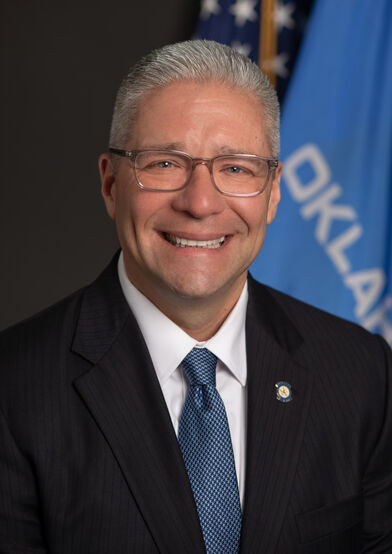
Kelly Hines
93% support rate
Top opponent
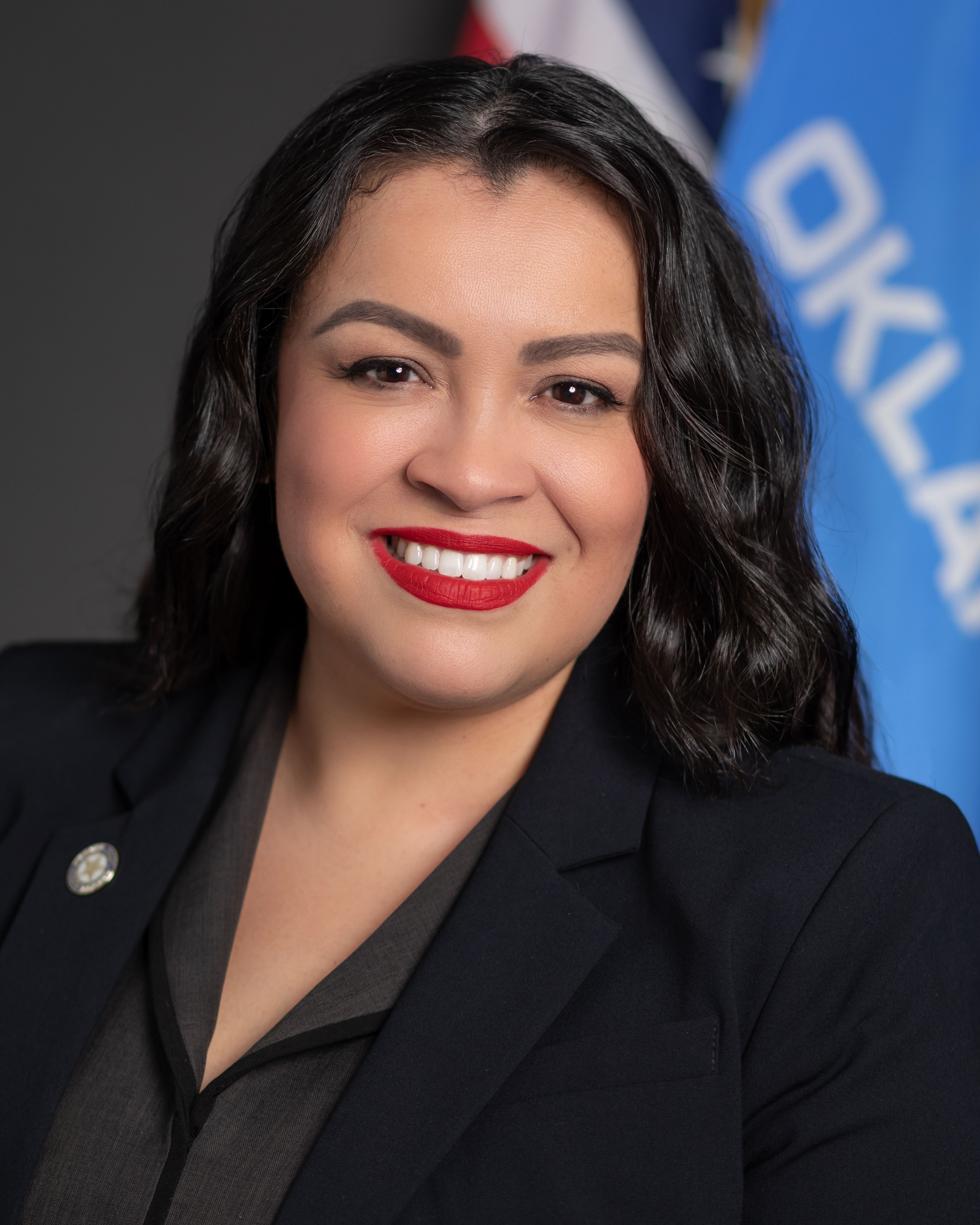
Julia Kirt
12% support rate
Ranked legislators
10
5 support · 5 oppose
Key legislators

Who's moving k-12 education in Oklahoma

Legislators moving k-12 education in Oklahoma
Legislator Party Stance Support rate Votes
Kelly Hines
Kelly Hines Senate · District 47
R
Strong +
93% 15
Carl Newton
Carl Newton House · District 58
R
Strong +
93% 14
Brian Hill
Brian Hill House · District 47
R
Strong +
92% 13
Scott Fetgatter
Scott Fetgatter House · District 16
R
Strong +
91% 11
Bob Culver
Bob Culver House · District 4
R
Strong +
90% 10
Julia Kirt
Julia Kirt Senate · District 30
D
Strong −
12% 8
Michael Brooks
Michael Brooks Senate · District 44
D
Strong −
12% 8
Annie Menz
Annie Menz House · District 45
D
Strong −
17% 6
Nikki Nice
Nikki Nice Senate · District 48
D
Oppose
25% 8
Regina Goodwin
Regina Goodwin Senate · District 11
D
Oppose
25% 8
Showing 51–60 of 64 bills

All education bills

in committee · Oklahoma · Senate Feb 3, 2026

SB 1298: Student assessments; directing the State Board of Education to issue a request for proposals to select certain alternative assessments. Effective date. Emergency.

SB 1298 requires Oklahoma's State Board of Education to issue requests for proposals seeking at least three alternative assessments for high school students (grades 9-12) that measure college and career readiness. These assessments must be adopted by the Board and made available to school districts starting in the 2026-2027 school year. The bill allows parents to opt their child out of standard assessments with written consent, but requires students to take an alternative assessment instead. It directly affects high school students and school districts by expanding assessment options beyond current requirements.
signed · Oklahoma · Senate May 5, 2025

SB 139: Schools; requiring school district boards of education to adopt certain cell phone policy.

SB 139 requires Oklahoma public school district boards of education to adopt cell phone policies by the 2025-2026 school year. Starting in the 2026-2027 school year, boards may choose to implement policies prohibiting students from using cell phones or personal electronic devices on school campuses "from bell to bell" during school hours. The bill directly affects school districts by setting a timeline for policy adoption and defining the scope of device restrictions during instructional time. This legislation, approved by the governor on May 3, 2025, provides a framework for district-level decisions without mandating specific enforcement.
Sub-Topics K-12 Education
passed · Oklahoma · House Apr 24, 2025

HB 1088: Schools; transfer students; allowing certain students to transfer to adjacent school district; effective date.

HB 1088 allows students in school districts that do not offer their required grade level to automatically transfer to an adjacent district without facing capacity limits. This applies only to one transfer per student, bypassing standard capacity rules that normally restrict transfers. Subsequent transfers would follow existing rules under the Education Open Transfer Act. The bill directly affects students whose home districts lack their grade level, particularly those seeking adjacent district enrollment.
in committee · Oklahoma · Senate Feb 4, 2025

SB 233: Higher education; providing certain concurrent enrollment tuition waiver to juniors and seniors who declare intention to teach. Effective date. Emergency.

SB 233, the "Teacher Shortage Reduction Act," provides tuition waivers for Oklahoma high school juniors and seniors who commit to becoming public school teachers. It allows eligible students to receive a waiver covering up to 60 college credit hours (instead of the standard 9-18 credits) if they declare an intention to pursue teacher education and teach in Oklahoma public schools for three years within ten years of earning their degree. Students who fail to fulfill this teaching commitment must repay the waived tuition, though hardship exceptions may apply. The program is funded through state appropriations and requires students to submit a formal declaration to the Oklahoma State Regents for Higher Education.
in committee · Oklahoma · Senate Feb 3, 2026

SB 1334: Strong Readers Act; modifying number of screening instruments to be approved; modifying criteria for approval. Effective date. Emergency.

SB 1334, the Strong Readers Act, requires Oklahoma public schools to screen all kindergarten through third-grade students for reading skills at the start, middle, and end of each school year. The bill mandates that the State Board of Education approve at least three screening tools meeting specific criteria, including alignment with reading science, validity, and ability to support students with disabilities or English learners. Schools must provide individualized reading intervention plans within 30 days for students not meeting grade-level targets, including evidence-based instruction and progress monitoring. The law takes effect for the 2026-2027 school year.
Sub-Topics K-12 Education
signed · Oklahoma · House May 7, 2025

HB 1995: Crimes and punishments; definitions of sex crimes; designating school resource officers as employees of a school system; emergency.

HB 1995 expands Oklahoma's definition of rape to include sexual acts between students aged 16-19 (while under school custody) and school employees (including resource officers) who are 18 or older. It explicitly designates school resource officers as school employees for these provisions and adds similar protections for foster children under 19 and secondary school students concurrently enrolled in higher education with staff. The law specifies that such acts are rape under Section 1111, with penalties including minimum 3-year prison terms (25 years for victims under 12). It also updates related provisions in Section 1123 regarding lewd acts with children under 16.
passed both · Oklahoma · Senate May 14, 2026

SB 514: Schools; student eligibility; virtual charter school students; Oklahoma Secondary School Activities Association (OSSAA) activities; policies. Effective date.

SB 514 expands Oklahoma's statewide alternative education system to explicitly include charter schools and virtual charter schools that are designated by the State Department of Education as offering alternative education programs. It requires school districts serving grades 7-12 to provide alternative education programs meeting specific standards (like smaller class sizes, certified teachers, and individualized plans) and allows districts to use full-time virtual or blended instruction. Designated charter and virtual charter schools must follow the same performance standards and attendance policies as district programs, while funding is based on student enrollment with 15% reserved for cooperative agreements between districts. The bill directly affects school districts, designated charter/virtual schools, and students at risk of not completing high school.
in committee · Oklahoma · House Feb 25, 2025

HB 1304: Schools; subject matter standards; computer science courses; curriculum; rules; effective date; emergency.

HB 1304 requires Oklahoma public high schools to offer a dedicated one-year computer science curriculum as part of graduation requirements for students in grades 8-12. It mandates that schools include computer science courses (covering programming, hardware, and business applications) as an approved option to fulfill the "two units of world language or computer technology" requirement for graduation. The bill specifies these courses must be approved for college admission and exclude basic keyboarding or typing courses. This directly affects all Oklahoma public high school students meeting graduation standards under the 2024-2025 school year curriculum rules. The policy change updates existing graduation requirements to explicitly include computer science as a valid pathway.
in committee · Oklahoma · Senate Feb 3, 2026

SB 1308: Higher education; providing eligibility for resident tuition. Effective date. Emergency.

SB 1308 allows students who graduated from an Oklahoma high school and lived in Oklahoma with a parent or guardian for at least two years prior to graduation to qualify for resident tuition at Oklahoma public colleges, regardless of their current immigration status. To qualify, students must meet admission standards and either provide proof of an immigration status application or file an affidavit promising to apply within one year of enrollment. The bill also ensures these students cannot be denied state scholarships or financial aid due to their immigration status. This applies to new students enrolling on or after July 1, 2026.
in committee · Oklahoma · House Feb 4, 2025

HB 1761: Schools; screening for dyslexia; requiring certain students to rescreen every three years; effective date; emergency.

HB 1761 requires Oklahoma public schools to screen all kindergarten through third-grade students for characteristics of dyslexia if they are not meeting grade-level reading targets after the initial assessment. Students identified with dyslexia characteristics must be rescreened every three years until age 18 or until a rescreening shows no characteristics. School districts must report detailed data on screenings, rescreenings, and interventions to the state Department of Education annually, including student progress and screening tools used. The bill also mandates the State Board of Education to develop policies for screening, including approved tools and parent notification processes. This affects all Oklahoma public schools serving K-3 students and requires ongoing monitoring of dyslexia identification.
Showing 51 to 60 of 64 bills
Previous 1 5 6 7 Next