Issue · Education

Education (K-12 Education)

Every education bill, vote, and legislator stance in Oklahoma, automatically classified by Maddy, our AI policy reader.

Total bills
64
2026 Regular Session
Top supporter
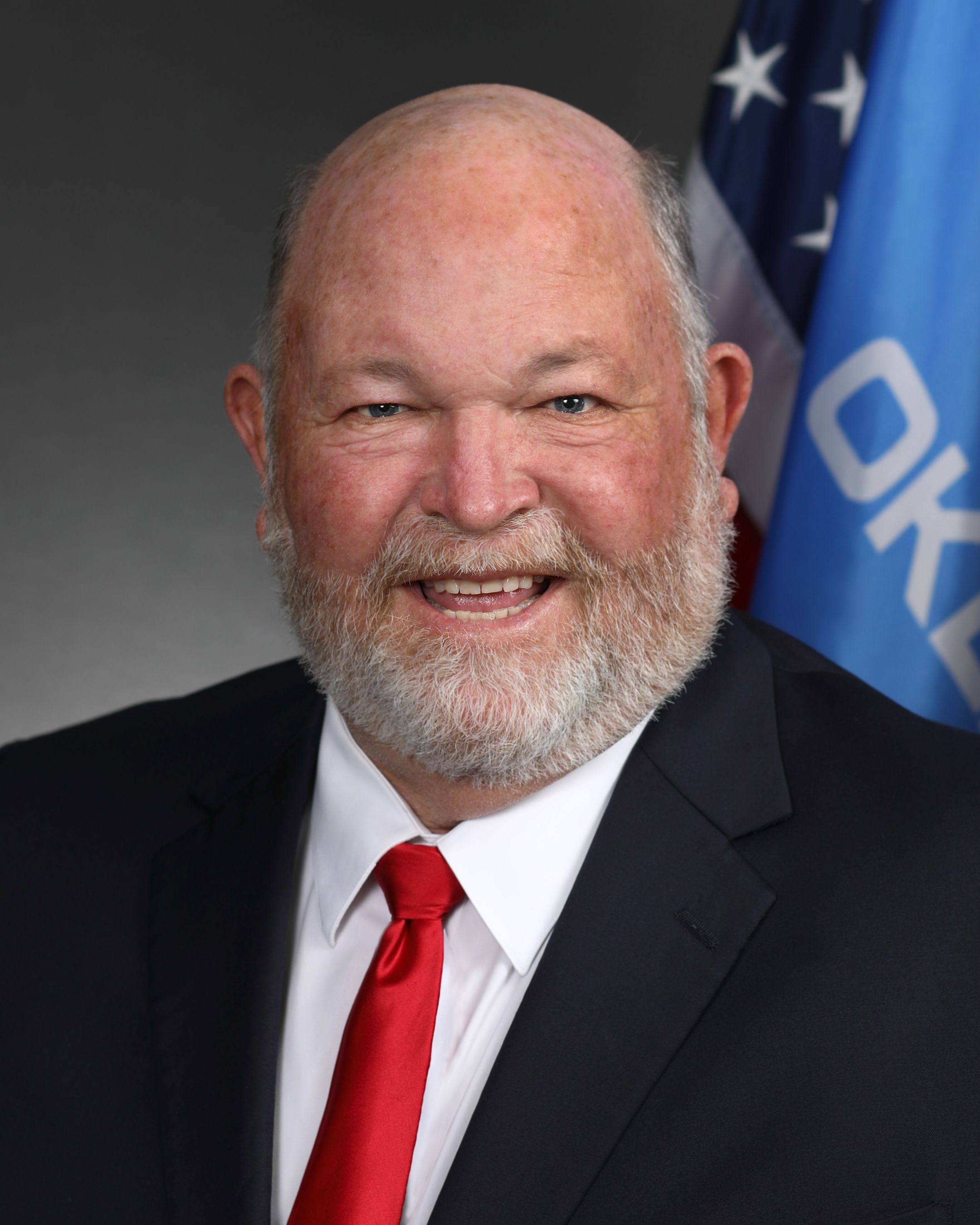
Kelly Hines
93% support rate
Top opponent
Julia Kirt
12% support rate
Ranked legislators
10
5 support · 5 oppose
Key legislators

Who's moving k-12 education in Oklahoma

Legislators moving k-12 education in Oklahoma
Legislator Party Stance Support rate Votes
Kelly Hines
Kelly Hines Senate · District 47
R
Strong +
93% 15
Carl Newton
Carl Newton House · District 58
R
Strong +
93% 14
Brian Hill
Brian Hill House · District 47
R
Strong +
92% 13
Scott Fetgatter
Scott Fetgatter House · District 16
R
Strong +
91% 11
Bob Culver
Bob Culver House · District 4
R
Strong +
90% 10
Julia Kirt
Julia Kirt Senate · District 30
D
Strong −
12% 8
Michael Brooks
Michael Brooks Senate · District 44
D
Strong −
12% 8
Annie Menz
Annie Menz House · District 45
D
Strong −
17% 6
Nikki Nice
Nikki Nice Senate · District 48
D
Oppose
25% 8
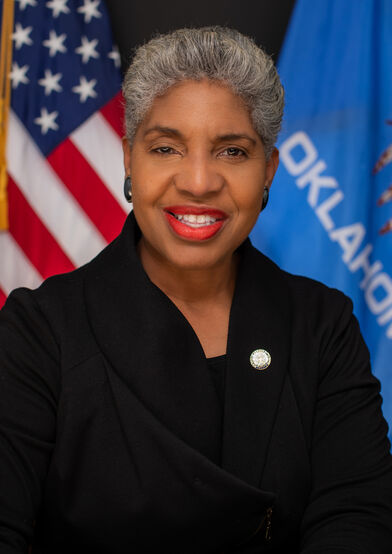
Regina Goodwin
Regina Goodwin Senate · District 11
D
Oppose
25% 8
Showing 11–20 of 64 bills

All education bills

in committee · Oklahoma · House Feb 3, 2026

HB 3861: Schools; requiring school district to cover certain transportation costs; OSSAA activities exception; effective date; emergency.

HB 3861 requires Oklahoma school districts to cover transportation costs for students attending school-sponsored cocurricular and extracurricular activities, except when those activities are sanctioned by the Oklahoma Secondary School Activity Association (OSSAA). For OSSAA-sanctioned events, the association itself must pay the transportation expenses instead of the school district. Funds collected from OSSAA under this provision cannot be counted toward the school district's general finances. The bill takes effect July 1, 2026, and applies to all public school districts in Oklahoma.
in committee · Oklahoma · House Feb 10, 2026

HB 3019: Schools; phasing in a reduction to the maximum number of students allowed per class in kindergarten through fifth grades; exceptions; effective date; emergency.

HB 3019 reduces maximum class sizes for Oklahoma public schools in kindergarten through fifth grade over a three-year phase-in. Starting in 2026-2027, classes in kindergarten through second grade may not exceed 22 students; this limit drops to 20 students in 2027-2028, and 18 students starting in 2028-2029. To comply, schools must employ a teacher’s assistant in classes exceeding these limits (with exceptions for special education and certain other classes), and teacher assistants cannot count toward the class size limit. School districts that fail to meet these requirements face reduced state funding calculated based on the number of students over the limit.
in committee · Oklahoma · House Feb 12, 2026

HB 3850: Prisons and reformatories; directing the Department of Corrections to fund program for inmates to obtain high school equivalency diplomas; effective date.

HB 3850 requires Oklahoma's Department of Corrections to fully fund a program enabling all state prison inmates to earn high school equivalency diplomas (like a GED) before release, removing prior financial hardship exemptions. It mandates that the department assess each inmate's educational needs upon intake, prioritize those with basic literacy gaps or nearing release dates, and link program completion to parole eligibility. Inmates refusing recommended education programs lose earned credits and face parole eligibility risks. The law applies broadly to all inmates except those documented as incapable of benefiting from education. It takes effect November 1, 2026.
passed · Oklahoma · House Apr 1, 2026

HB 3706: Education; requiring a minimum amount of math instruction per day and week for kindergarten through fifth grade students; requiring math instruction to align with the Oklahoma Academic Standards for Mathematics; effective date; emergency.

HB 3706 requires all Oklahoma public elementary schools to provide at least 60 minutes of daily mathematics instruction for full-day kindergarten through fifth-grade students starting in the 2026-2027 school year. The instruction must align with the Oklahoma Academic Standards for Mathematics (OAS-M) approved by the State Board of Education. This law directly affects K-5 students and public elementary schools across Oklahoma, mandating a specific daily math time requirement. It becomes effective July 1, 2026, with an emergency declaration allowing immediate implementation upon approval. The bill does not change existing math standards but enforces a minimum daily instructional time.
in committee · Oklahoma · Senate Feb 17, 2026

SB 1893: Students; creating the Teacher Shortage Reduction Act; providing criteria for certain graduation recognition; providing criteria for certain education designation. Effective date. Emergency.

SB 1893, the "Teacher Shortage Reduction Act," creates new graduation recognition and college designations to support future educators. It requires Oklahoma high schools to award a graduation "education endorsement" to students who meet specific criteria: earning a standard diploma, identifying teaching as a career goal in their academic plan, and completing an education-related apprenticeship, internship, or mentorship. For students earning this endorsement and 30+ college credits or an associate degree through concurrent enrollment, the Oklahoma State Regents must award an "education designation" on their college diploma and transcript. This designation guarantees acceptance into a college of education and grants credit for prior field experience, directly affecting high school students and higher education institutions starting with the 2027-2028 graduating class.
passed · Oklahoma · House Apr 20, 2026

HB 3288: Schools; physical education programs; prekindergarten and elementary school; physical education instruction; recess; increases; grades six through twelve; effective date.

HB 3288 requires Oklahoma public elementary schools (prekindergarten through grade 5) to provide 60 minutes per week of dedicated physical education instruction (not counting recess) and an additional 60 minutes per week of physical activity (including recess, fitness breaks, or wellness education). It prohibits withholding physical education as punishment for students in these grades, except in safety-related situations, and mandates schools coordinate recess before testing to encourage light-to-moderate activity. The bill also encourages school districts to provide 225 minutes per week of physical education for grades 6-12, with specific curriculum standards emphasizing lifelong activity skills and accessibility for students with disabilities. These requirements are tied to school accreditation and take effect July 1, 2028.
in committee · Oklahoma · House Feb 3, 2026

HB 4479: Oklahoma Higher Learning Access Program; requiring completion of application to participate in program to graduate from public high school; exceptions; effective date; emergency.

HB 4479 requires Oklahoma public high school students to complete the Oklahoma Higher Learning Access Program application to graduate, with specific exceptions for certain student groups. The bill mandates this application as a graduation requirement, directly affecting all students in Oklahoma's public high schools. The effective date was amended to November 1, 2026, replacing the original July 1, 2026 date. This policy change aims to streamline access to postsecondary education funding by linking program enrollment to high school graduation.
Sub-Topics K-12 Education
signed · Oklahoma · Senate May 29, 2026

SB 1632: Schools; directing career-readiness assessments and assessment-based credentials to be made available to certain students beginning in certain school year. Effective date. Emergency.

SB 1632 requires Oklahoma public schools to provide free career-readiness assessments to students in grades 10-12 starting in the 2026-2027 school year. The assessments measure foundational workplace skills like applied math, workplace documents, and critical thinking, and lead to nationally recognized credentials upon meeting proficiency standards. It shifts approval authority for these assessments from the Oklahoma Department of Commerce to the State Department of Education, while directing the Oklahoma State Regents for Higher Education to establish rules for awarding college credit based on assessment results. The bill affects all Oklahoma public high school students in targeted grades and mandates school districts to administer the assessments at no cost to students who choose to participate.
passed · Oklahoma · House Apr 1, 2026

HB 4420: Strong Readers Act; references; legislative findings; reading screenings; reading intervention plans; reading deficiencies; mandatory third grade retention; good cause exemptions; request process; intensive reading intervention; acceleration class; reporting requirements; summer academy programs; teacher training requirements; literacy instructional team; revolving fund; donations; emergency.

HB 4420, the Strong Readers Act, requires annual reading screenings for all kindergarten through third-grade students in Oklahoma public schools to identify reading deficiencies. It mandates scientifically based reading instruction (banning the "three-cueing system" model), requires intensive intervention for students who don’t meet grade-level standards, and allows third-grade retention unless a "good cause" exemption applies. The bill also establishes summer reading academies, teacher training requirements, and parent notification protocols for reading progress. These provisions directly affect K-3 students, their schools, and educators, with implementation beginning in the 2025-2026 school year.
in committee · Oklahoma · Senate Feb 3, 2026

SB 1899: Oklahoma Higher Learning Access Program; providing eligibility for children of school district certified personnel. Effective date. Emergency.

SB 1899 expands eligibility for Oklahoma's Higher Learning Access Program to include children of certified school personnel, such as teachers and other district employees. The bill amends Section 2603 of Oklahoma law to explicitly add "children of certified classroom teachers or certified personnel" as a qualifying group under financial need requirements. This change allows these students to receive tuition assistance equivalent to resident rates for their first semester of college, provided they meet other standard program criteria like high school graduation and academic requirements. The amendment updates existing eligibility rules without altering the program's core structure or funding mechanisms.
Showing 11 to 20 of 64 bills
Previous 1 2 3 7 Next