Issue · Criminal Justice

Criminal Justice

Every criminal justice bill, vote, and legislator stance in Oklahoma, automatically classified by Maddy, our AI policy reader.

Total bills
139
2026 Regular Session
Top supporter
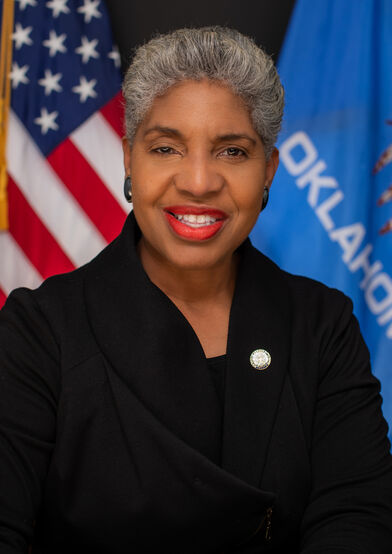
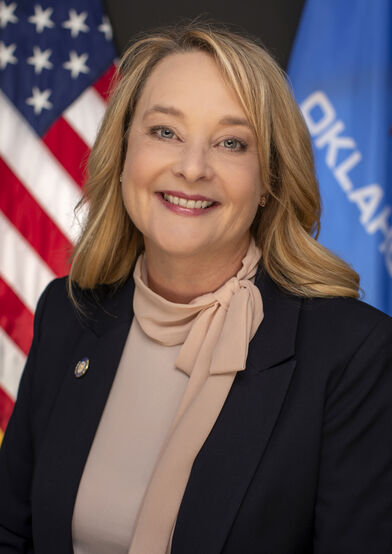
Aletia Timmons
76% support rate
Top opponent
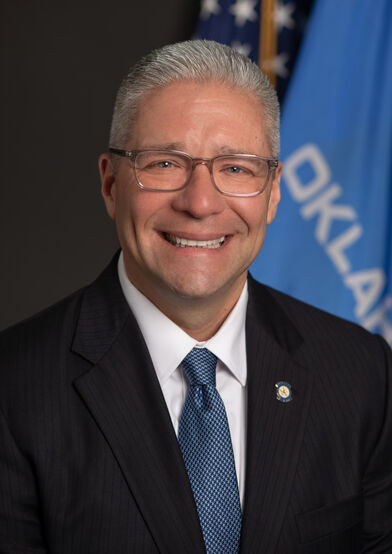
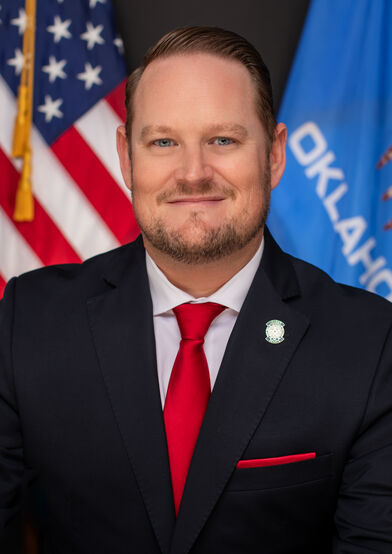
Brian Guthrie
24% support rate
Ranked legislators
10
5 support · 5 oppose
Key legislators

Who's moving criminal justice in Oklahoma

Legislators moving criminal justice in Oklahoma
Legislator Party Stance Support rate Votes
Aletia Timmons
Aletia Timmons House · District 97
D
Support
76% 91
Regina Goodwin
Regina Goodwin Senate · District 11
D
Support
73% 225
Michael Brooks
Michael Brooks Senate · District 44
D
Support
72% 274
Carri Hicks
Carri Hicks Senate · District 40
D
Support
71% 184
Julia Kirt
Julia Kirt Senate · District 30
D
Support
70% 174
Brian Guthrie
Brian Guthrie Senate · District 25
R
Oppose
24% 158
Lisa Standridge
Lisa Standridge Senate · District 15
R
Oppose
26% 220
Jay Steagall
Jay Steagall House · District 43
R
Oppose
27% 149
Julie McIntosh
Julie McIntosh Senate · District 3
R
Oppose
28% 164
Dusty Deevers
Dusty Deevers Senate · District 32
R
Oppose
28% 156
Showing 61–70 of 139 bills

All criminal justice bills

passed · Oklahoma · House Apr 27, 2026

HB 3264: Crimes and punishments; minimum prison sentences; criminal offense; list; effective date.

HB 3264 requires individuals convicted of 24 specific serious crimes - including first-degree murder, child sexual abuse, human trafficking, domestic abuse by strangulation, and discharging a firearm into occupied buildings - to serve at least 85% of their prison sentence before becoming eligible for parole. The bill eliminates earned credits or other sentence reductions that would allow offenders to serve less than 85% of their sentence. It applies to all convictions for these listed offenses, including attempts, conspiracies, or solicitations. The law would take effect on November 1, 2026, if passed.
signed · Oklahoma · House Apr 30, 2025

HB 1579: Juvenile bureaus; salaries and expenses; limitations; effective date.

HB 1579 sets salary limits for juvenile bureau staff in Oklahoma counties, capping directors' pay at 90% of Class A county officer salaries and other employees at 85%. It requires juvenile court judges (with county commissioner oversight) to establish expense limits for bureau operations and mandates that all bureau costs - salaries and expenses - be funded through county budgets or dedicated sales taxes. The bill also specifies that county excise boards must appropriate funds for bureau staffing and operations, consistent with other county officer budgets. Additionally, it clarifies that district attorneys represent juvenile bureaus in lawsuits, unless conflicts arise. The law became effective November 1, 2025.
signed · Oklahoma · Senate May 5, 2026

SB 1232: Crimes and punishments; creating felony offense related to copper theft. Effective date.

SB 1232 elevates copper theft from a misdemeanor to a felony offense under Oklahoma law. It directly affects individuals who steal copper, such as from power lines, pipes, or infrastructure, by increasing penalties. The bill amends Section 1727 of the Oklahoma Statutes to establish felony charges for copper theft, moving it from a lower-level offense to a more serious criminal classification. This change specifically targets theft of copper valued at $100,000 or less, as referenced in existing statutes.
signed · Oklahoma · Senate May 12, 2025

SB 861: Crimes and punishments; gang-related offenses; modifying reference to certain offense. Effective date.

SB 861 amends Oklahoma law to clarify that individuals committing gang-related offenses - such as those listed in Section 856 of Title 21 - as a condition of gang membership or while associated with a gang face a mandatory 5-year prison term added to any other penalties. It updates statutory references to align with existing definitions of "criminal street gang" and "gang-related offense" from Section 856. The bill, effective November 1, 2025, directly affects criminal street gang members who commit specified offenses, reinforcing penalties for gang-associated criminal activity. It makes no new policy changes but corrects outdated references in current law.
Sub-Topics Corrections
in committee · Oklahoma · House Feb 4, 2025

HB 1624: Firearms; defining term; effective date.

HB 1624 amends Oklahoma law to clarify firearm possession restrictions for specific groups. It prohibits convicted felons, individuals on felony probation, delinquent youth (within 10 years of adjudication), and undocumented immigrants from possessing most firearms. The bill also restores firearm rights for pardoned nonviolent felons and penalizes licensed gun owners who knowingly allow prohibited individuals to possess firearms, with penalties including license revocation and fines up to $5,000. Key provisions define terms like "altered toy pistol" and "sawed-off shotgun" for clarity in enforcement. The law takes effect November 1, 2025.
in committee · Oklahoma · House Feb 4, 2025

HB 2719: Crimes and punishments; providing statutory reference for certain prostitution offense; effective date.

HB 2719 amends Oklahoma's prostitution-related penalties in Section 1031 of Title 21. It increases penalties for specific offenses, including classifying prostitution while knowingly HIV-positive as a felony (up to 5 years), child prostitution as a felony (up to 10 years), and prostitution within 1,000 feet of schools/churches as a felony (up to 5 years). The bill also adds community service requirements (40-80 hours) and mandates courts to notify county health officials of convictions. It becomes effective November 1, 2025.
Sub-Topics Human Trafficking
in committee · Oklahoma · Senate Mar 6, 2025

SB 551: Crimes and punishment; modifying penalty provision related to child sexual abuse. Effective date.

SB 551 amends Oklahoma's penalties for child sexual abuse and exploitation, specifically increasing minimum sentences for offenses against children under 12. It sets a mandatory 25-year minimum prison term for perpetrators of child sexual abuse (Section F) or exploitation (Section I) involving children under 12, replacing previous sentencing ranges. The bill also requires mandatory post-prison supervision for certain convictions and expands the age range covered to include all children under 18. These changes directly affect individuals convicted of child sexual abuse/exploitation (including enablers like caregivers) and the state's sentencing framework. The law updates statutory language but does not alter defenses or exemptions like reasonable parental force.
Sub-Topics Corrections Sentencing
vetoed · Oklahoma · Senate May 29, 2025

SB 631: Crimes and punishments; expanding scope of acts that require service of minimum percentage of sentence. Effective date.

SB 631 requires offenders convicted of 23 specific serious crimes - including child pornography, human trafficking, aggravated assault on a defender, and discharging firearms into buildings - to serve at least 85% of their prison sentence before becoming eligible for parole. It expands the existing 85% service requirement to include these new offenses, which were previously not subject to this rule. The bill also prohibits earned credits or other reductions that would lower the required service below 85% for these convictions. This applies to anyone convicted of these offenses in Oklahoma, effective November 1, 2025.
in committee · Oklahoma · House Feb 26, 2025

HB 1008: Abortion; prohibition of abortion; definitions; prescribing standard based upon preservation of the life of a pregnant woman; emergency.

HB 1008 prohibits most abortions in Oklahoma except when necessary to preserve the life of a pregnant woman facing a medical emergency involving physical disorder, illness, or injury directly related to pregnancy. It defines "medical emergency" as conditions where abortion is required to save the woman's life, and imposes penalties of up to $100,000 or 10 years in prison for violations. The bill explicitly states it does not criminalize women for pregnancy outcomes and preserves access to contraceptives when used before pregnancy detection. The law takes immediate effect as an emergency measure upon passage.
in committee · Oklahoma · House Feb 12, 2025

HB 1043: Motor vehicles; creating the Respect for Citizens Act of 2025; declaring certain driver licenses invalid in this state; effective date.

HB 1043, the "Respect for Citizens Act of 2025," declares certain out-of-state driver licenses issued to undocumented immigrants without proof of lawful presence as invalid in Oklahoma. It requires law enforcement to issue citations for driving with such invalid licenses and mandates police departments to post online lists of these invalid license types. The law, effective November 1, 2025, specifically targets licenses marked as issued to undocumented immigrants or those substantially identical to standard licenses but lacking proof of lawful presence.
Showing 61 to 70 of 139 bills
Previous 1 6 7 8 14 Next