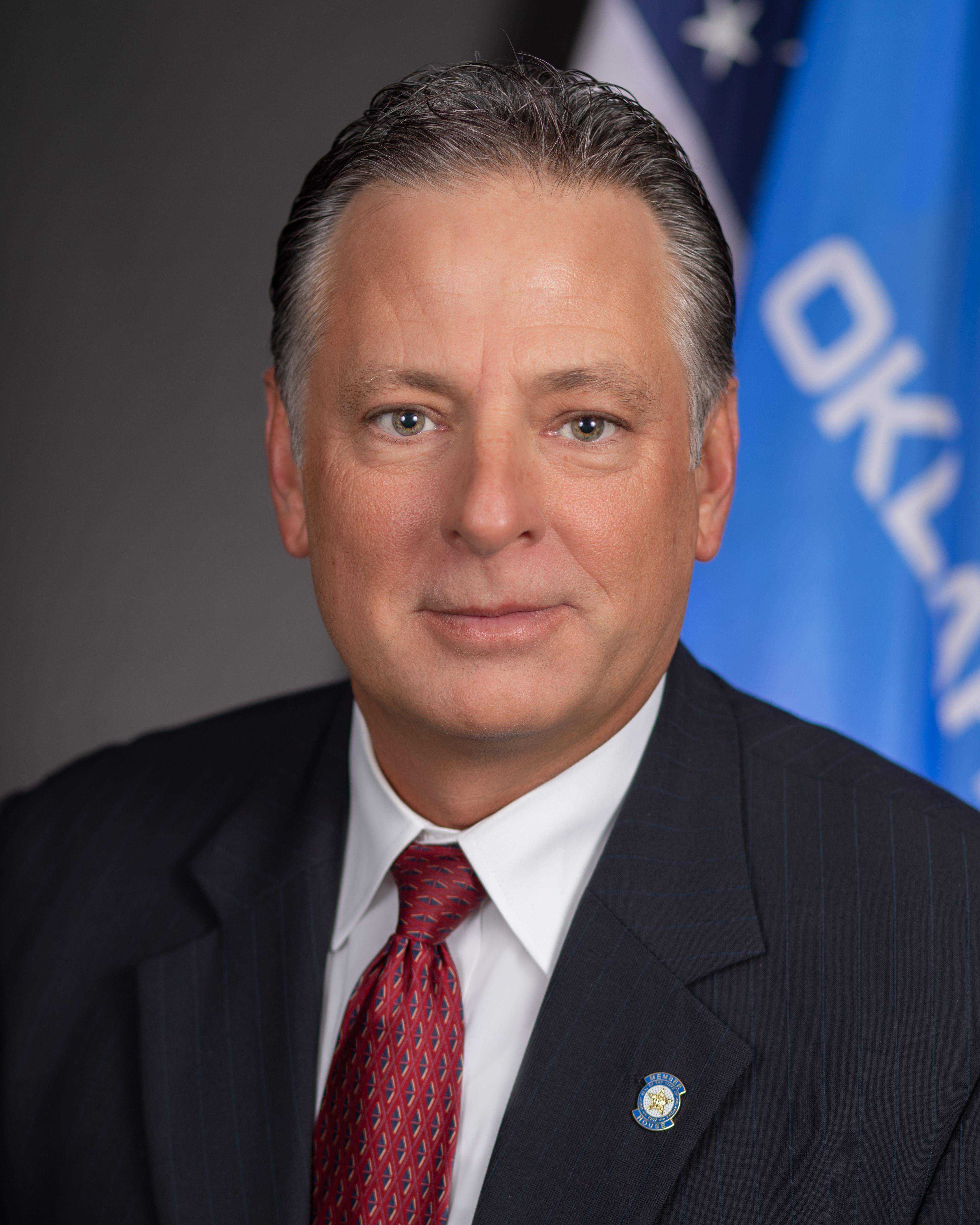
HB 4432 amends Oklahoma's tax code to eliminate a limitation on itemizing wagering income for tax purposes and updates statutory references throughout the Oklahoma Revenue and Taxation Act. It specifically adjusts how businesses calculate Oklahoma taxable income, particularly regarding federal net operating loss deductions and the allocation of income from property or business activities. The bill clarifies that Oklahoma net operating losses must be separately determined using federal rules but without requiring a federal loss, and it updates rules for allocating income from intangible property and certain business activities. This is a procedural update to the tax code, not a new tax or policy change, and it affects businesses and individuals filing Oklahoma income taxes. The bill was introduced in 2026 but has not advanced beyond committee referral.
SB 1546 renames Oklahoma's teacher scholarship program to the NEXT-ED Program and increases scholarship amounts for students pursuing teaching degrees. The bill provides up to $2,000 per year for the first three years (for students with fewer than 90 credits) and up to $5,000 for the final year (for students with 90+ credits), with a total maximum of $11,000 per student. To qualify, students must commit to teaching in Oklahoma public schools for five years after graduation and maintain a 2.5 GPA. Participants who fulfill this teaching commitment may also receive up to $20,000 in total through annual employment incentive payments of up to $4,000 per year.
SB 2084 caps settlement amounts for wrongful termination claims by employees of Oklahoma public institutions of higher education (like state universities) at two years of their base salary at termination. It limits total settlements to include back pay and damages but excludes accrued unpaid wages, leave, and retirement contributions already earned. The bill specifically applies to state law claims, not federal ones, and takes effect November 1, 2026. This directly affects public university employees filing termination disputes under Oklahoma law.
HB 3705 increases Oklahoma's Parental Choice Tax Credit Program, allowing taxpayers to claim credits for education expenses of eligible students. The bill raises the maximum annual credit for private school tuition to $7,500 (or actual tuition, whichever is lower) for families earning under $75,000, with tiered reductions up to $5,000 for households earning over $250,000. It also creates special credit tiers for students experiencing homelessness ($7,500) and those at financially disadvantaged private schools (maximum credit based on average school costs). Qualified expenses include tuition, tutoring, textbooks, and standardized test fees, but exclude scholarship-funded amounts. This directly affects Oklahoma families choosing private education or approved alternative learning programs.
SB 1122 requires Oklahoma's State Board of Equalization to assess property used for **wired broadband service** (offering internet over 100 Mbps download/20 Mbps upload) at a **15% tax rate** for tax years 2026-2036. It applies only to infrastructure in areas with **less than 10% broadband coverage** (per FCC maps) and exclusively to property used for broadband, excluding other services like video streaming. The bill amends tax code to define "broadband service providers" and mandates this specific assessment ratio for qualifying assets, including fiber, cables, and network infrastructure. This policy directly affects **wired broadband providers** expanding service in underserved rural or low-coverage regions.
Oklahoma's SJR 39 proposes a constitutional amendment to reduce limits on annual increases in property tax assessments. It would lower the maximum annual growth rate for most real property from 5% to 3% (for tax years 2027 onward) and further reduce limits for homestead properties (primary residences) and agricultural land from 3% to 1%. The amendment applies to locally assessed real property, excluding personal property and properties with recent transfers or improvements. If approved by voters, these changes would take effect for tax years beginning in 2027.
This Oklahoma House Concurrent Resolution expresses support for eliminating the United States Department of Education and urges the U.S. Congress to cooperate with that goal. The document argues that education is a state responsibility under the Tenth Amendment and claims that federal involvement has led to excessive regulations and poor student outcomes in Oklahoma. It highlights concerns about declining national reading scores and asserts that local control would better address educational needs. The resolution does not change any laws or policies within Oklahoma but serves as a formal statement of legislative sentiment regarding federal education policy.
HB 3704 directs Oklahoma to participate in a federal income tax credit program allowing individuals to claim a credit for donations to scholarship granting organizations (SGOs). The bill requires the Governor to certify Oklahoma's participation to the U.S. Treasury and designates the Oklahoma Tax Commission to register SGOs, maintain their lists, and handle federal reporting. This enables Oklahoma taxpayers to claim the federal credit for qualifying donations, while coordinating with Oklahoma's existing state tax credit for SGO contributions. The law takes effect July 1, 2026, and remains in place until changed by law or federal policy.
Oklahoma Senate Bill 227 modifies tax exemptions for oil and gas producers by limiting eligibility for gross production tax refunds to specific years (2005-2013 and 2022-2024). It caps annual refunds at $12.5 million for 2015-2016 and $10 million for 2022-2024, requiring producers to qualify as "economically at-risk" leases based on production volume and profitability thresholds. Producers must submit documentation to the Oklahoma Tax Commission to claim refunds for prior-year production, with claims due by the bill’s effective date for 2024. The bill directly affects oil/gas operators seeking refunds on past production under these revised rules.
HB 3024 establishes a 10% annual cap on salary increases and bonuses for most state employees in executive branch agencies, requiring cabinet secretary approval for any increase exceeding this limit. It mandates that agencies set performance metrics for bonus eligibility and document salary adjustments above 10% due to role changes or performance reviews. The bill excludes executive directors, positions requiring advanced degrees or state licenses (like doctors and engineers), and employees of higher education systems or school districts from these limits. These provisions take effect July 1, 2026, with the Office of Management and Enterprise Services overseeing implementation.